DRAWING
Institution: Bilkent University, Fine Arts Department | 2023-2024
Instructors: Alper Yıldırım & Birsu Çeltek
Semester: 2 (1st year students)
Course Brief
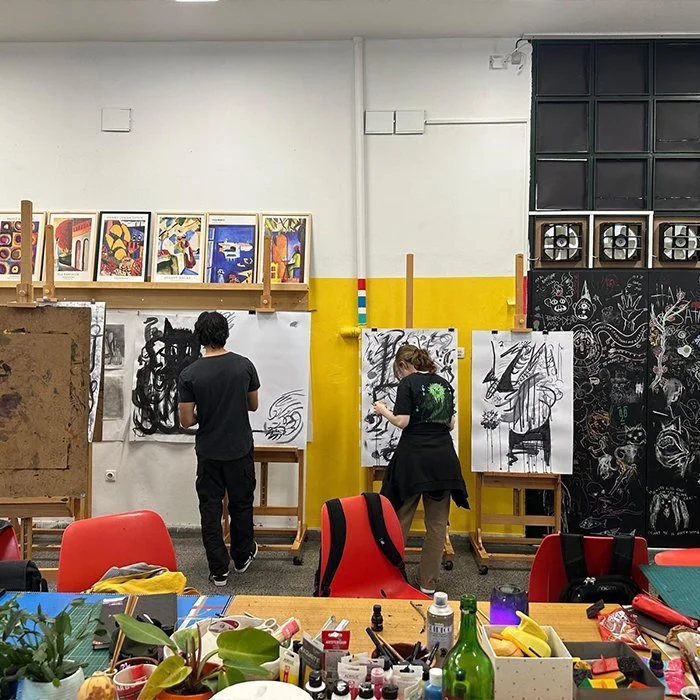
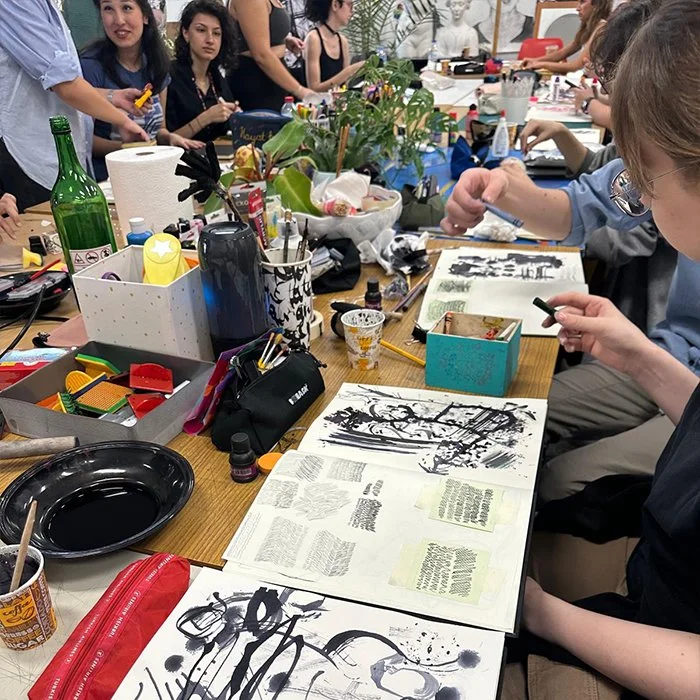
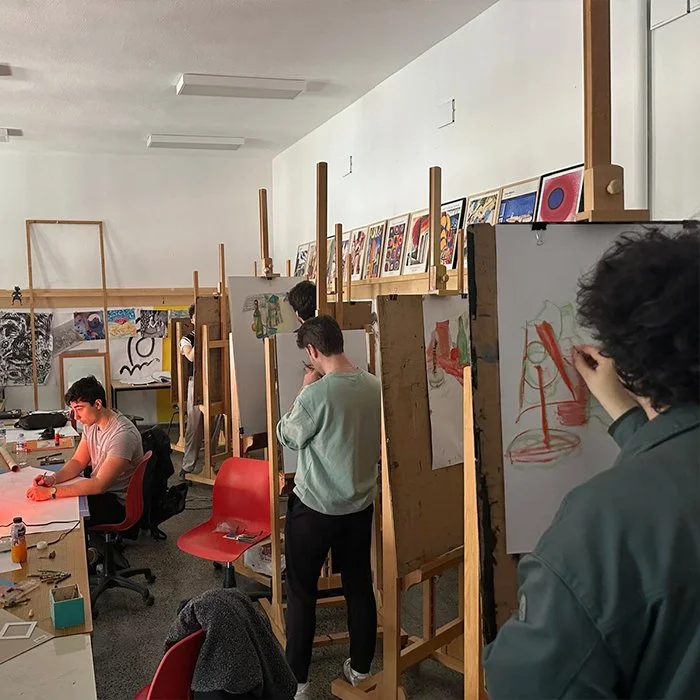
This course introduces drawing as a fundamental method of observation, visual thinking, and expression. Students develop practical skills through sustained experimentation with line, contour, movement, proportion, structure, value, and composition.
The course progresses through three interconnected phases. Students first learn to observe without relying on habitual assumptions, then explore movement and rhythm through gesture, and finally construct figures and objects through geometric form, proportion, and tonal modelling. Pencil, charcoal, ink, brush, and other mark-making tools are used throughout the course.
Learning Outcomes
By the end of the course, students will be able to:
Use a range of drawing materials, tools, and mark-making techniques.
Observe subjects carefully and translate visual information into line and form.
Develop coordination between observation, hand movement, and drawing.
Capture movement, rhythm, weight, and direction through gestural studies.
Construct complex figures and objects from basic geometric forms.
Use proportion, negative space, value, and composition to organise a drawing.
Develop a more personal and expressive approach to line.
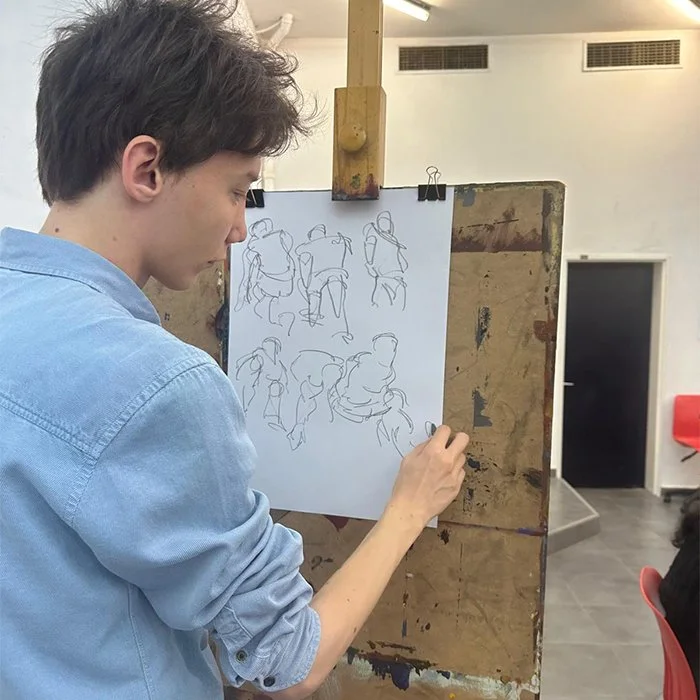
Phase 01
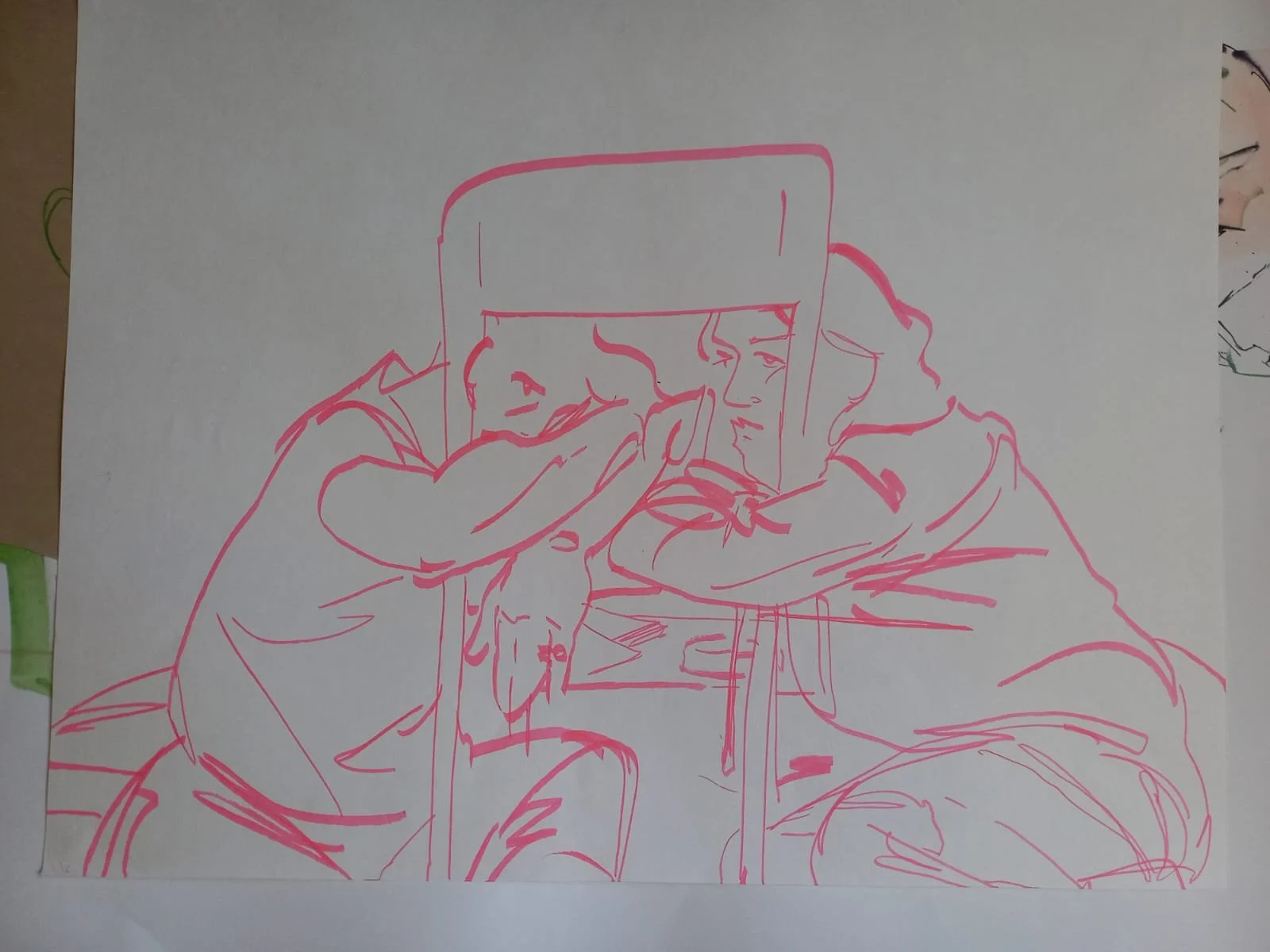
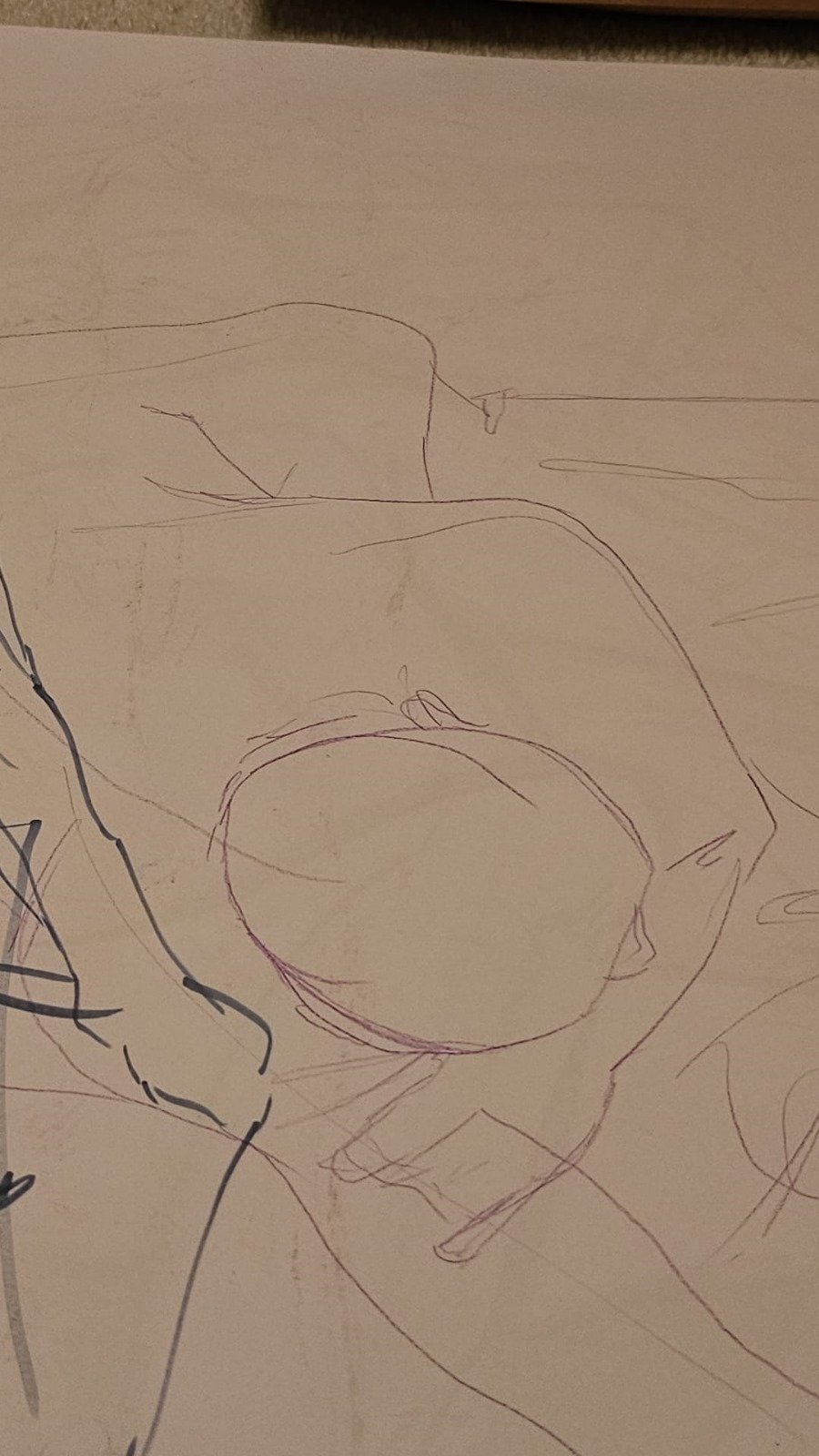
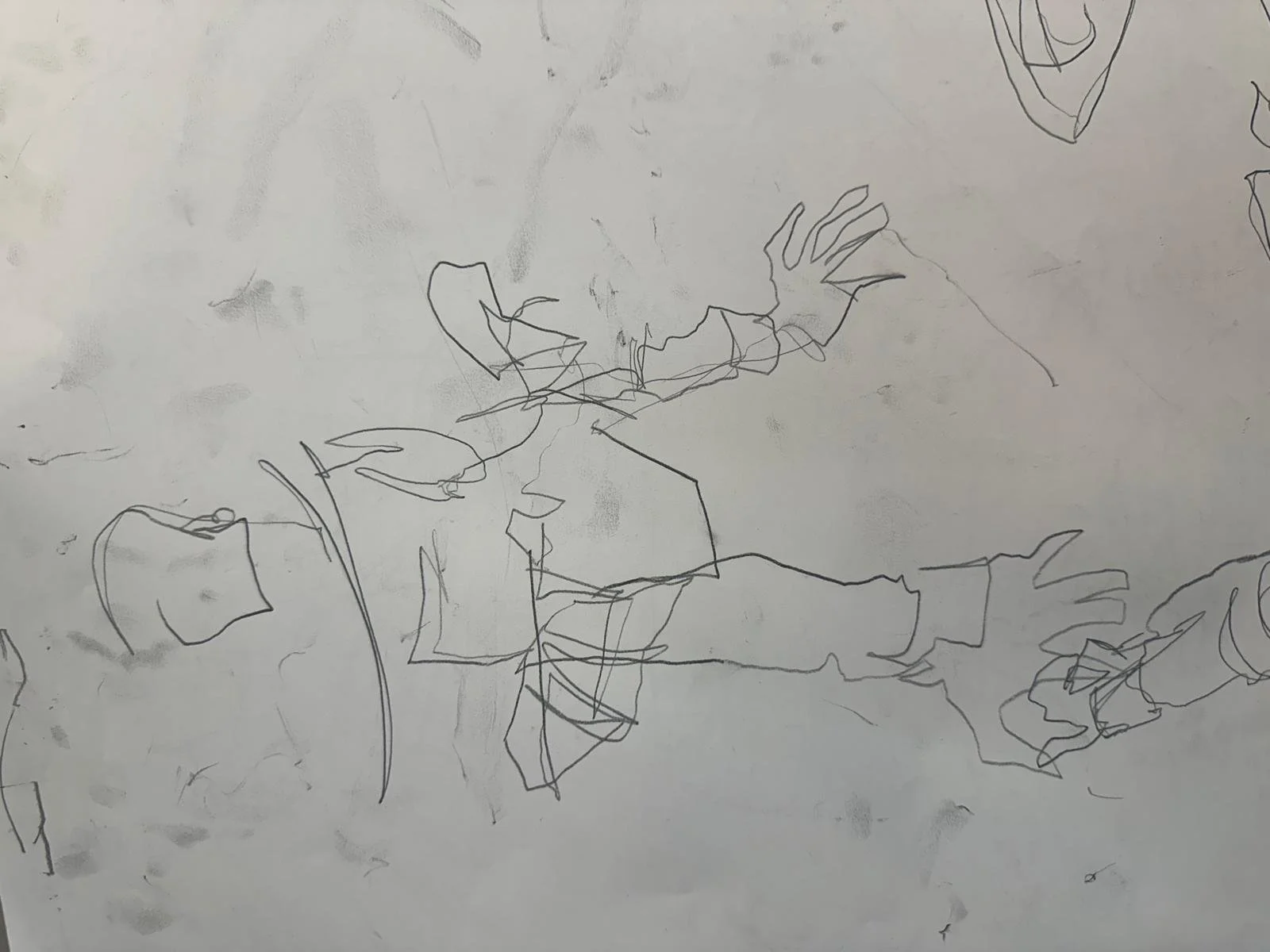
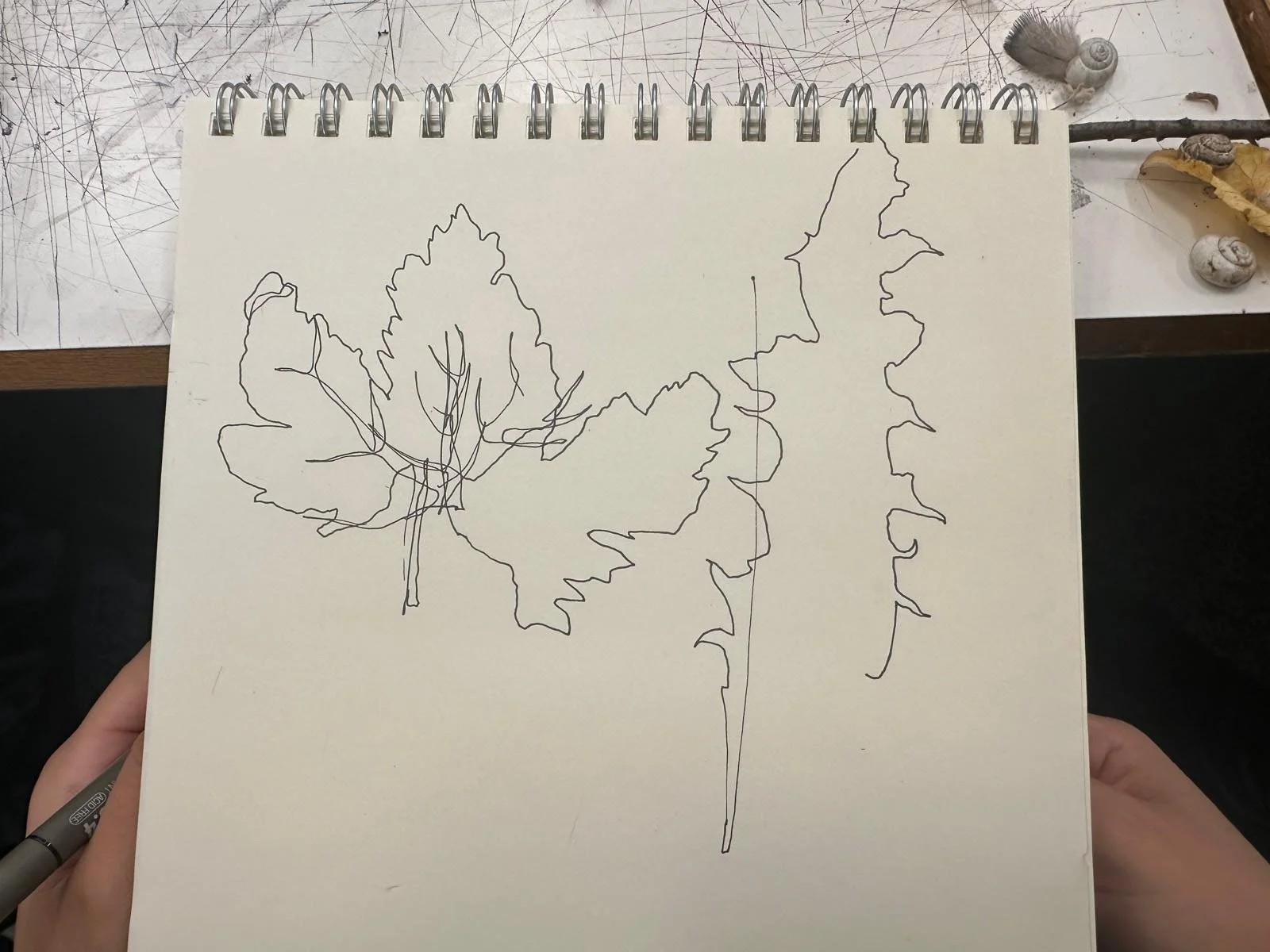
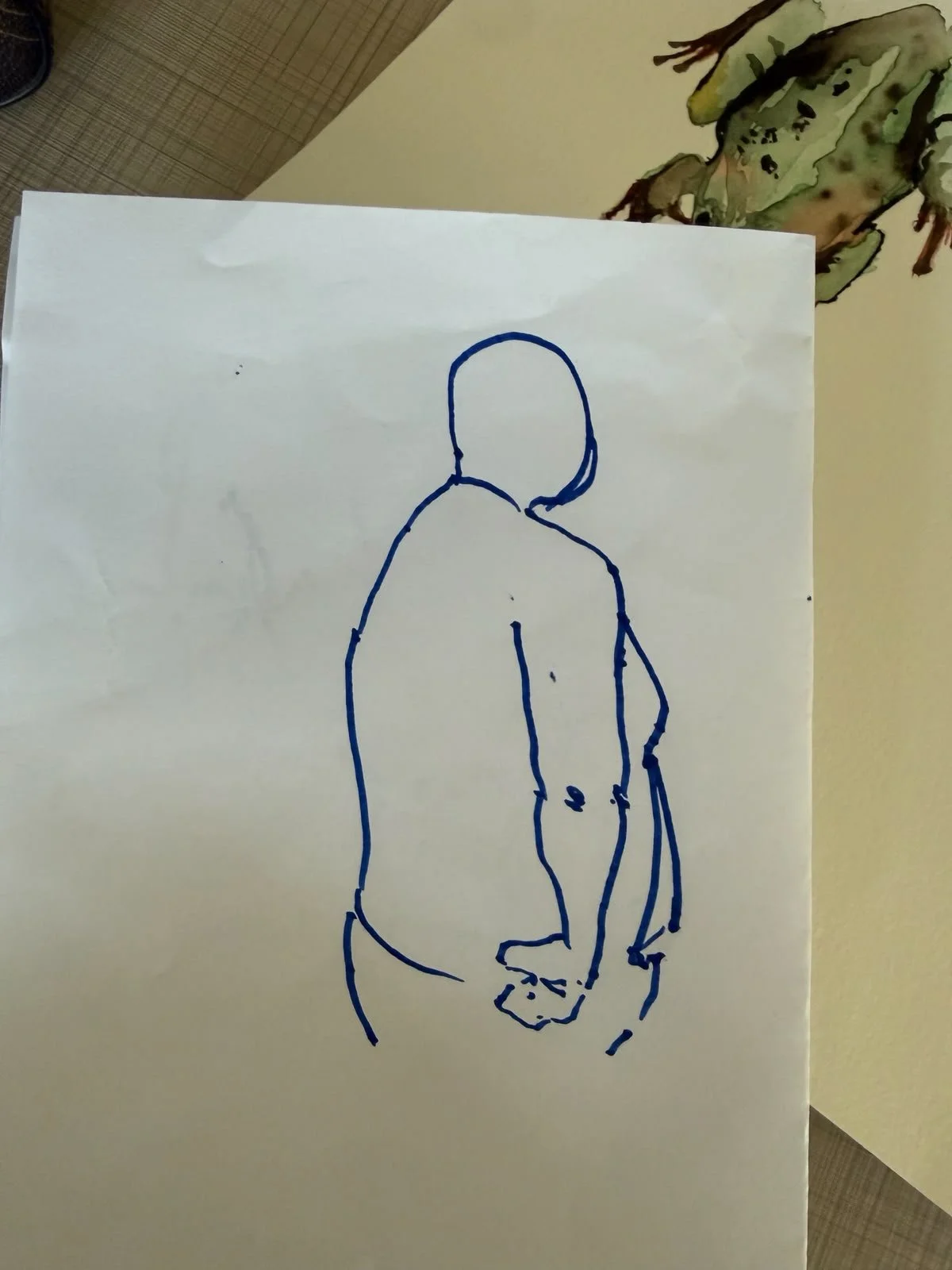
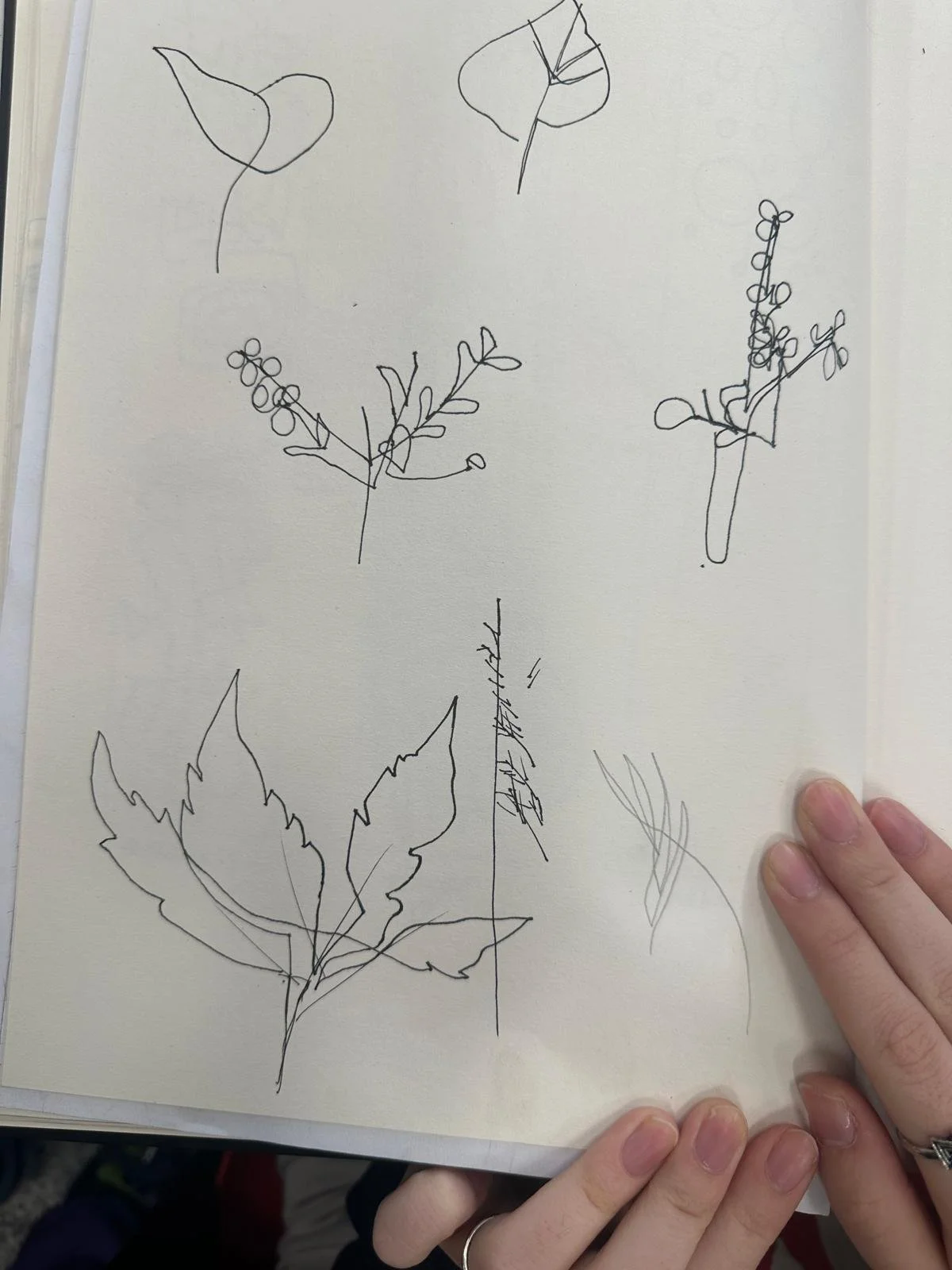
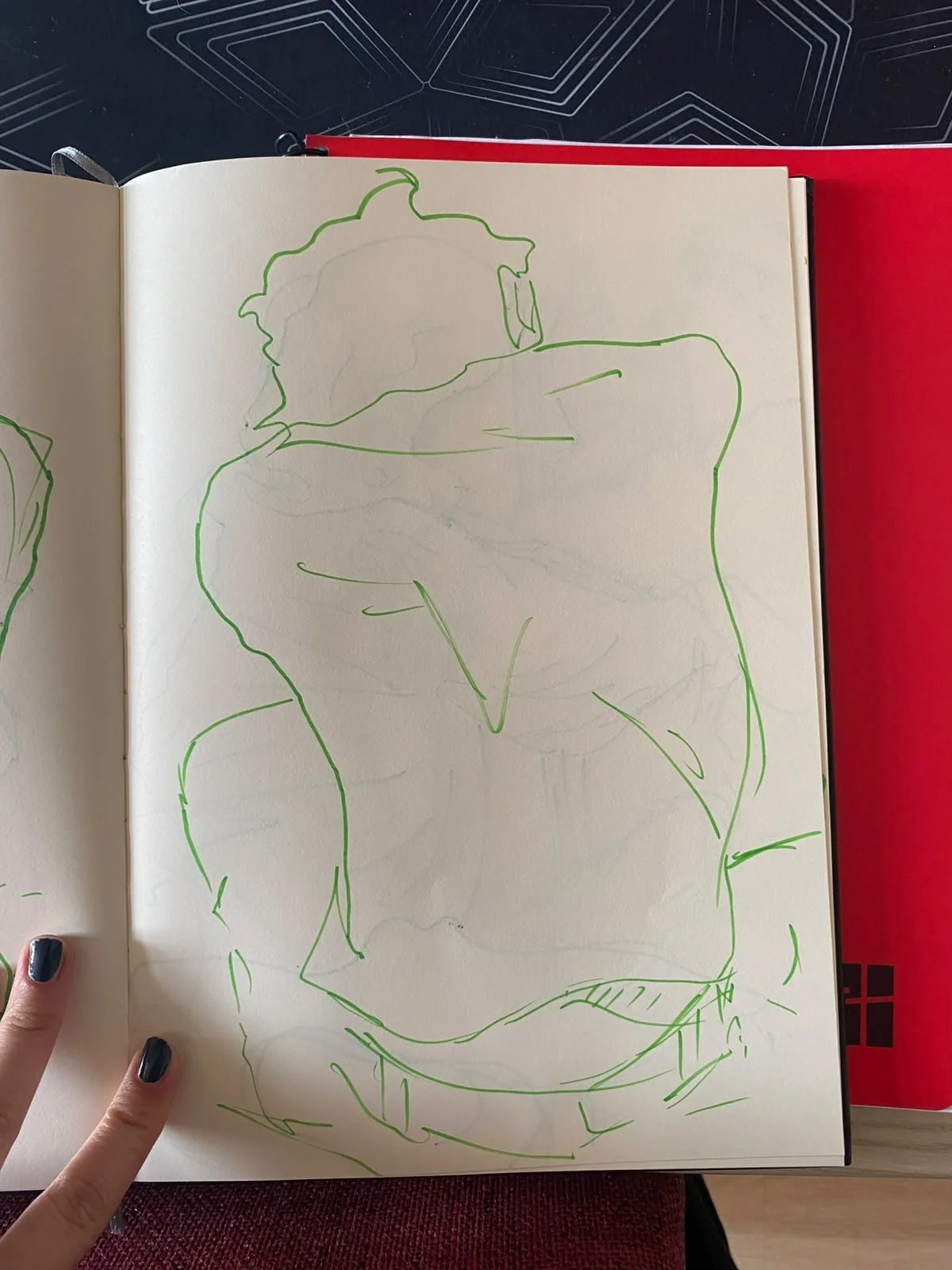
Blind Contour Drawing
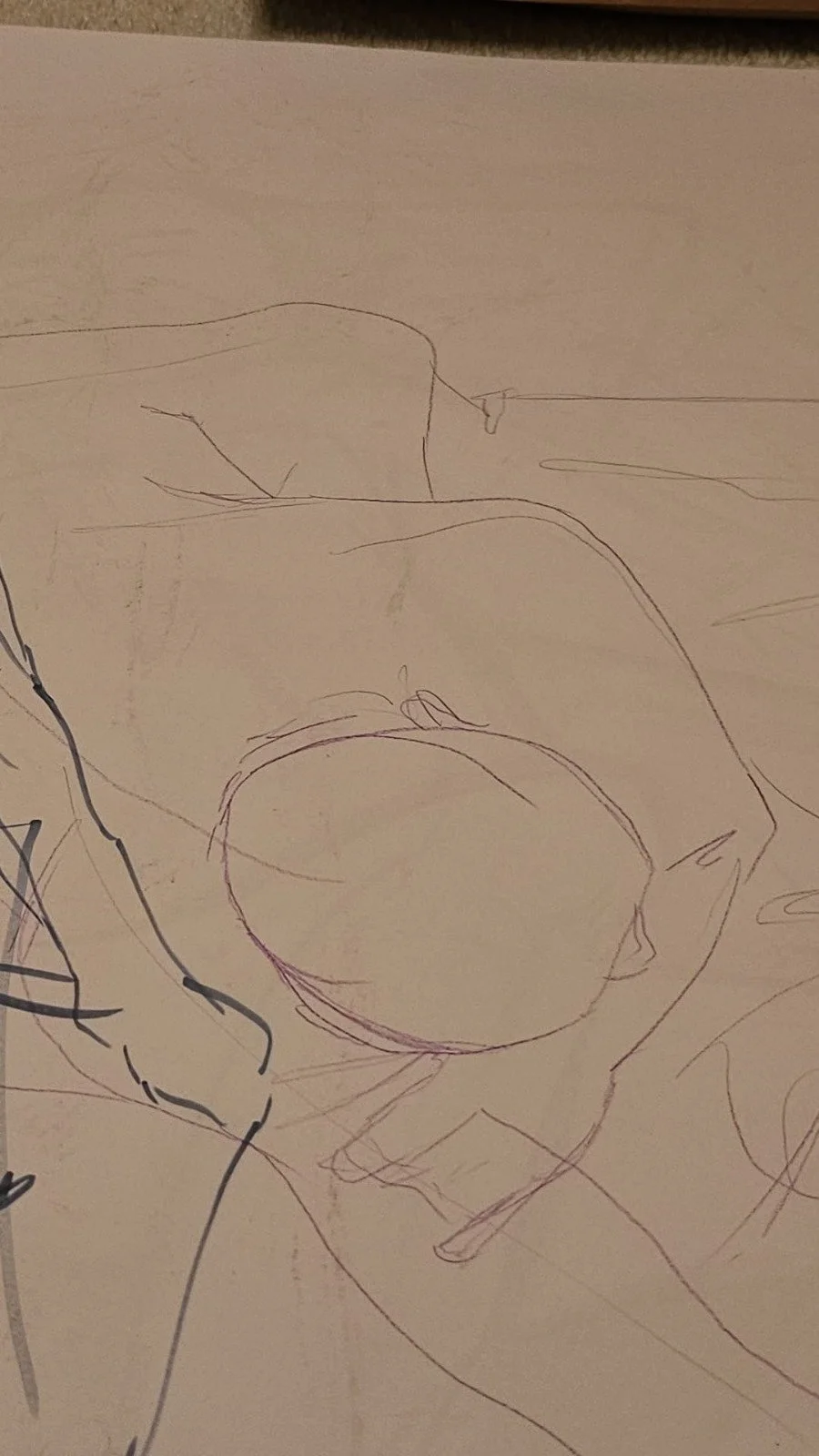
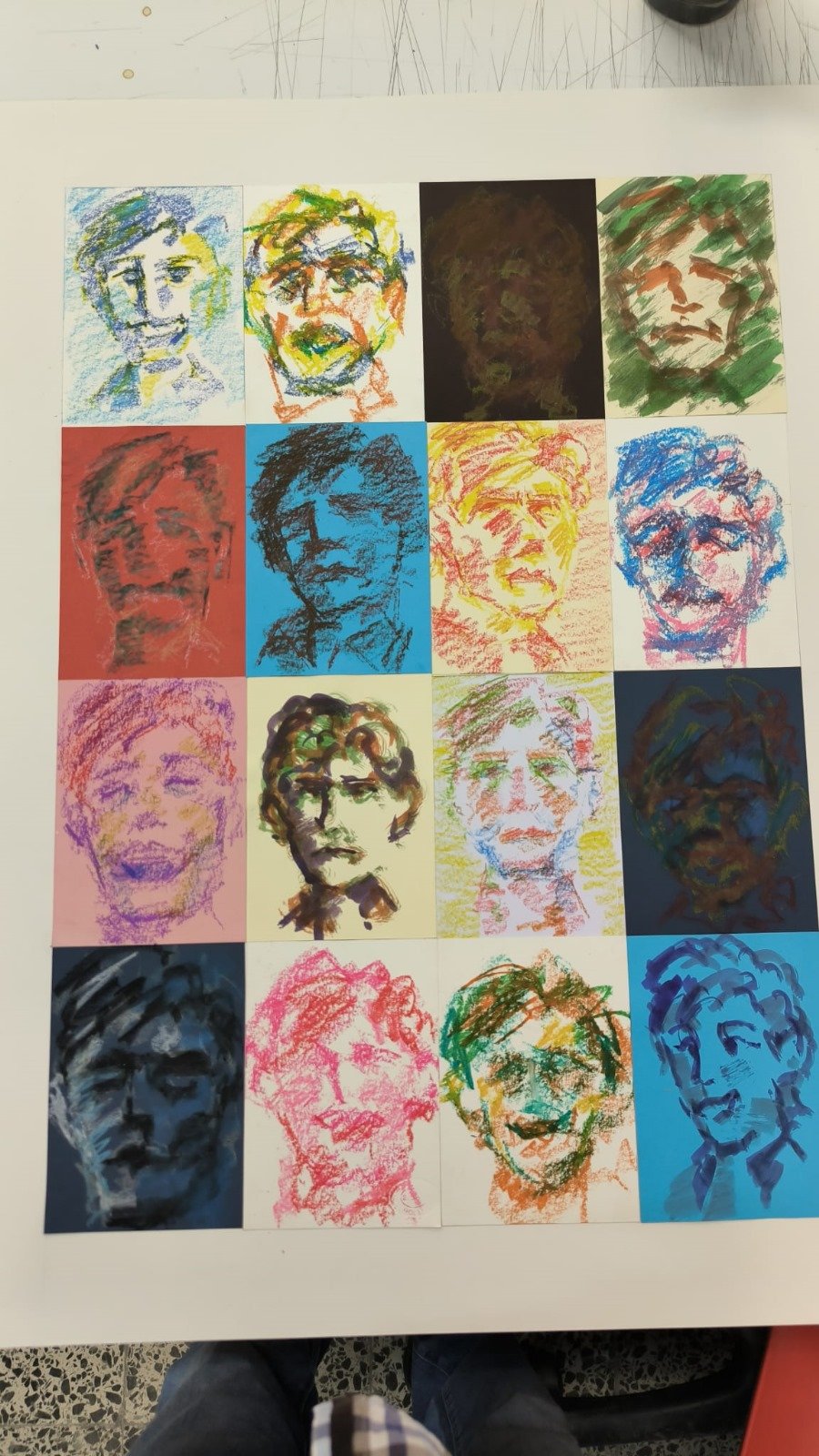
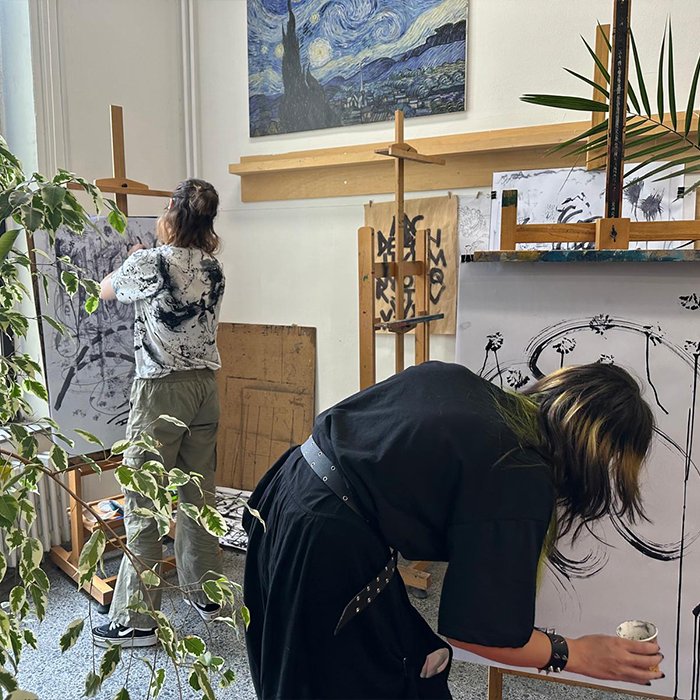
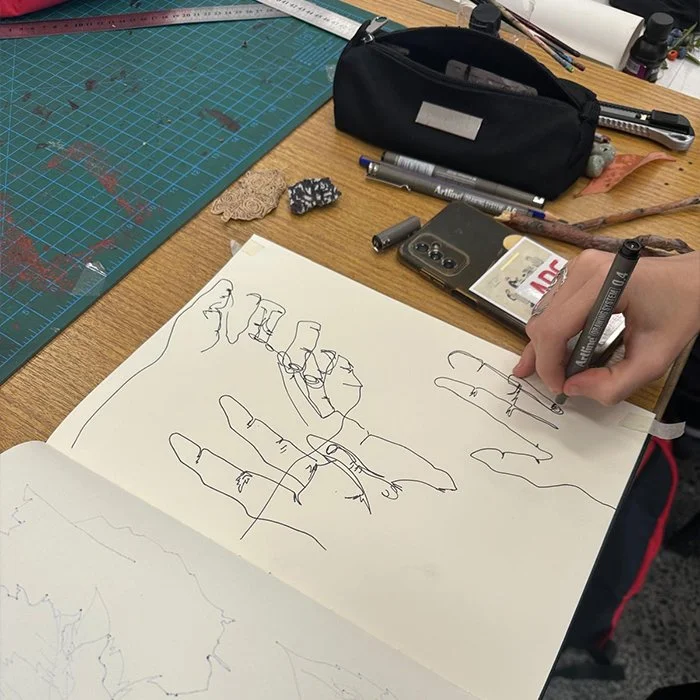
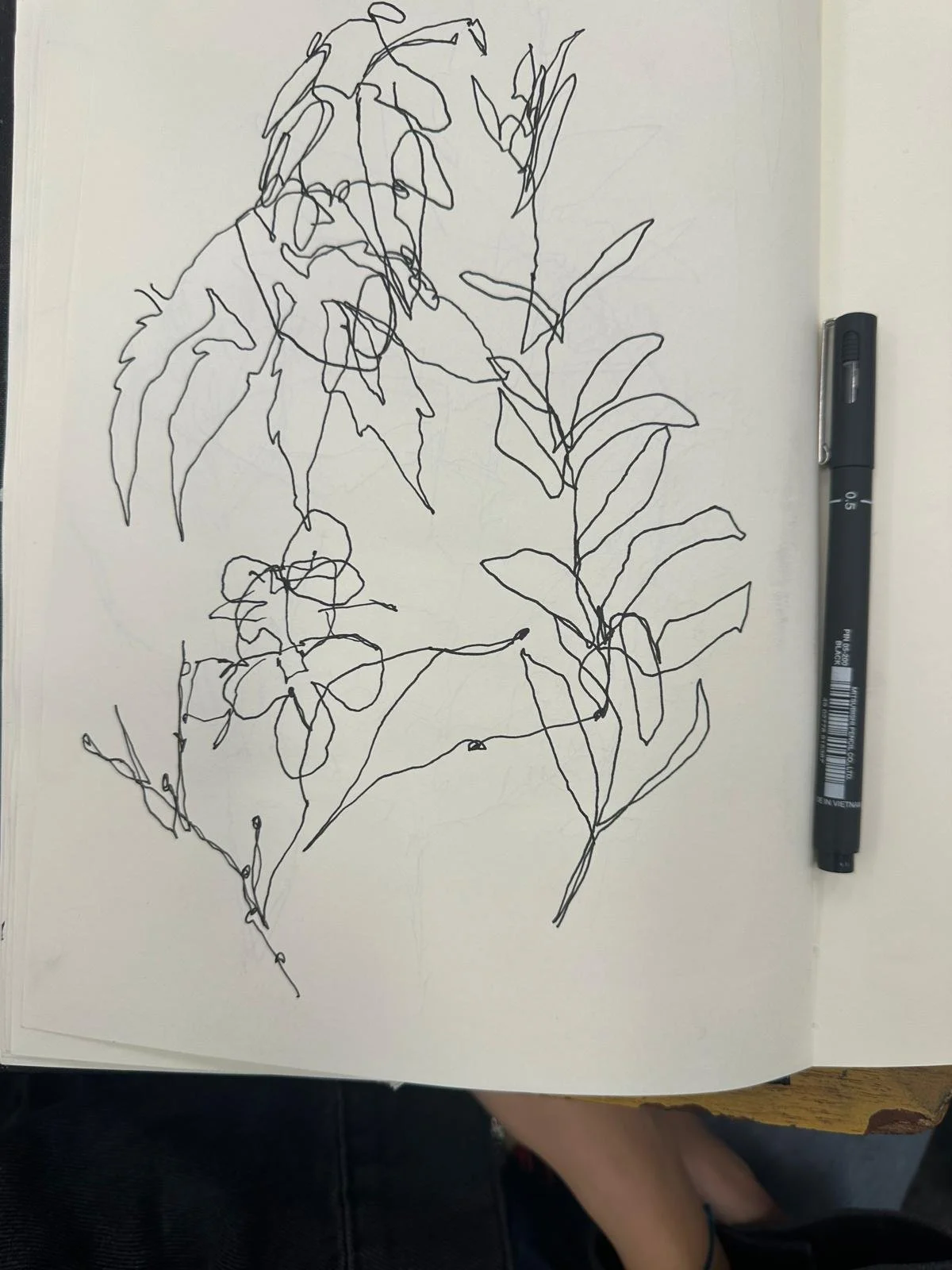
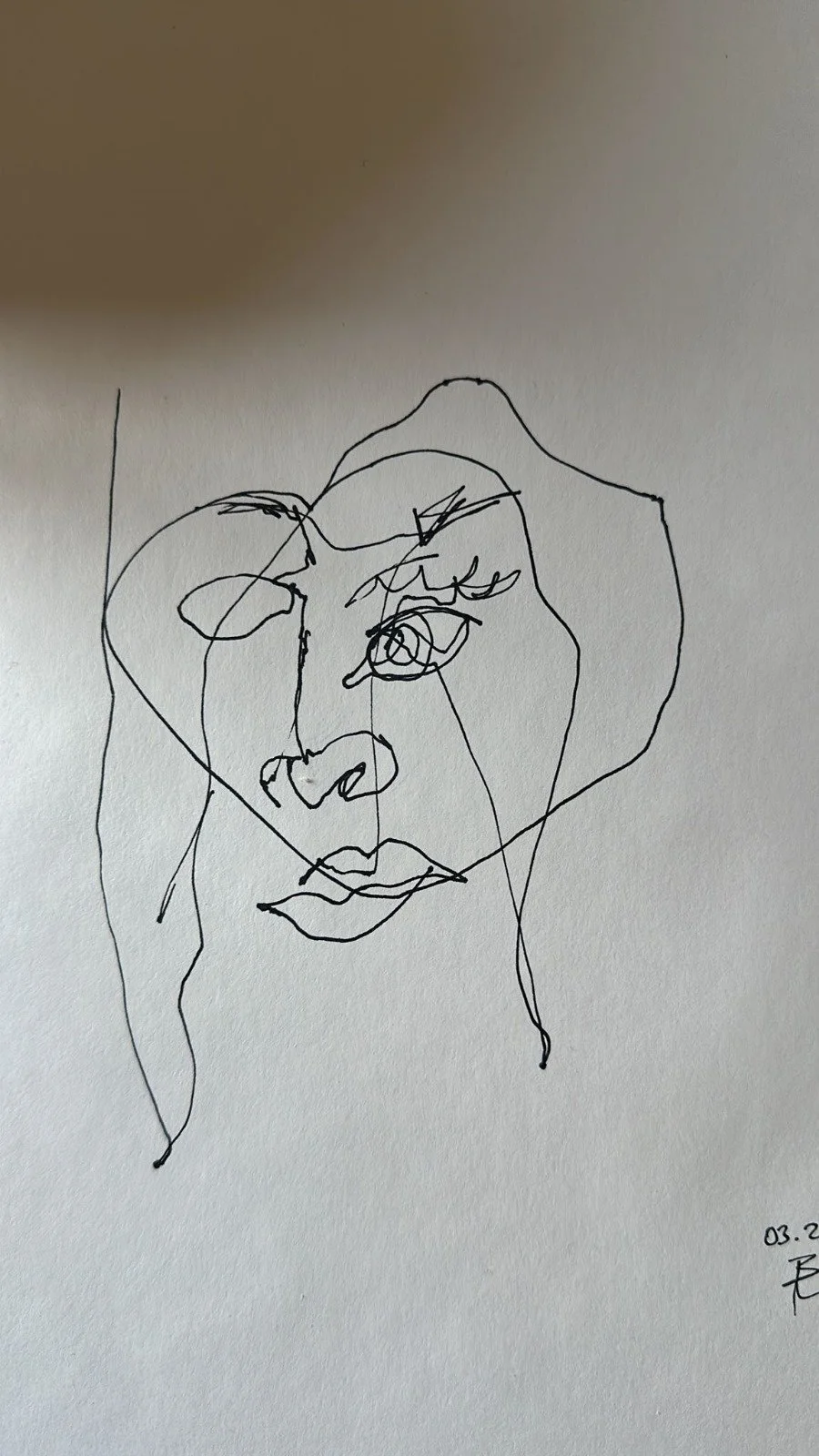
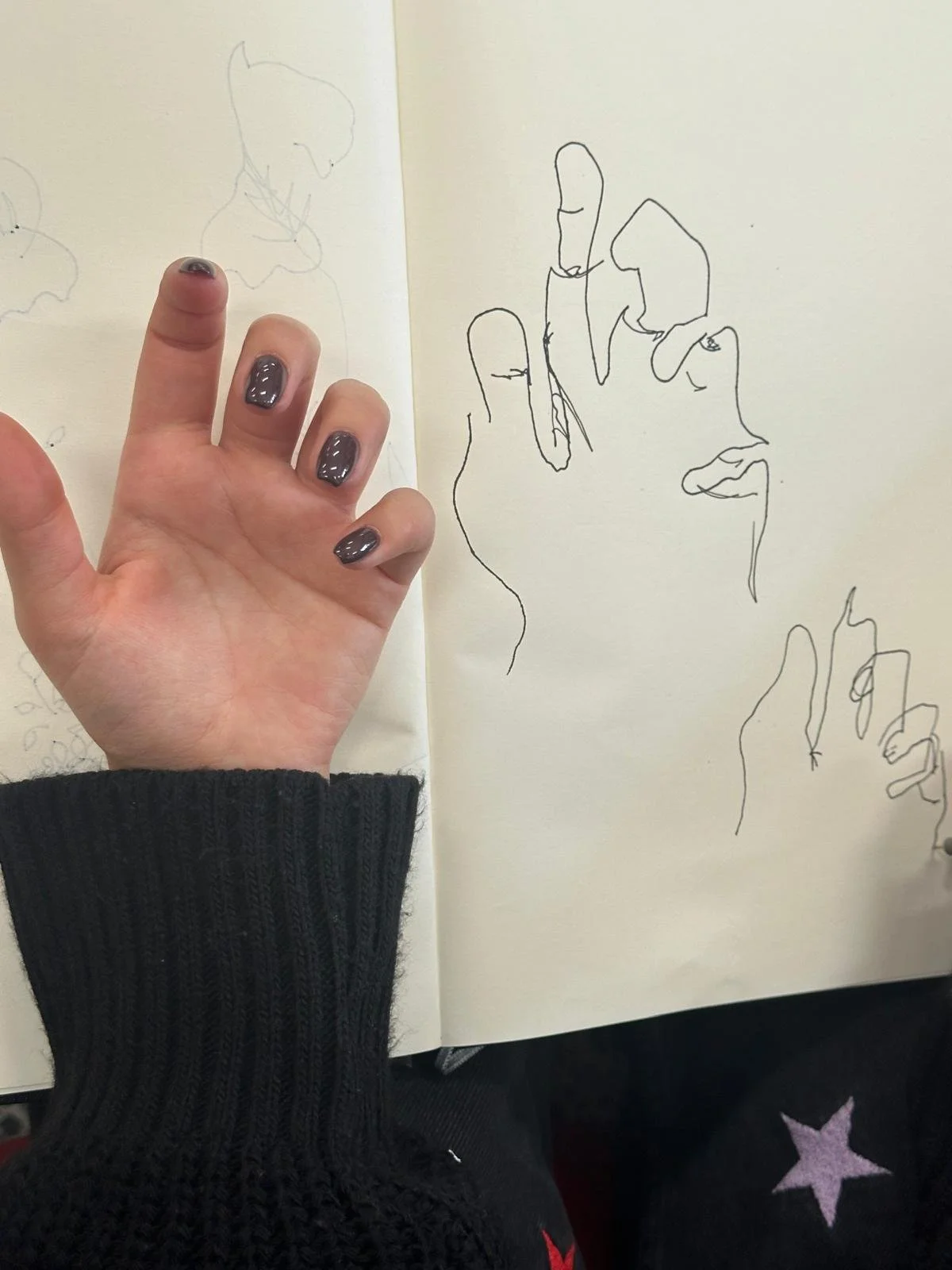
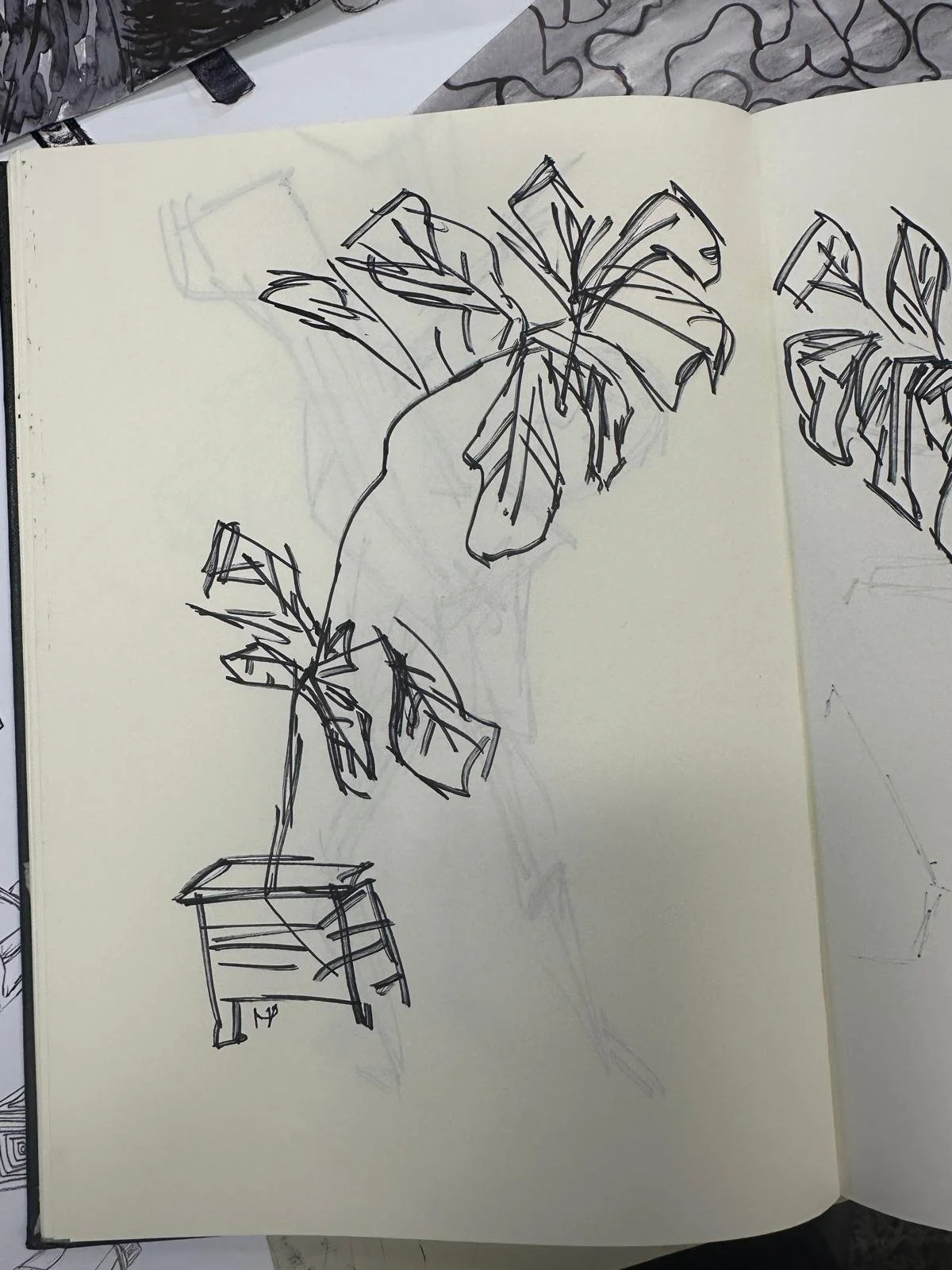
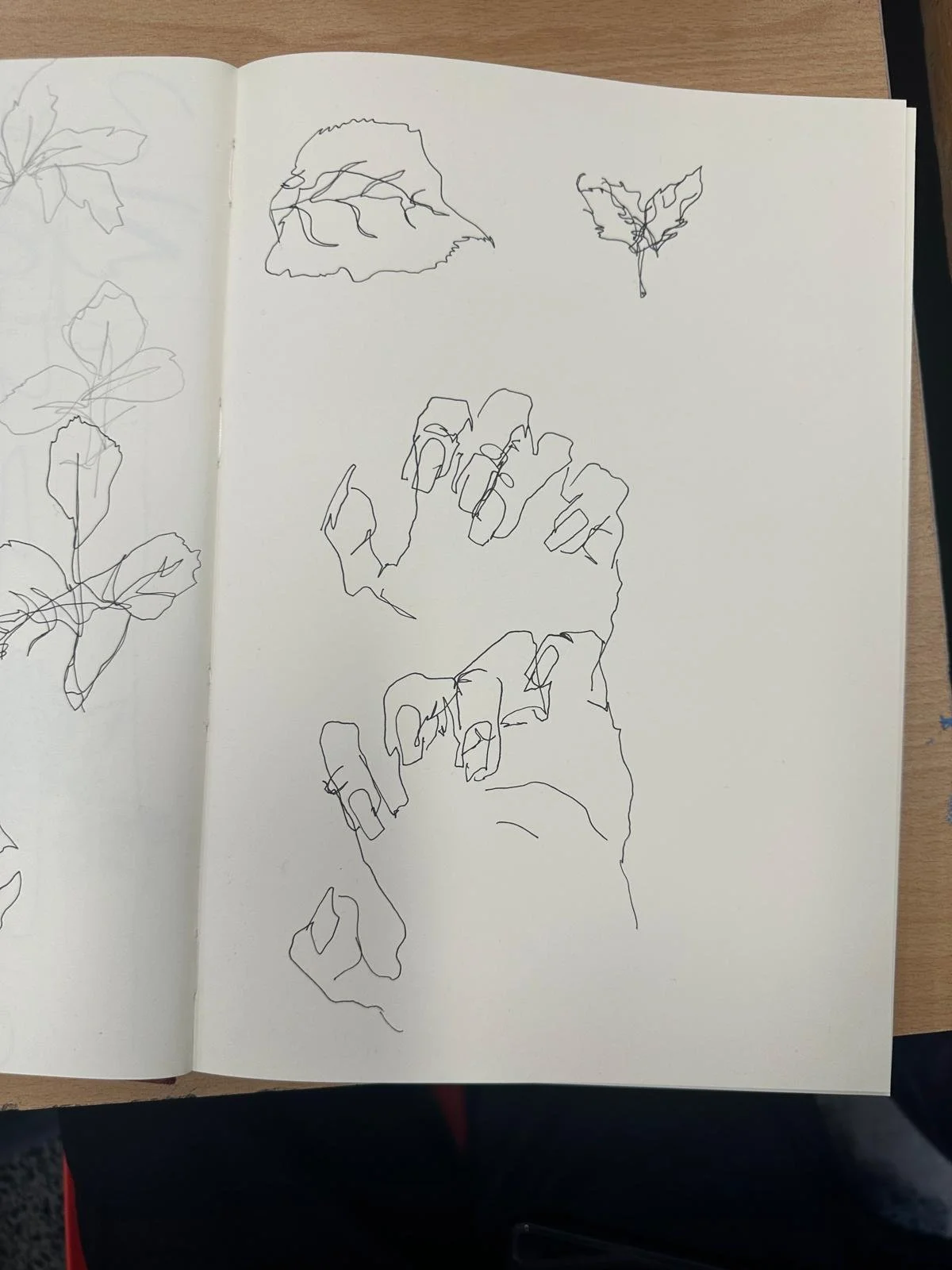
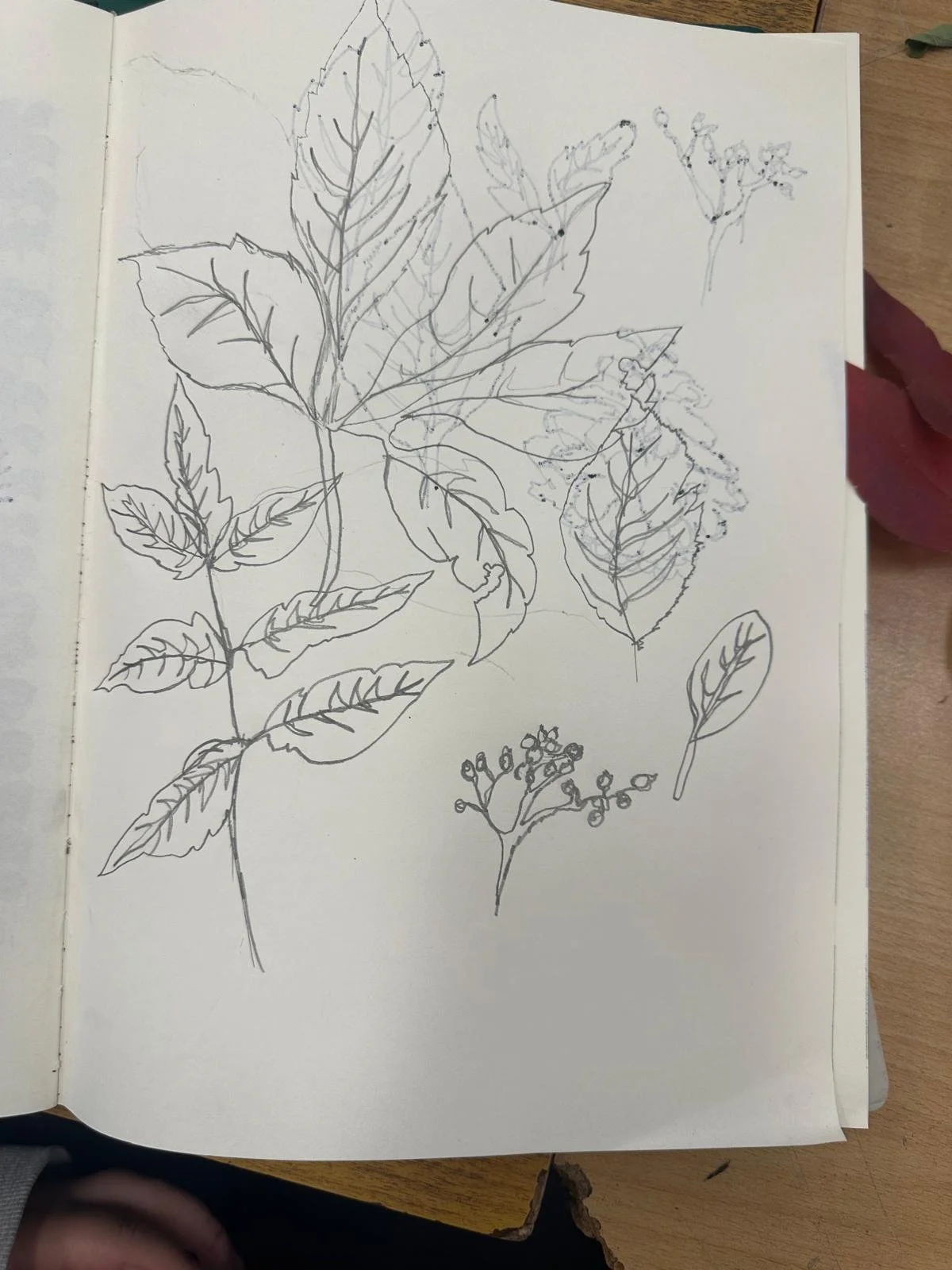
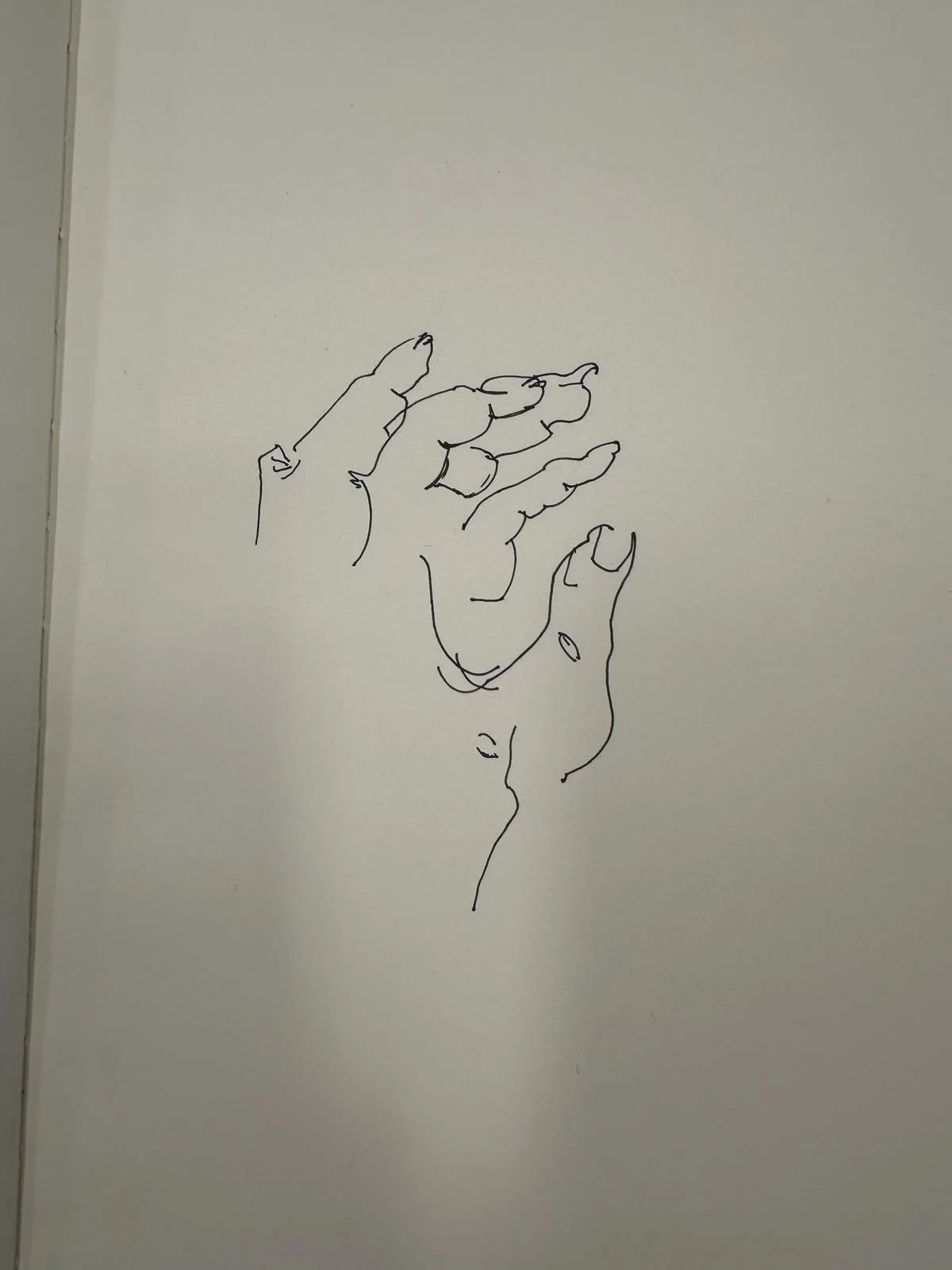
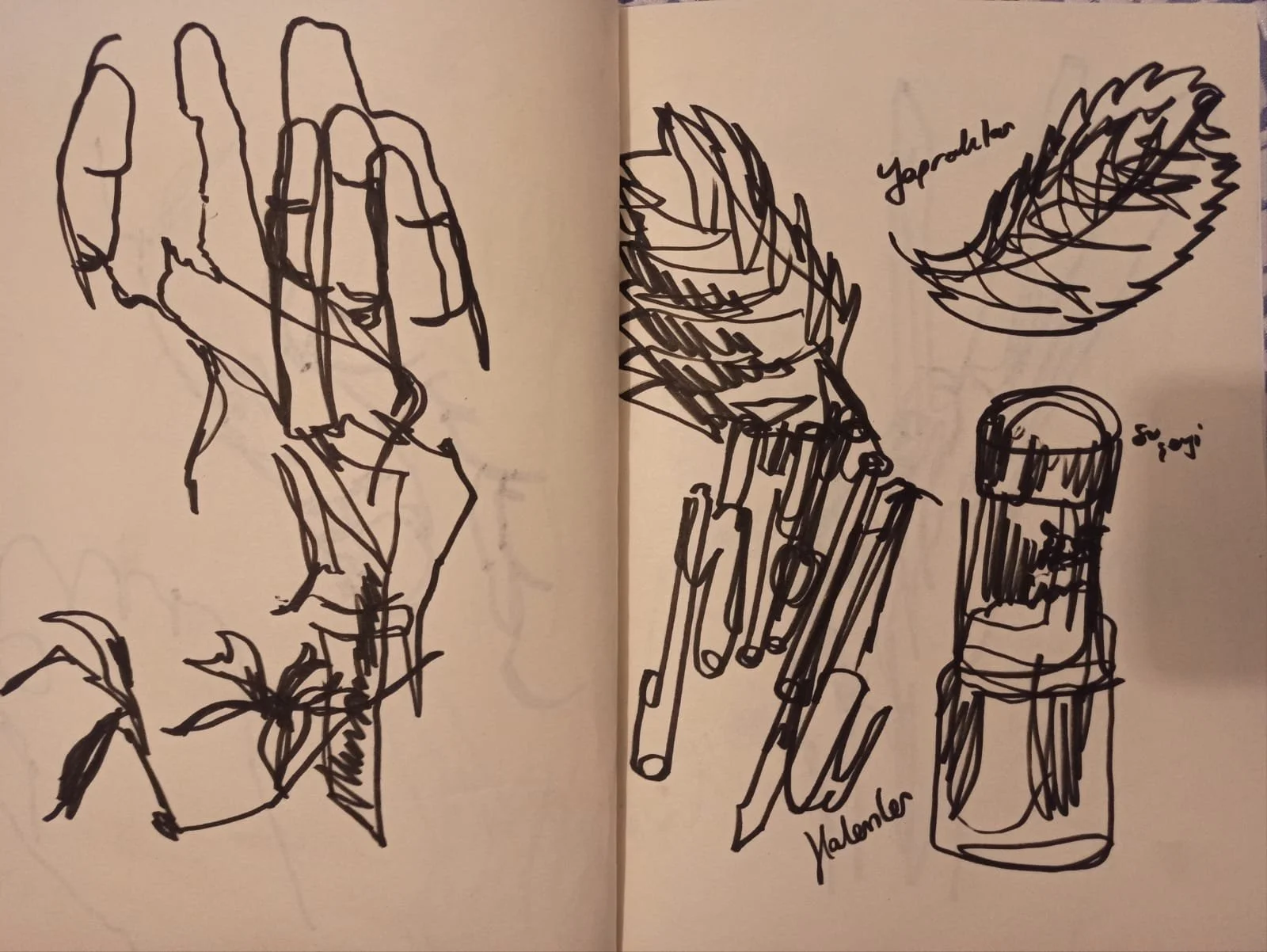
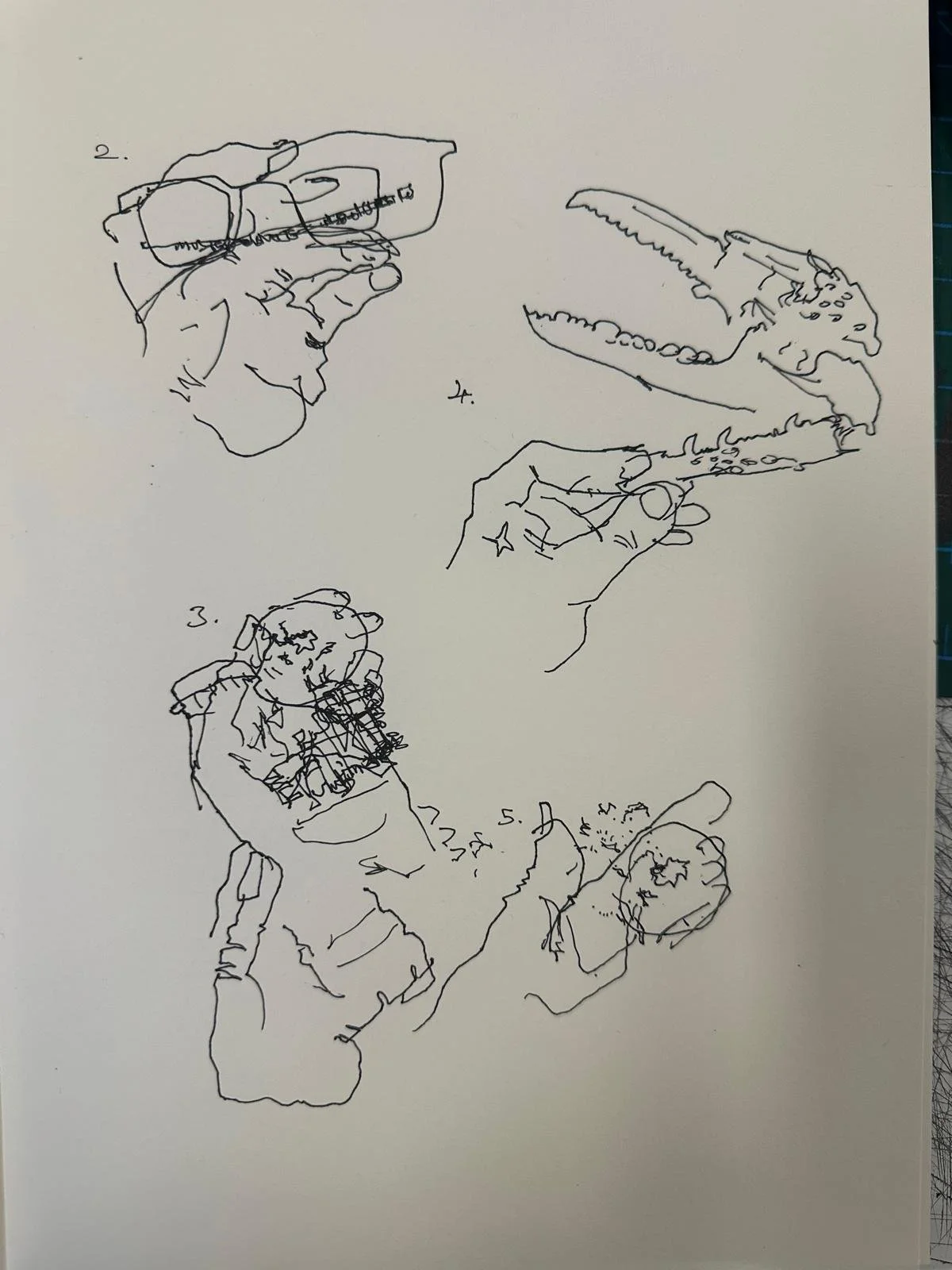
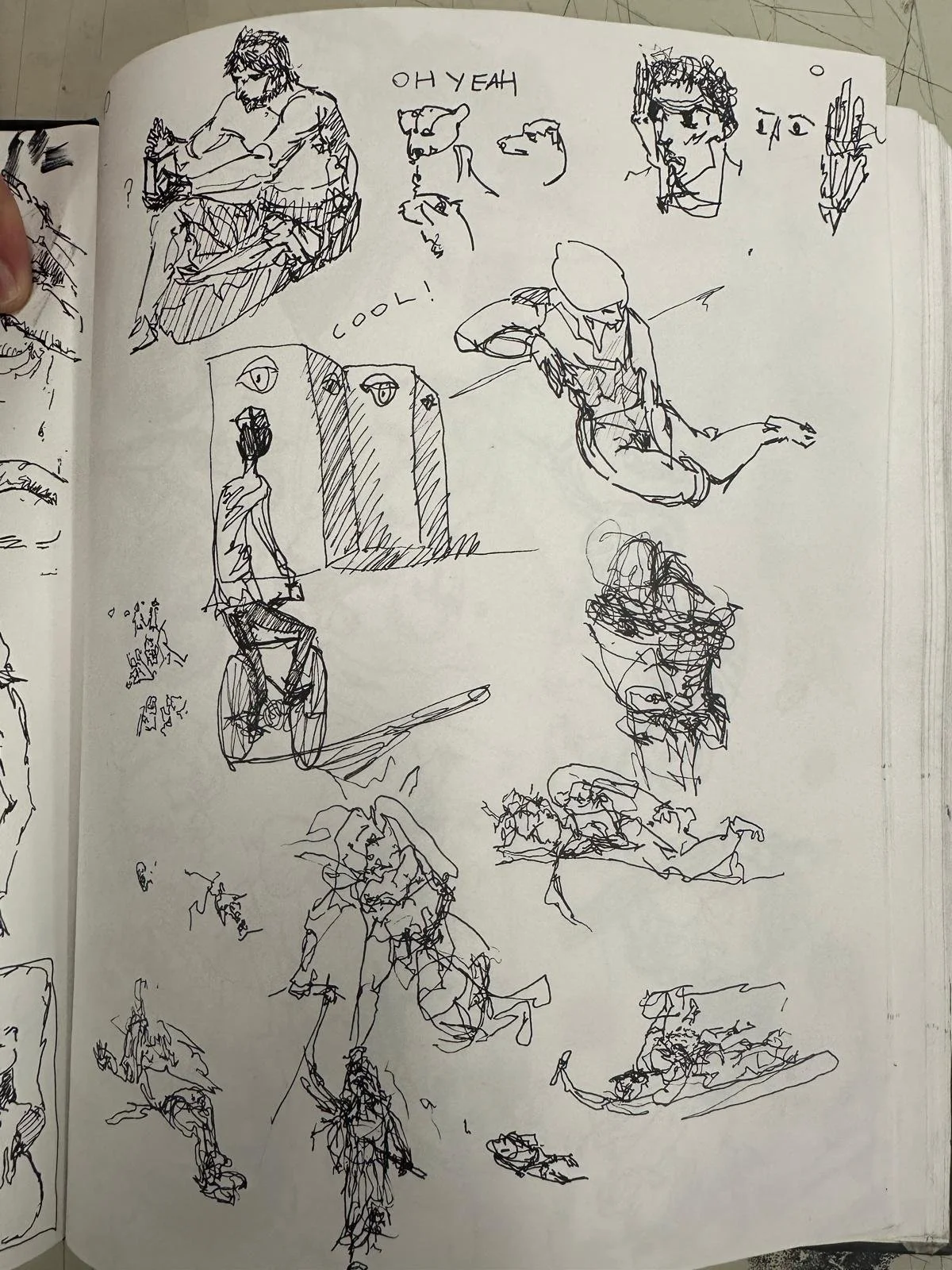
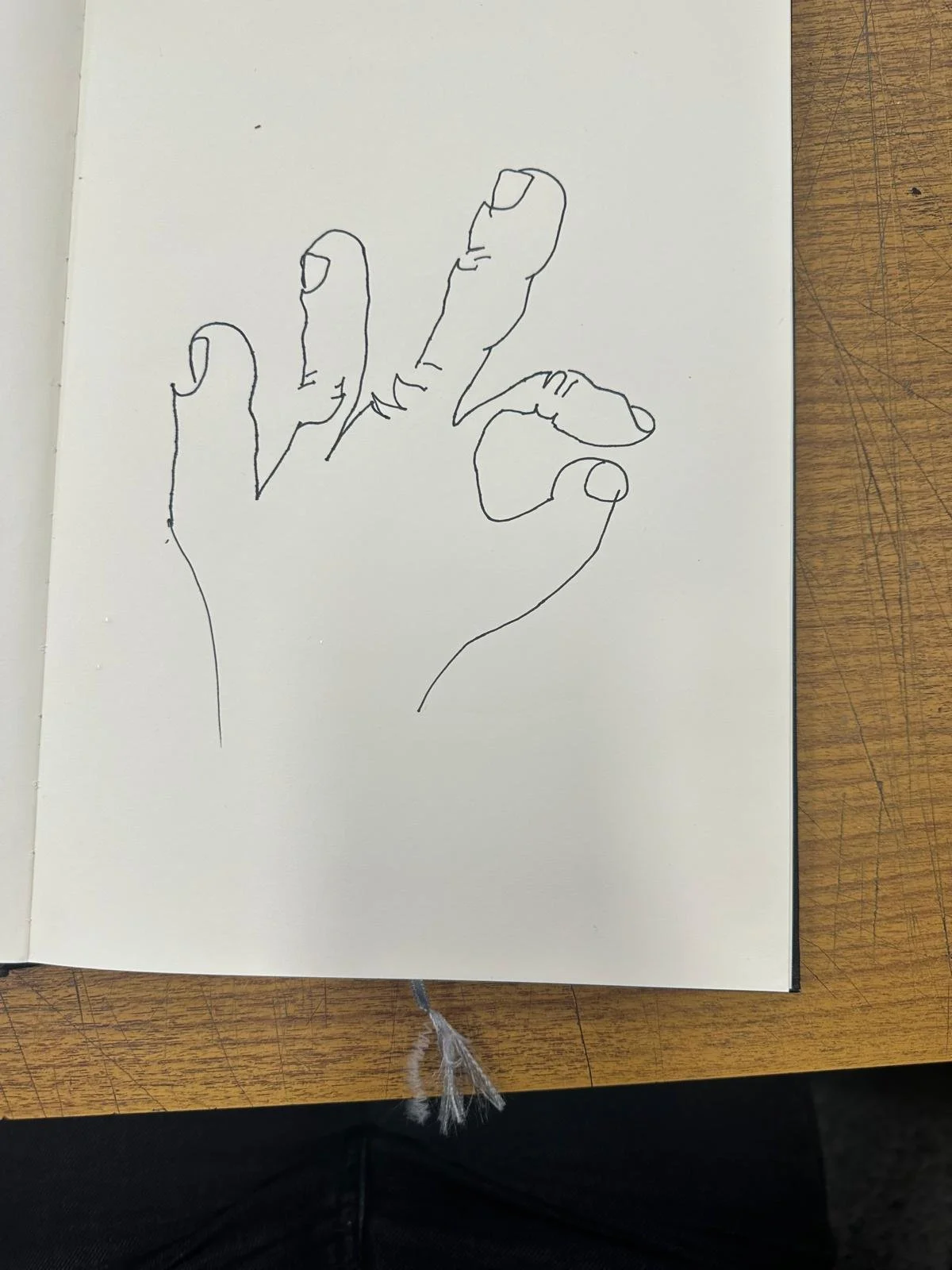
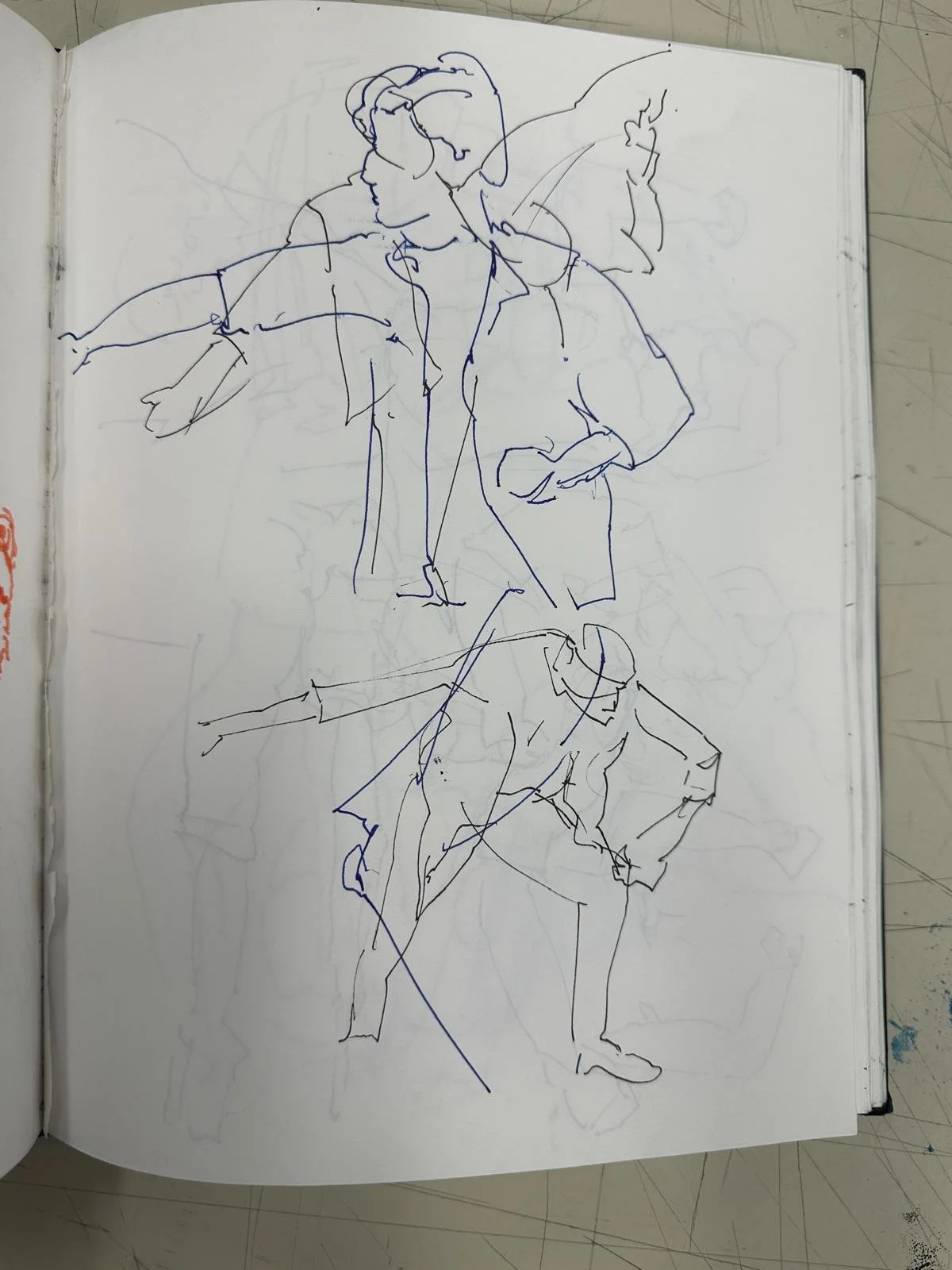
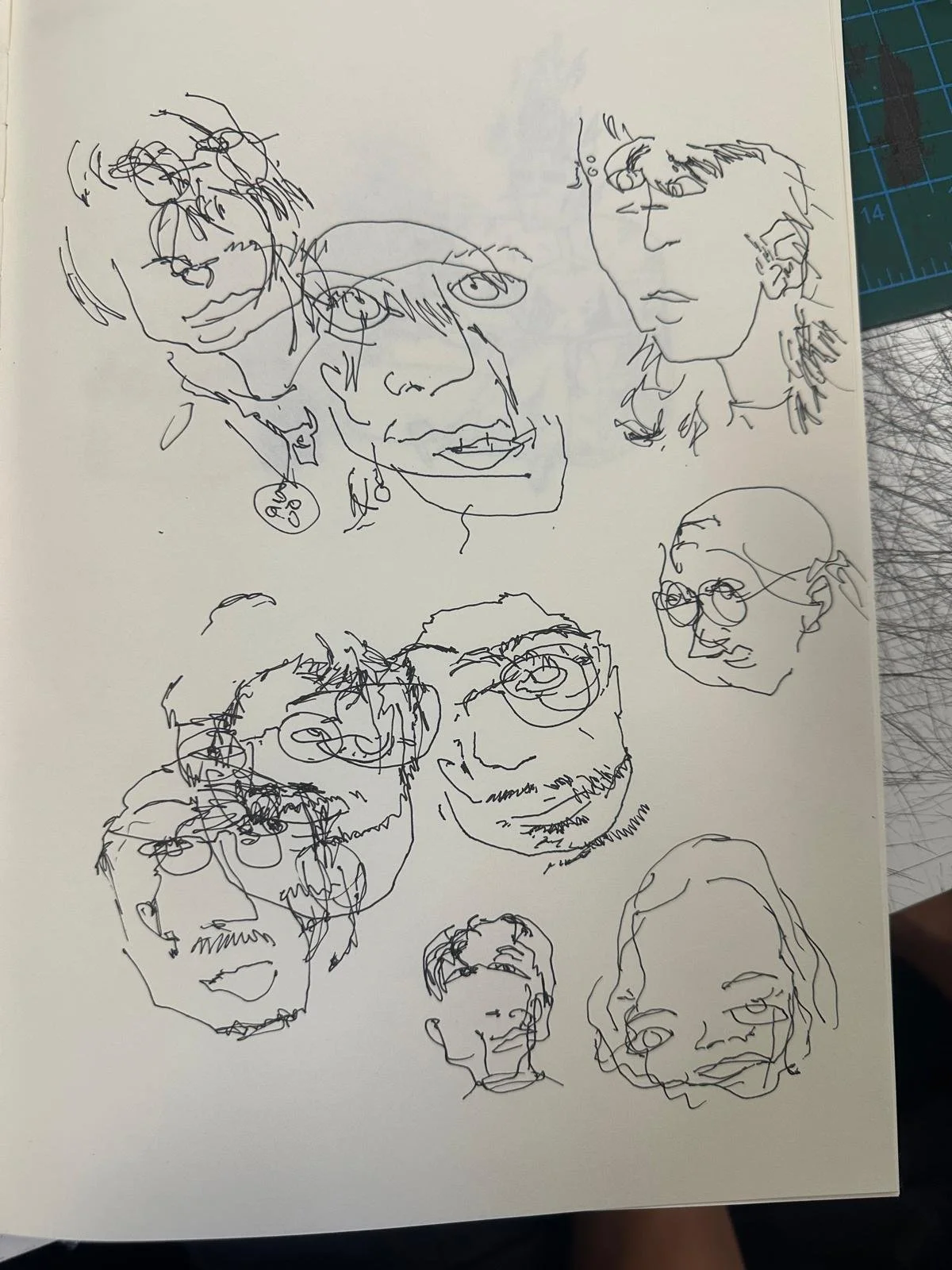
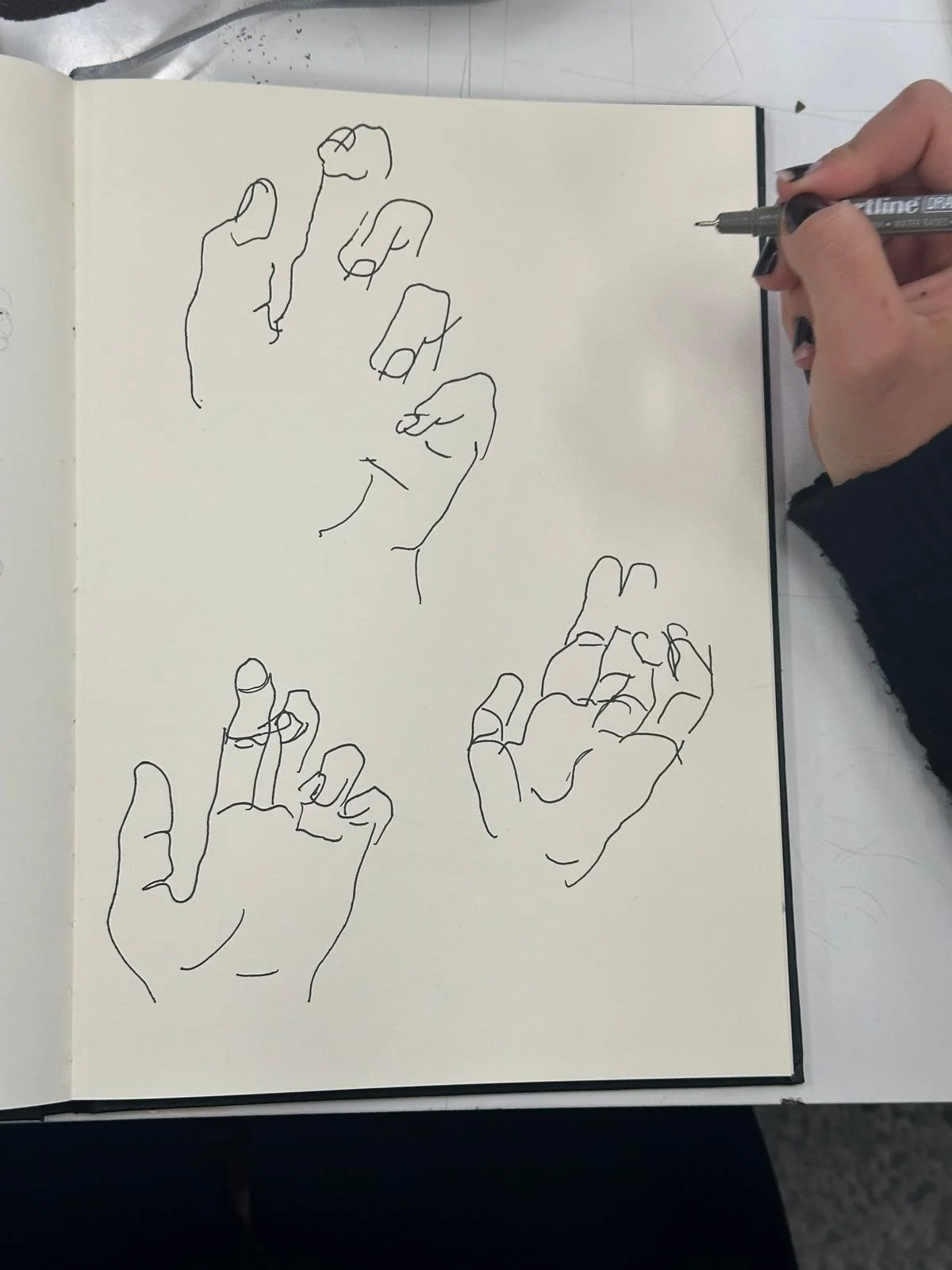
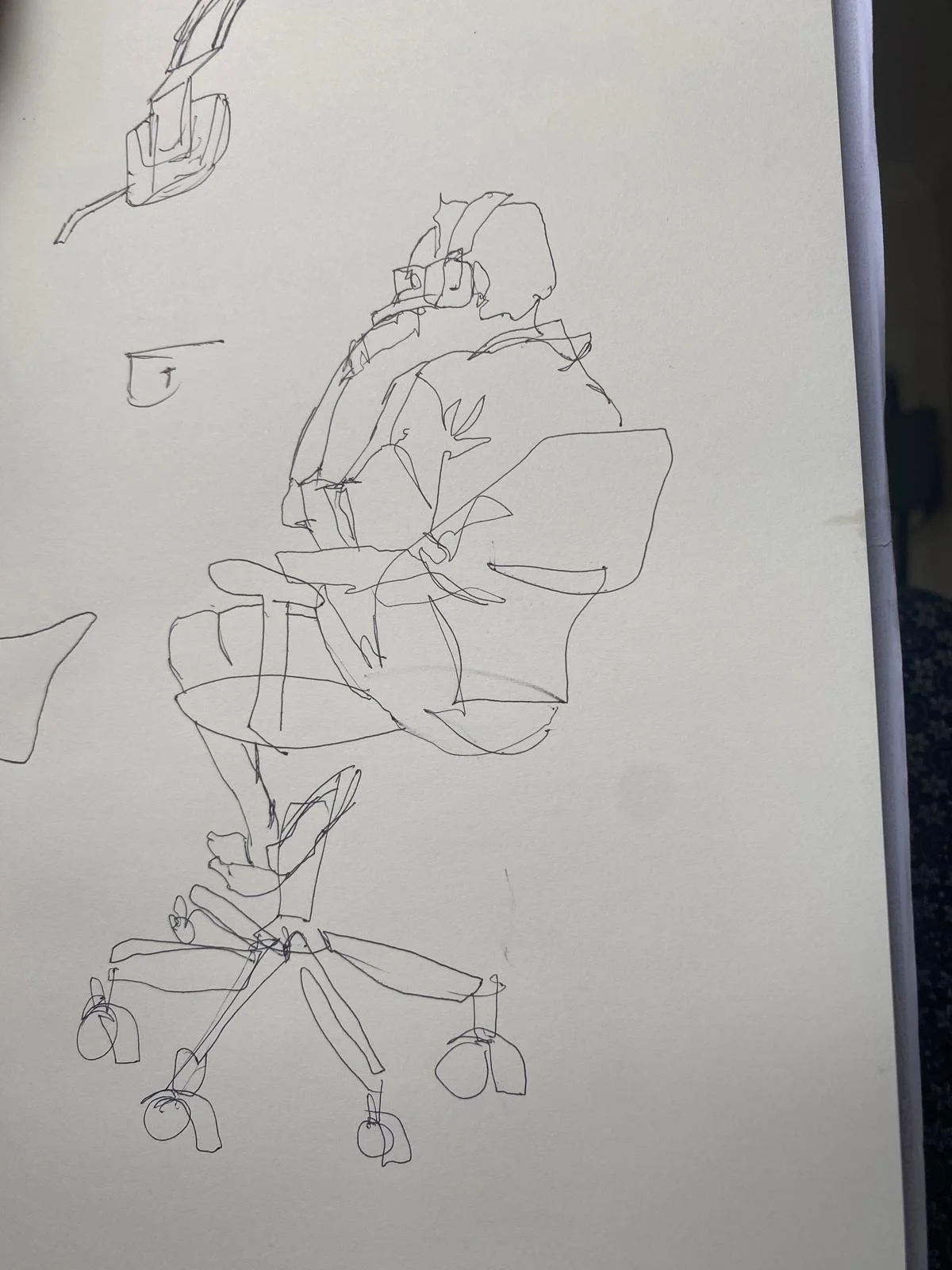
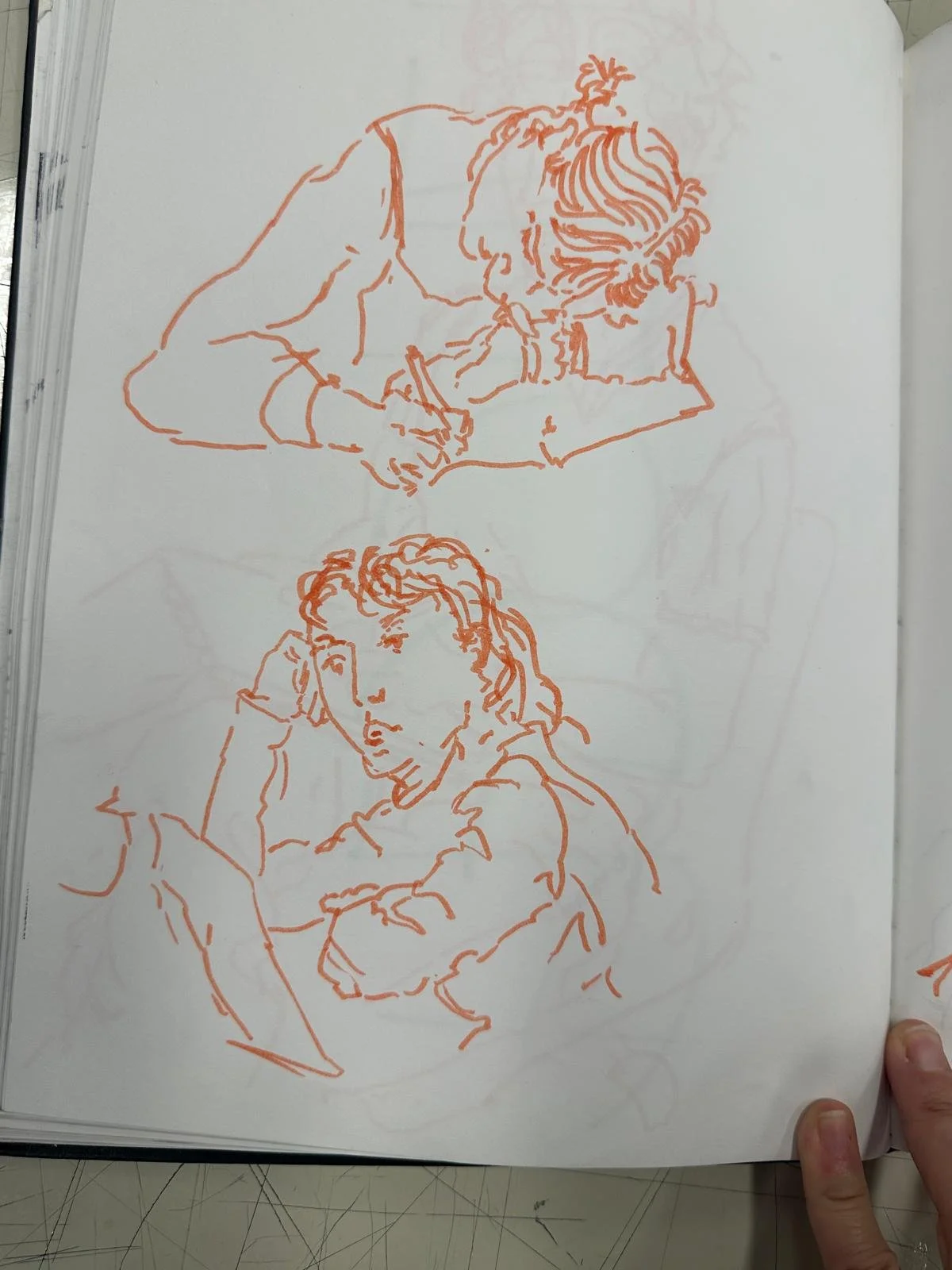
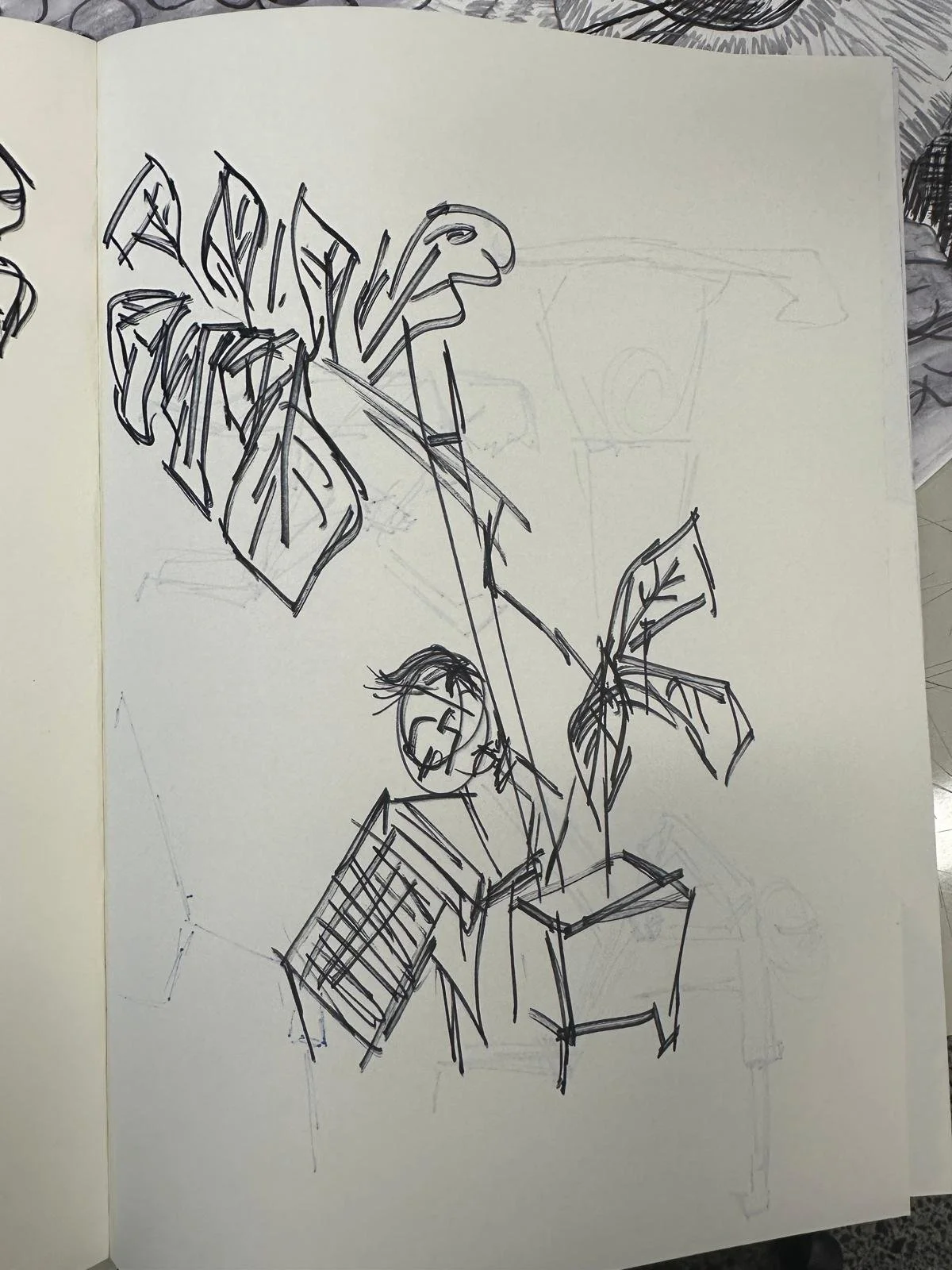
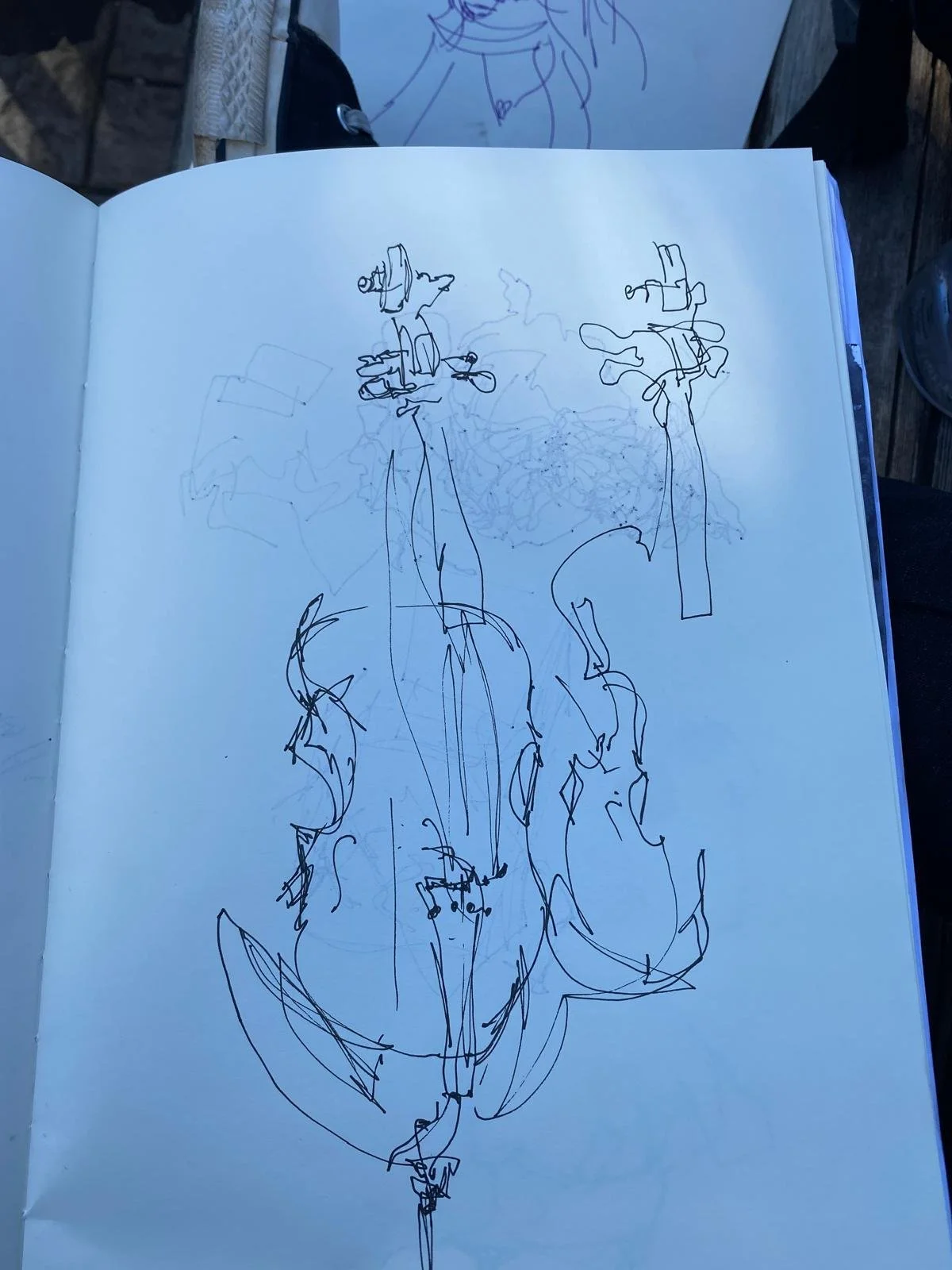
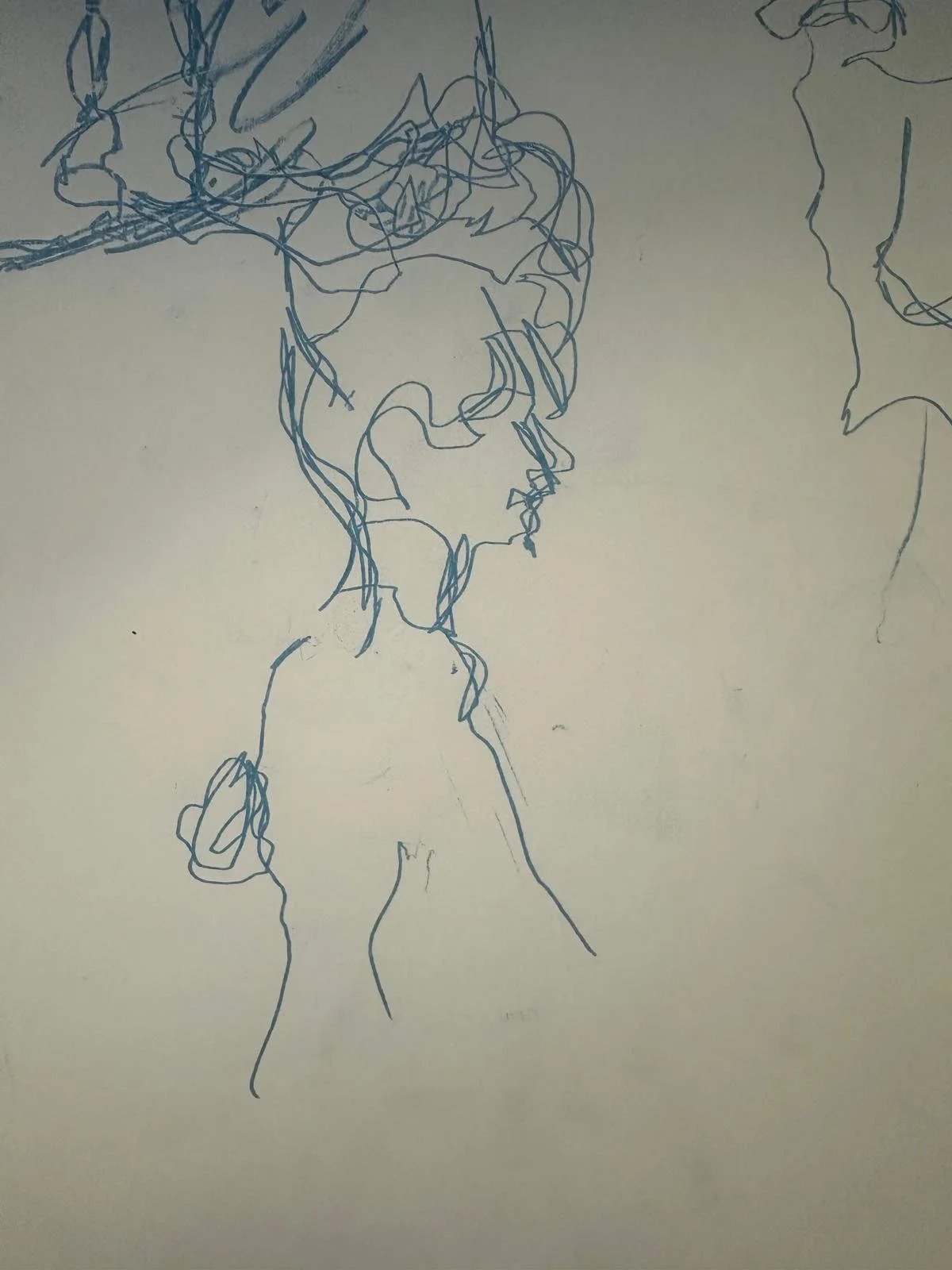
Students begin by examining the relationship between seeing and drawing. In blind contour exercises, they observe the subject continuously while drawing without looking at the page, allowing the movement of the eye to guide the movement of the hand.
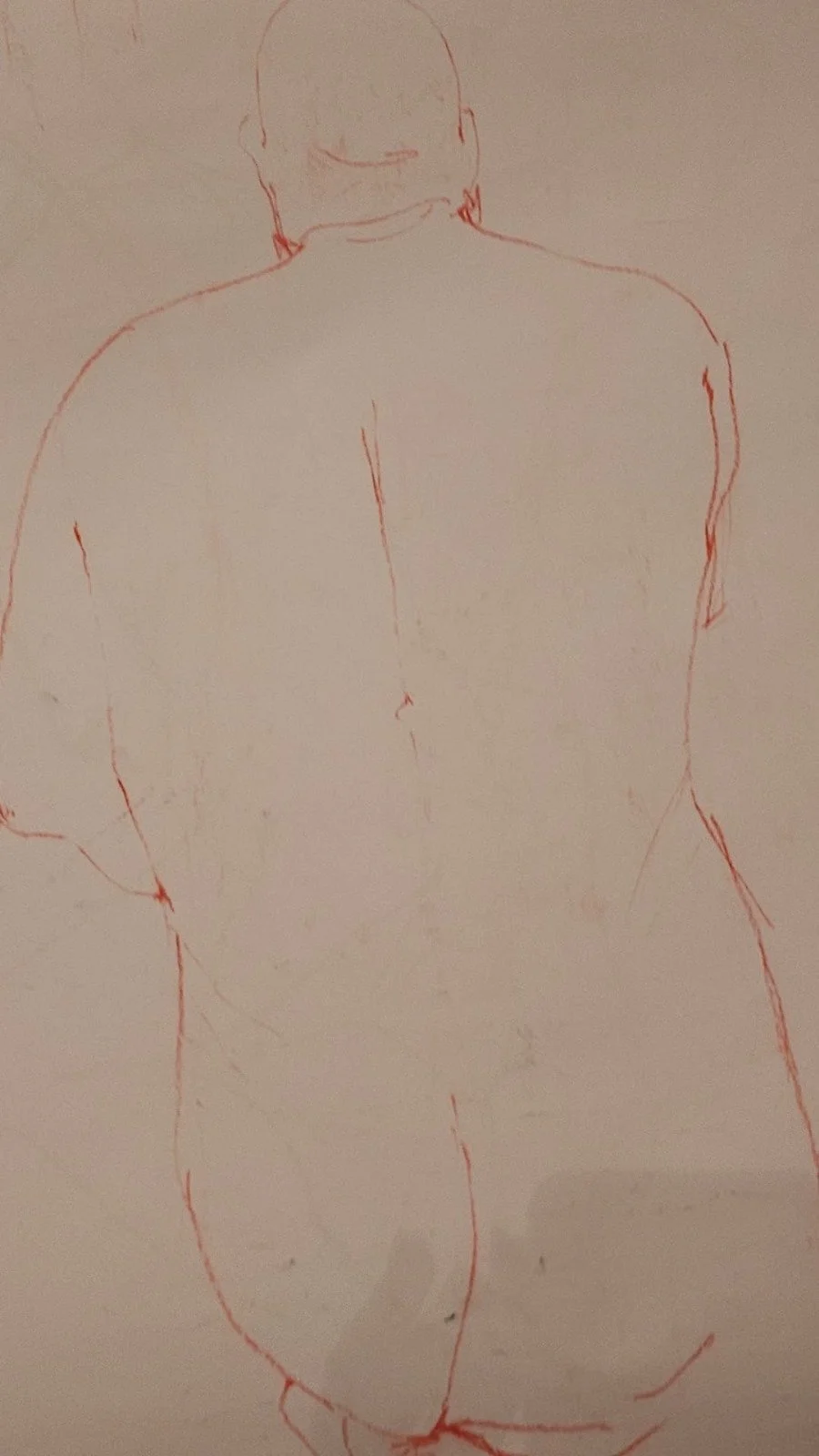
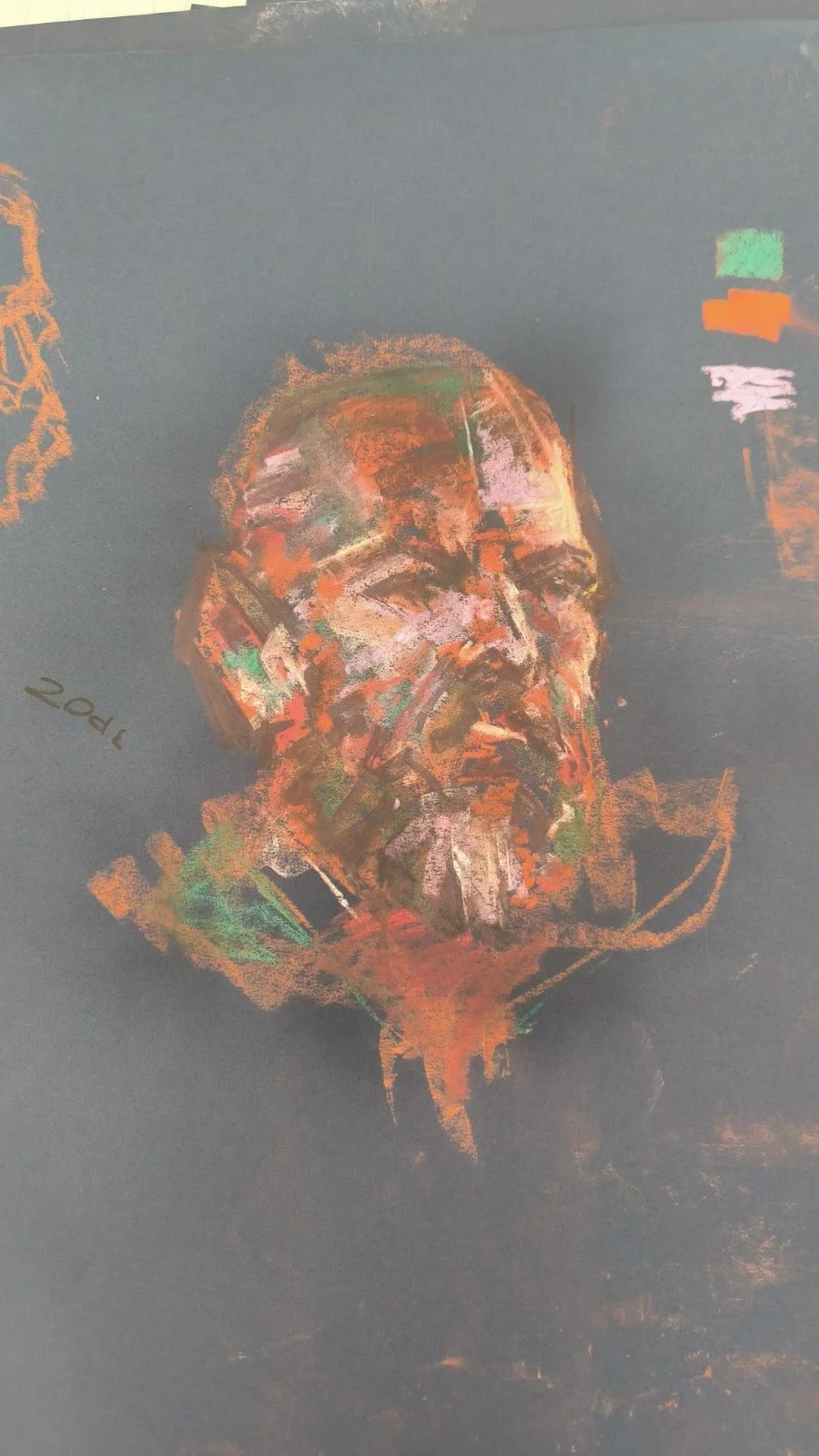
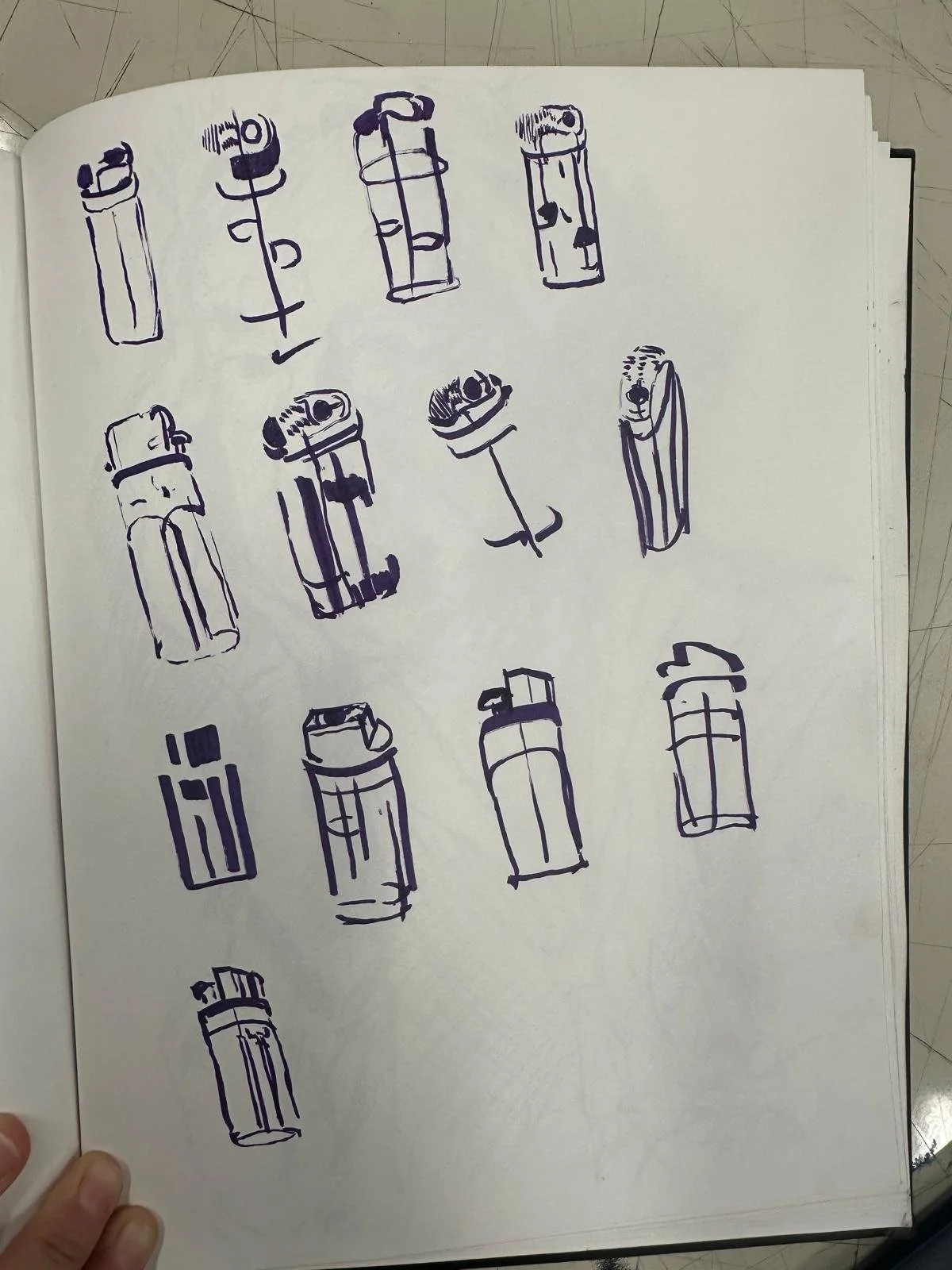
The phase progresses from leaves and everyday objects to hands, portraits, and self-portraits. Blind, pure, and modified contour methods are combined with continuous-line and upside-down drawing exercises. Rather than pursuing immediate visual accuracy, students learn to slow down, notice unfamiliar details, and challenge habitual ways of representing what they think they see.
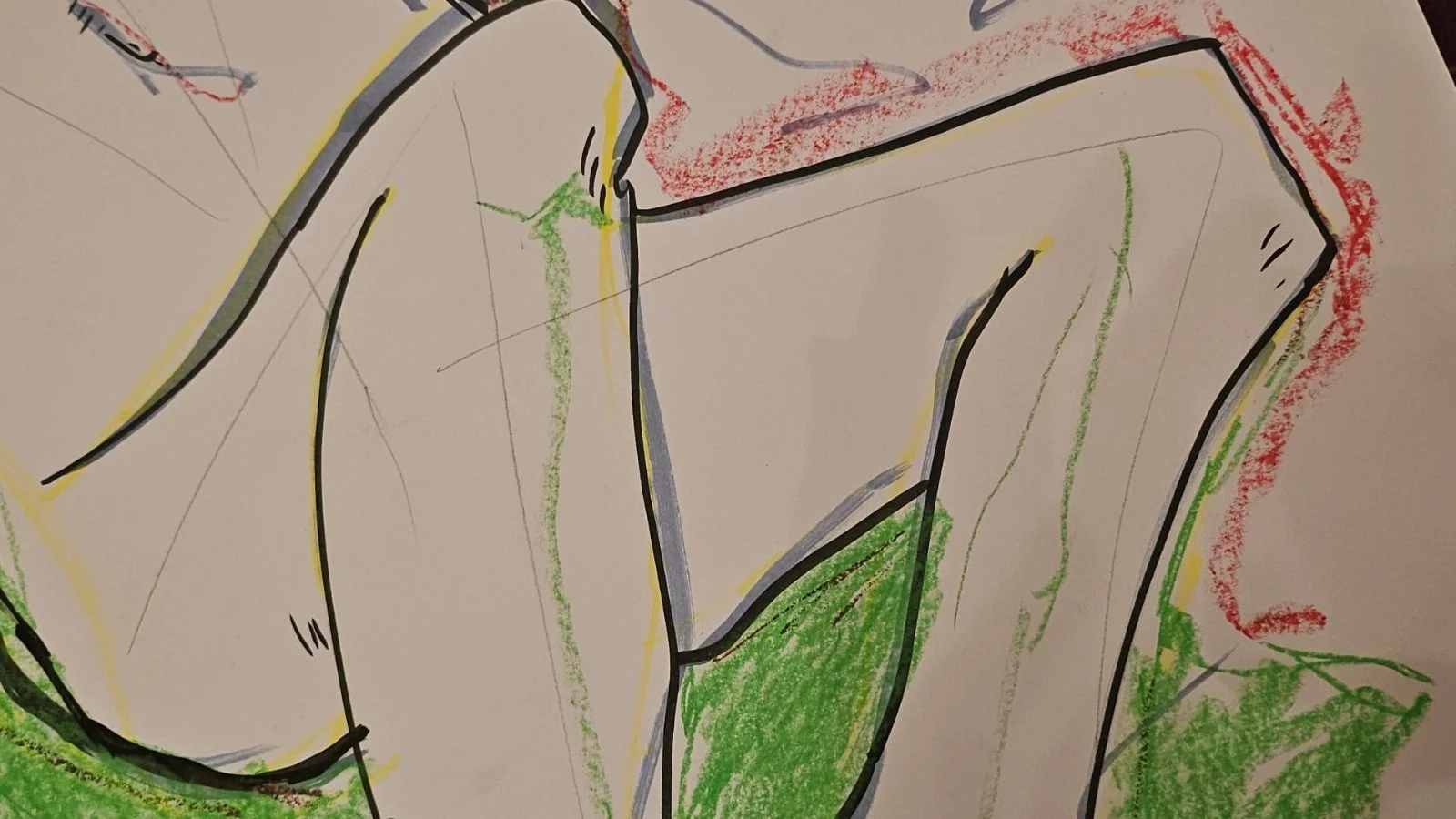
Selected Student Works
Phase 02
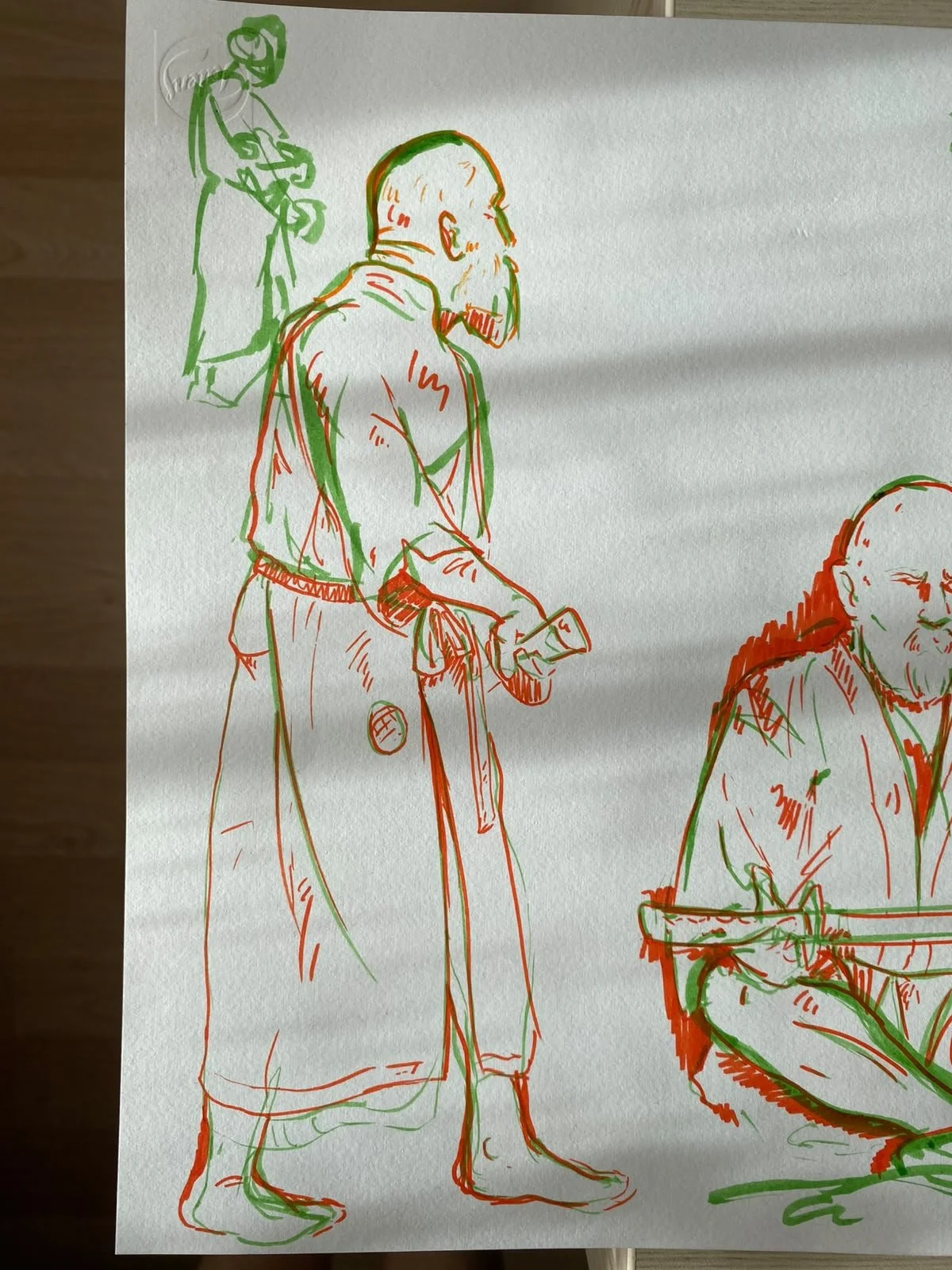
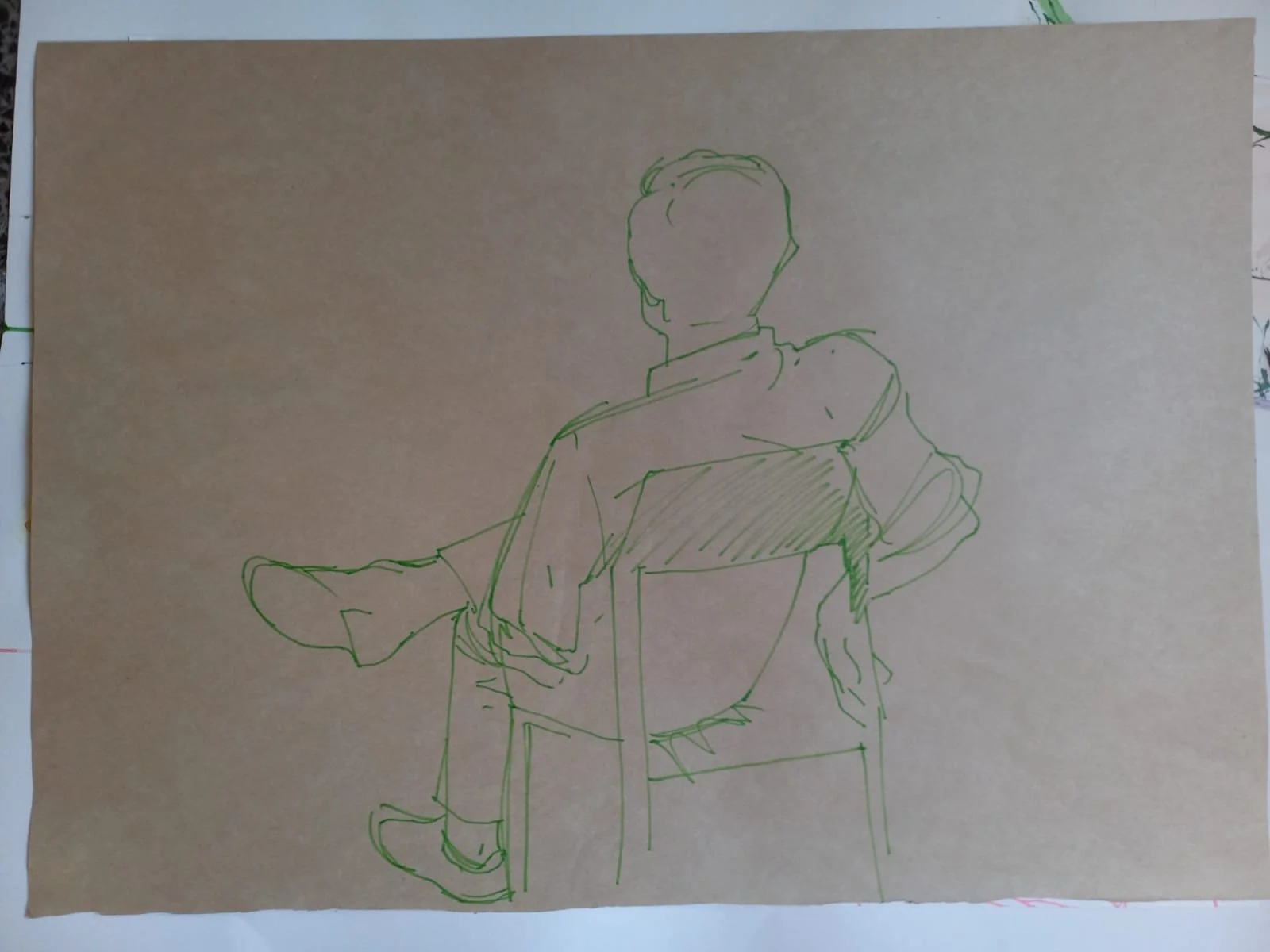
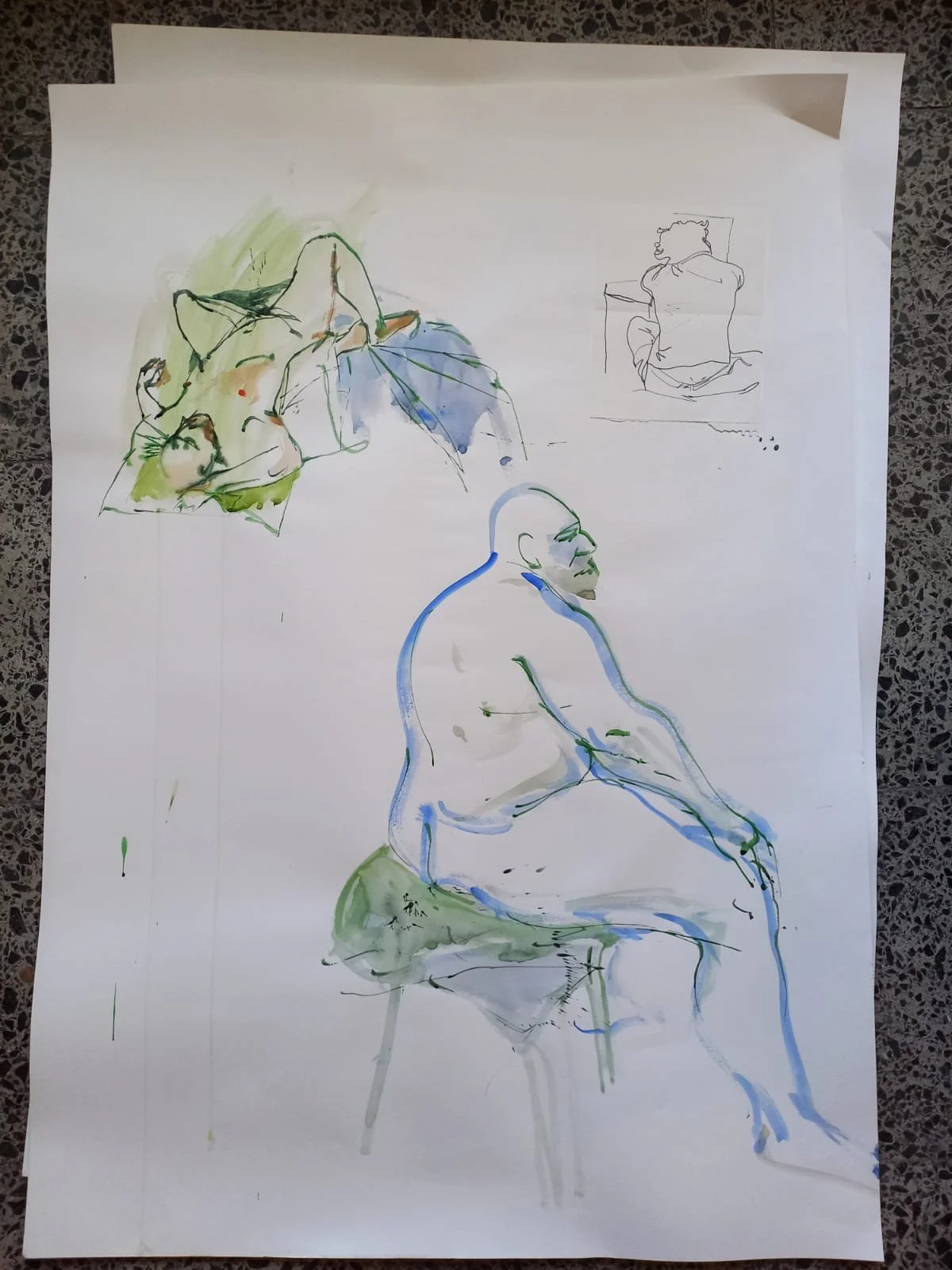
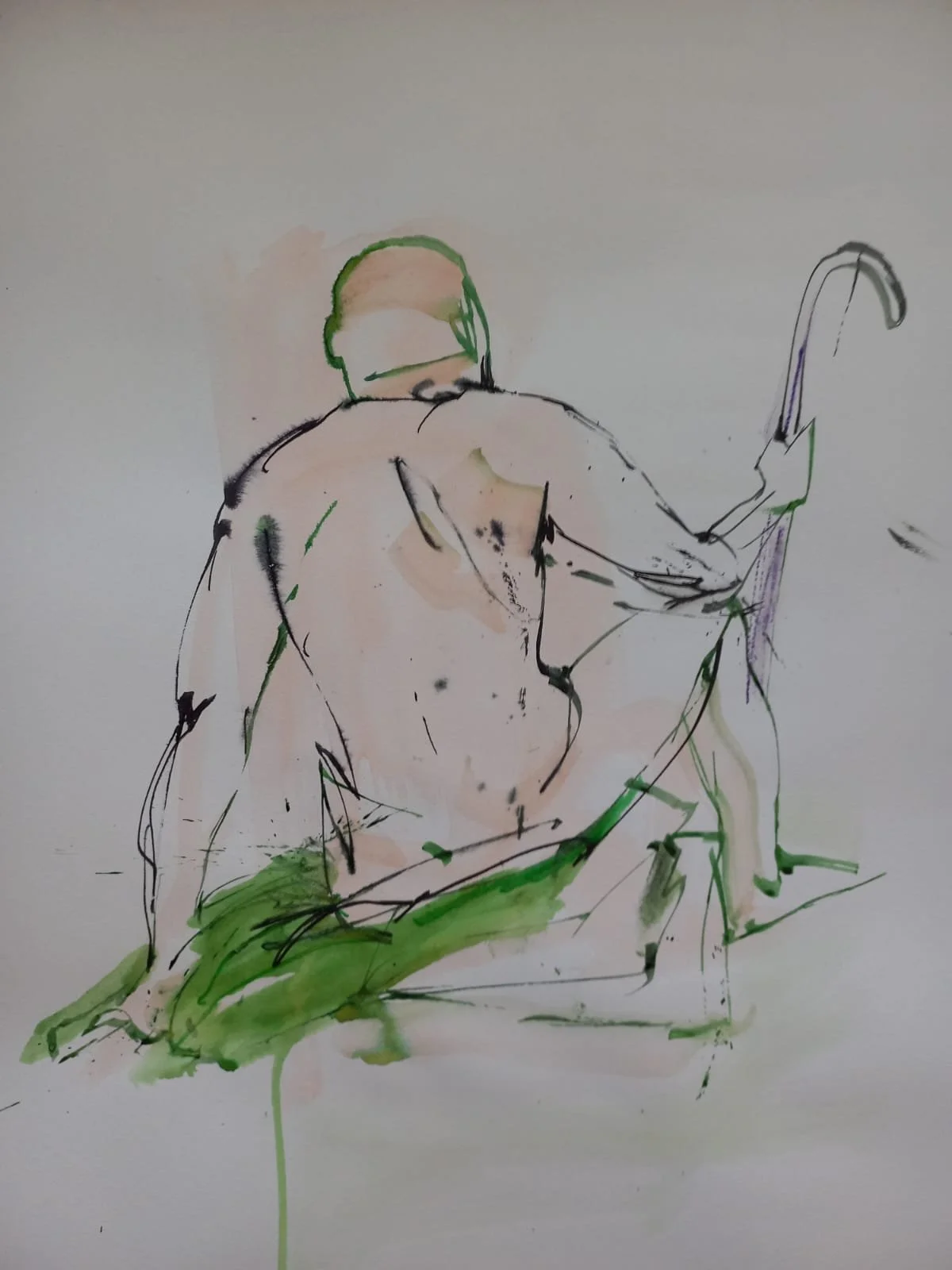
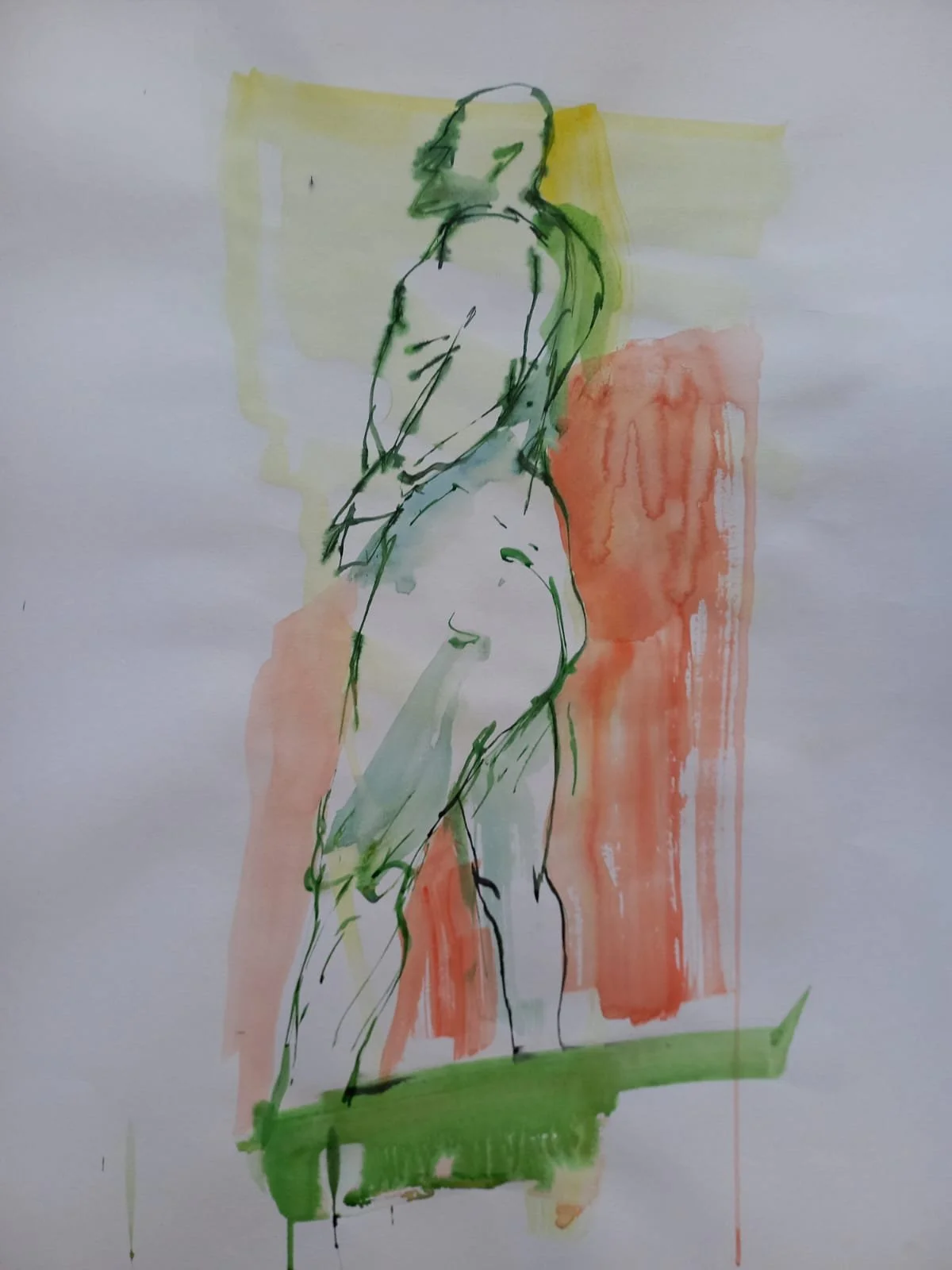
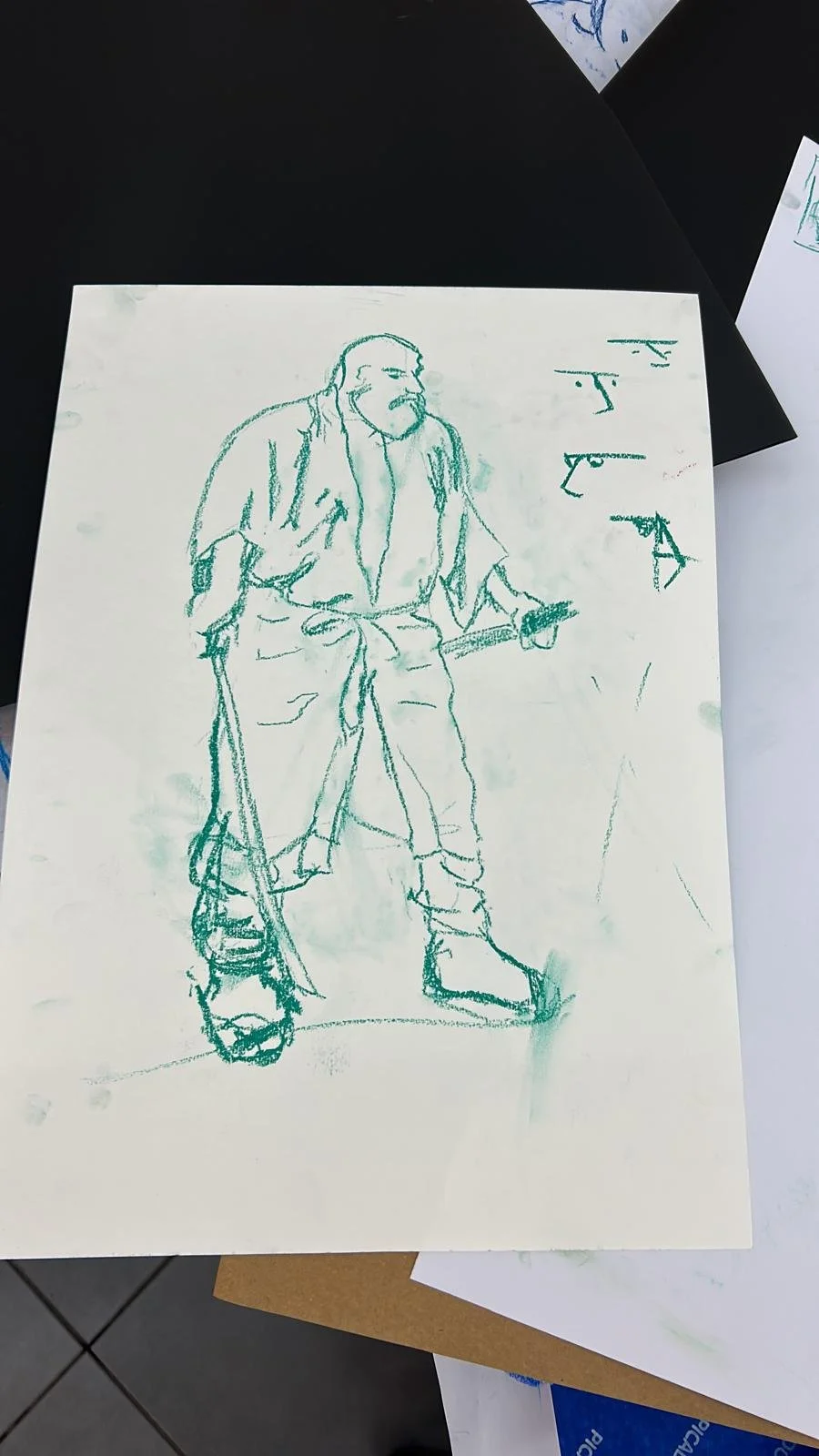
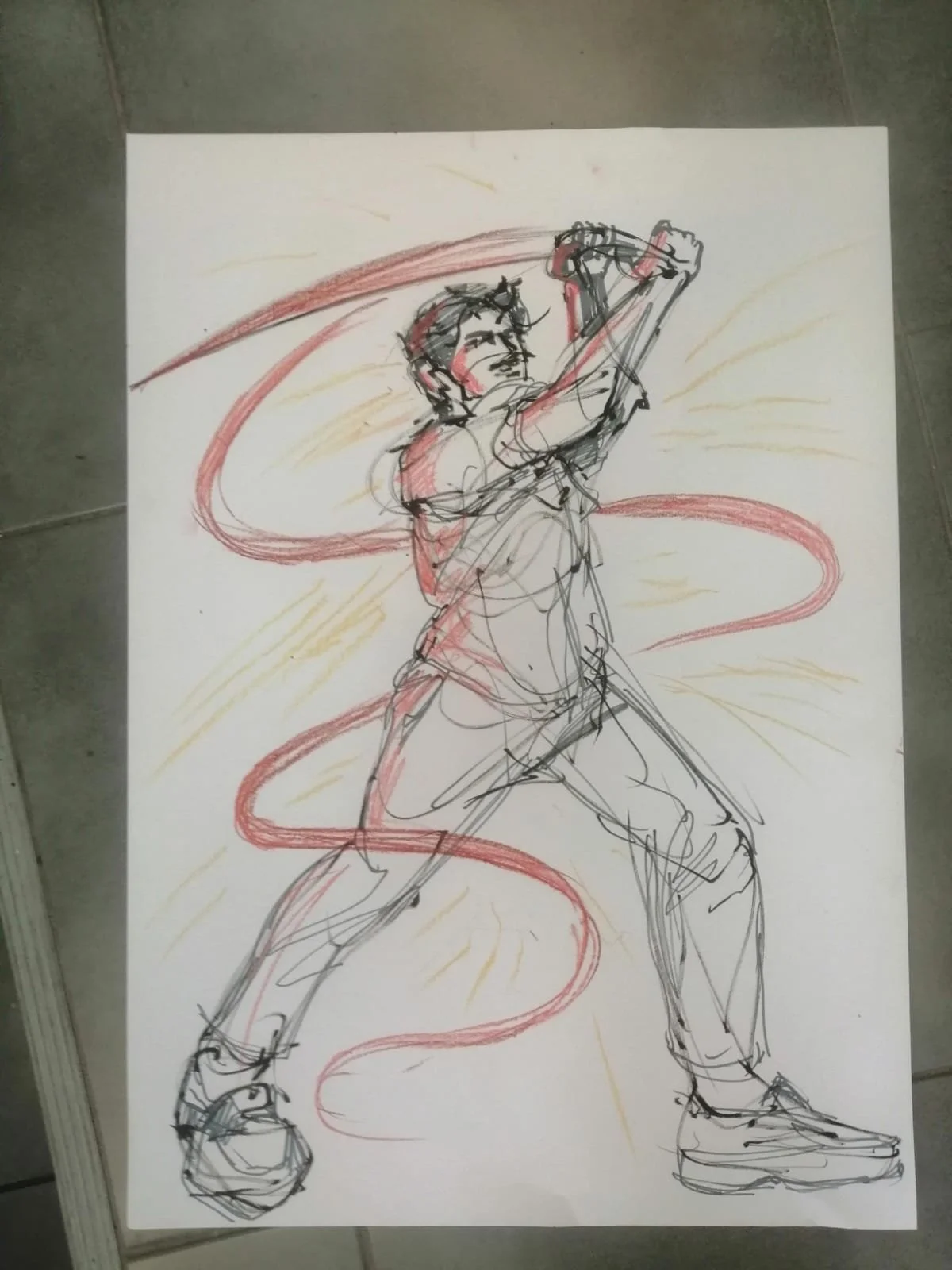
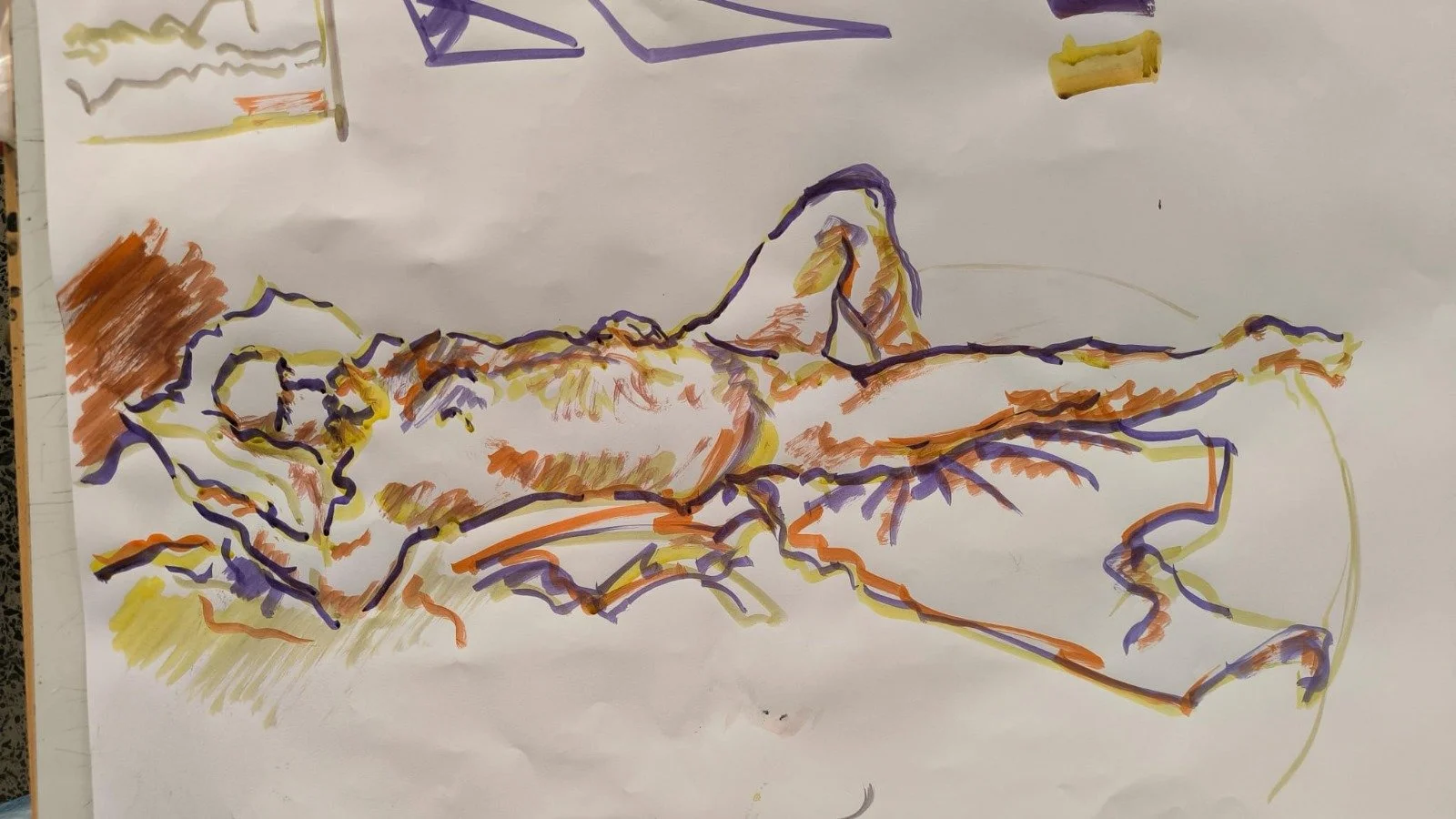
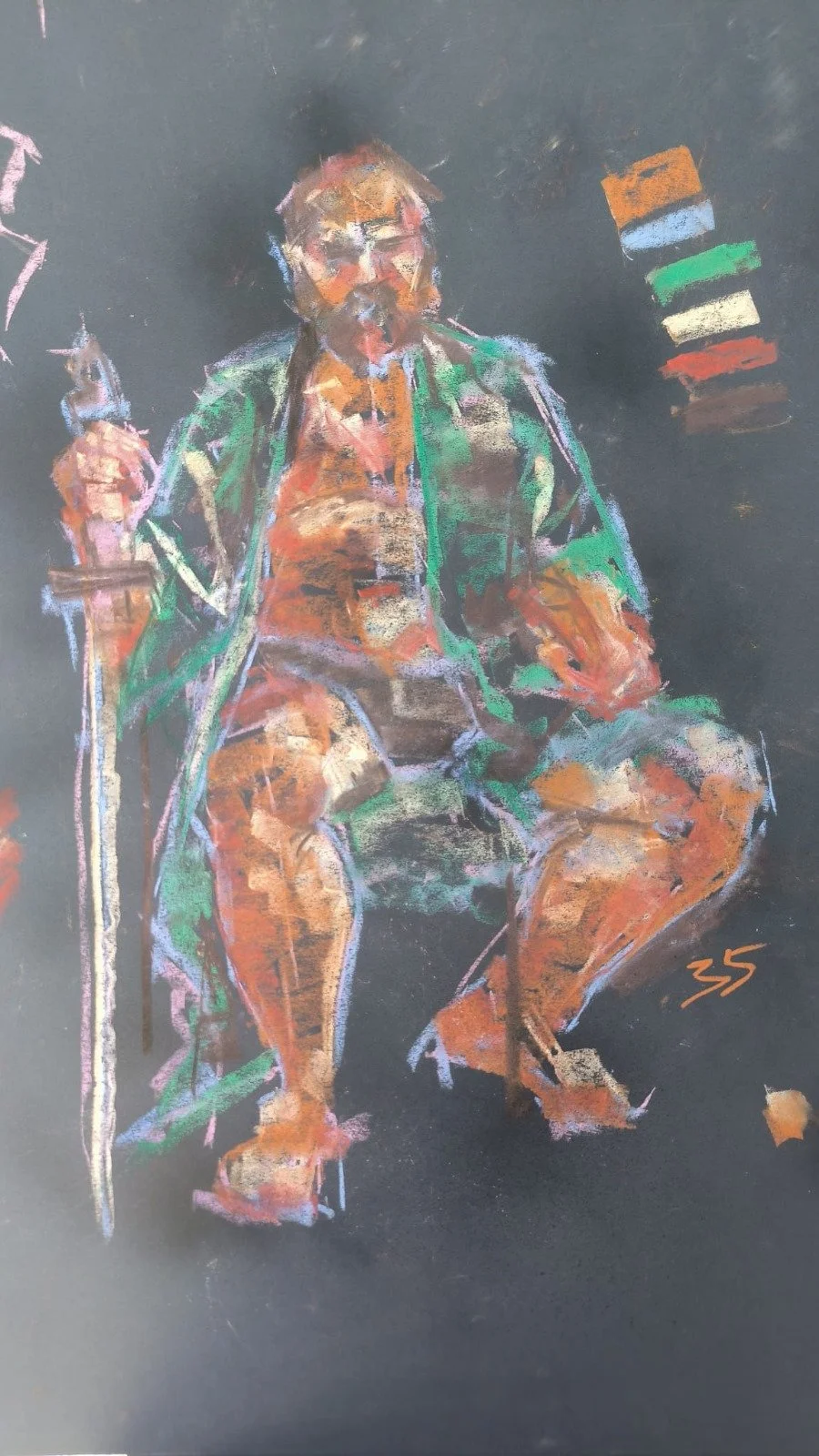
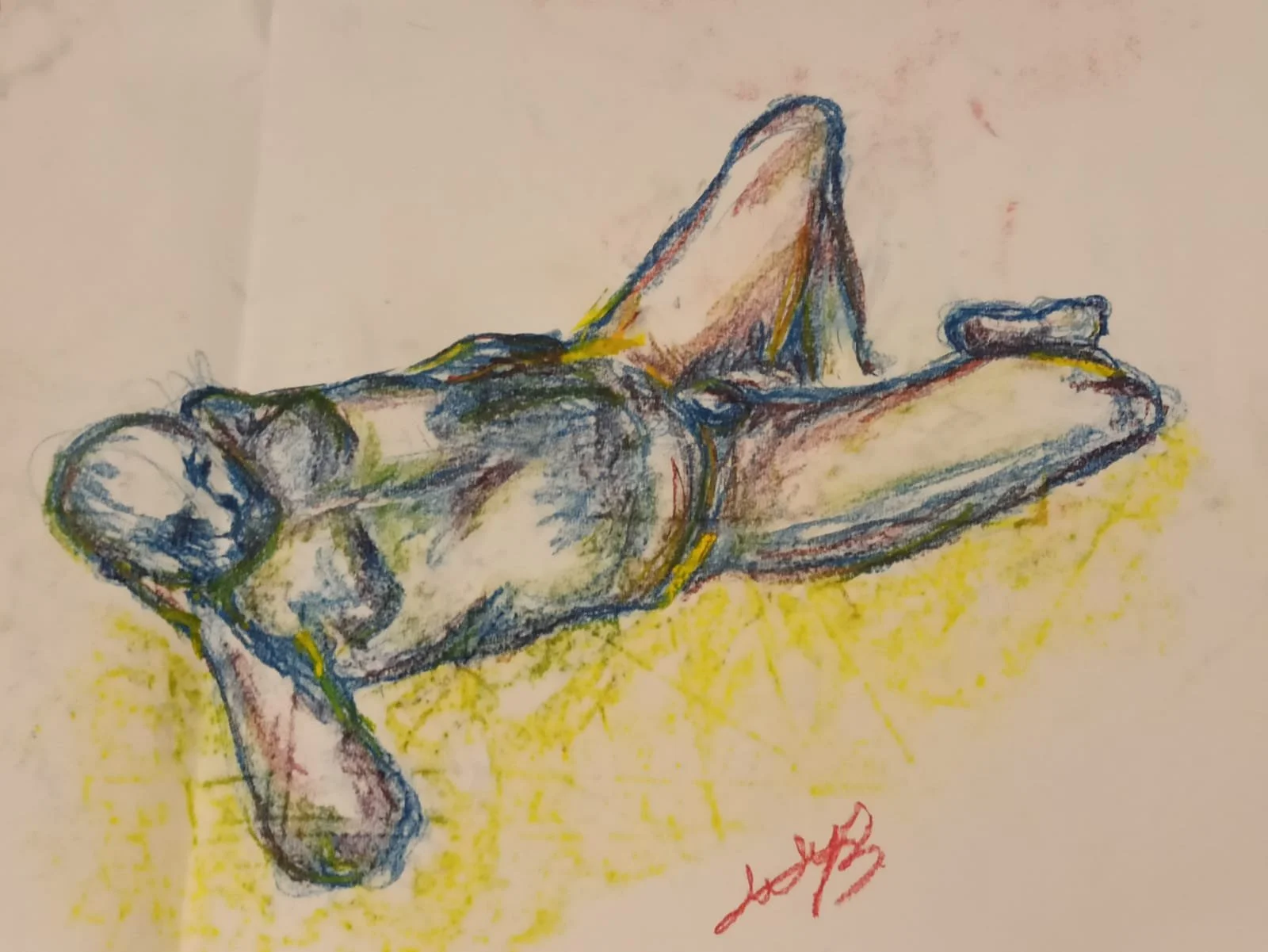
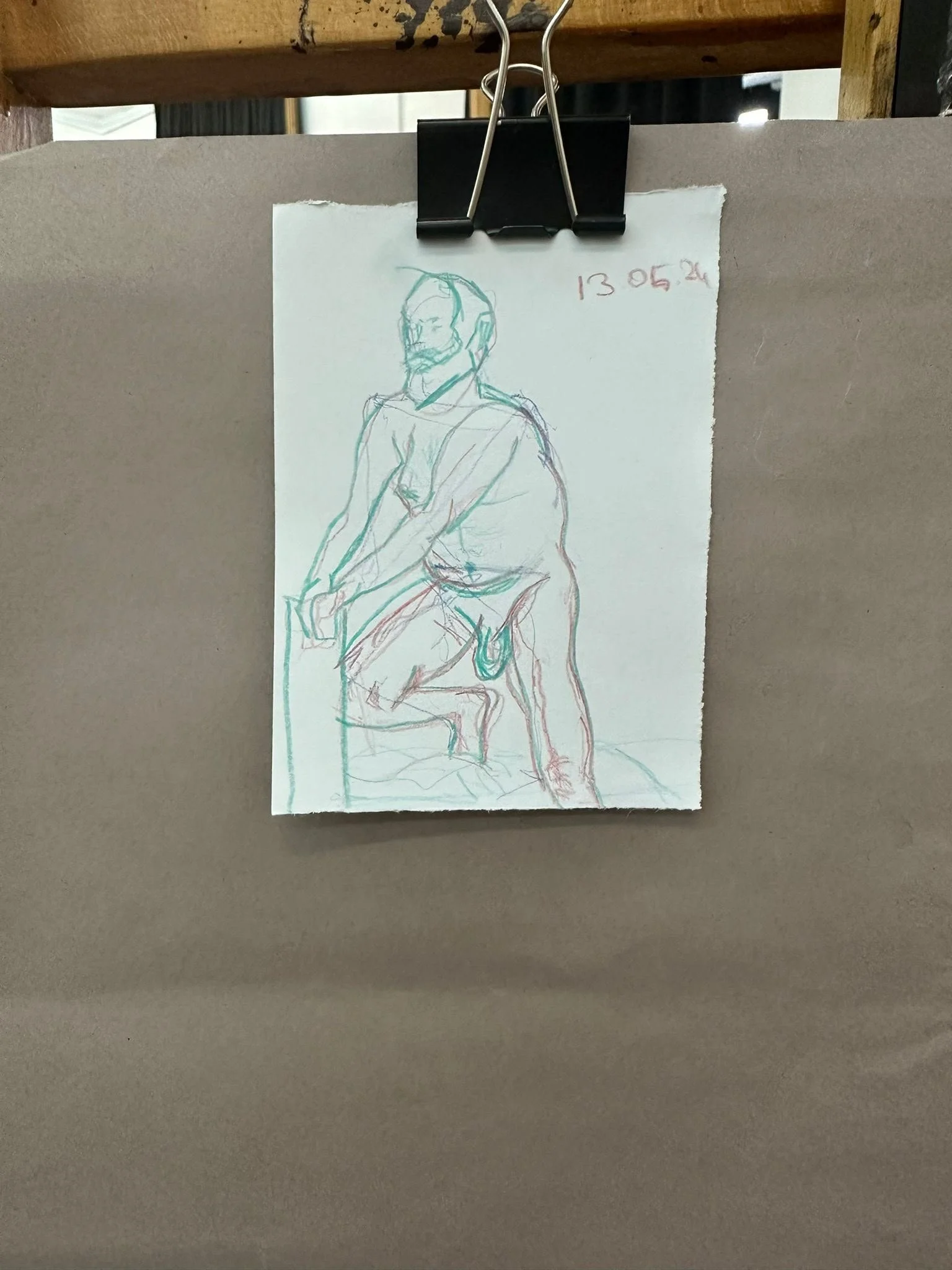
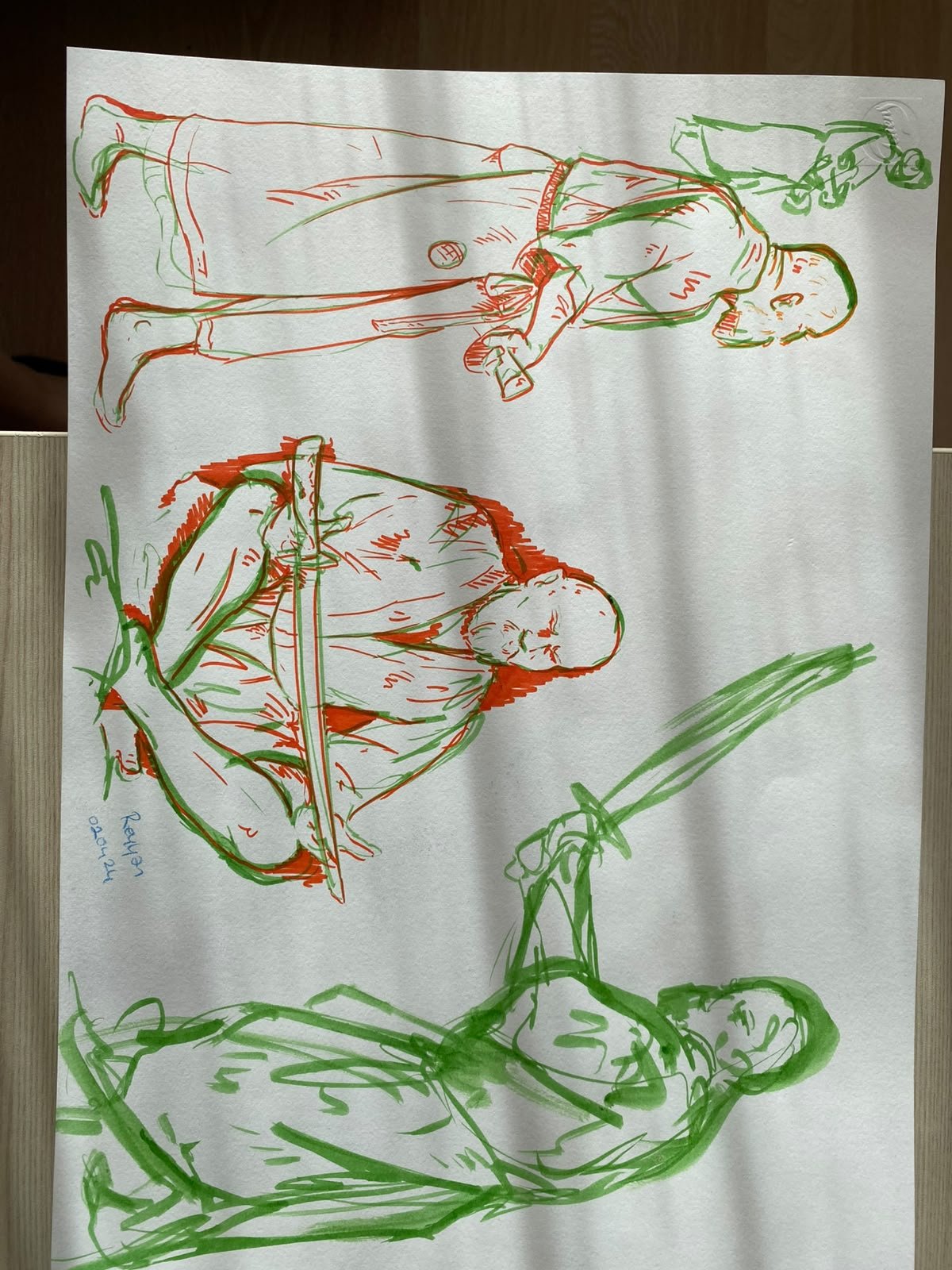
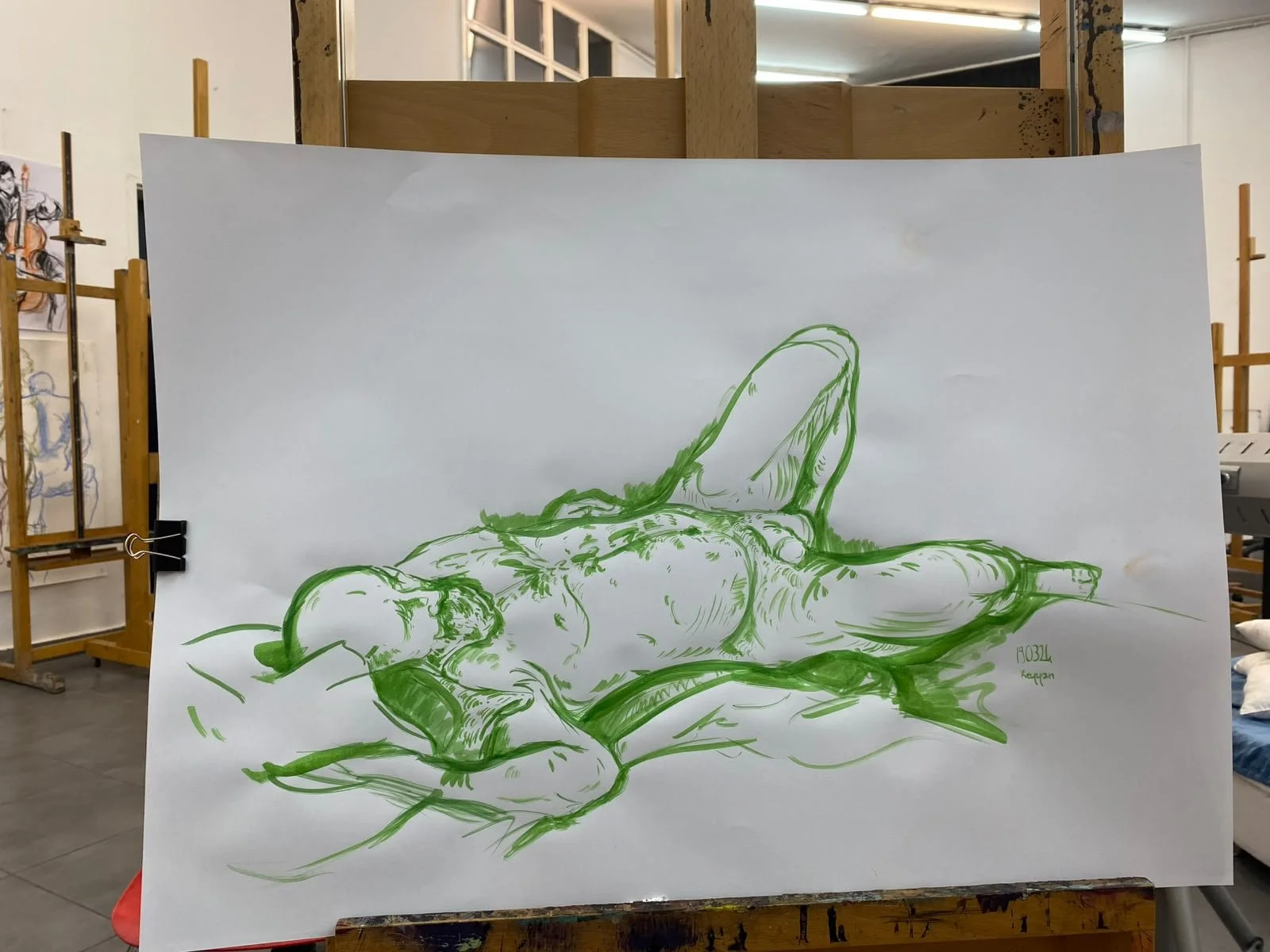
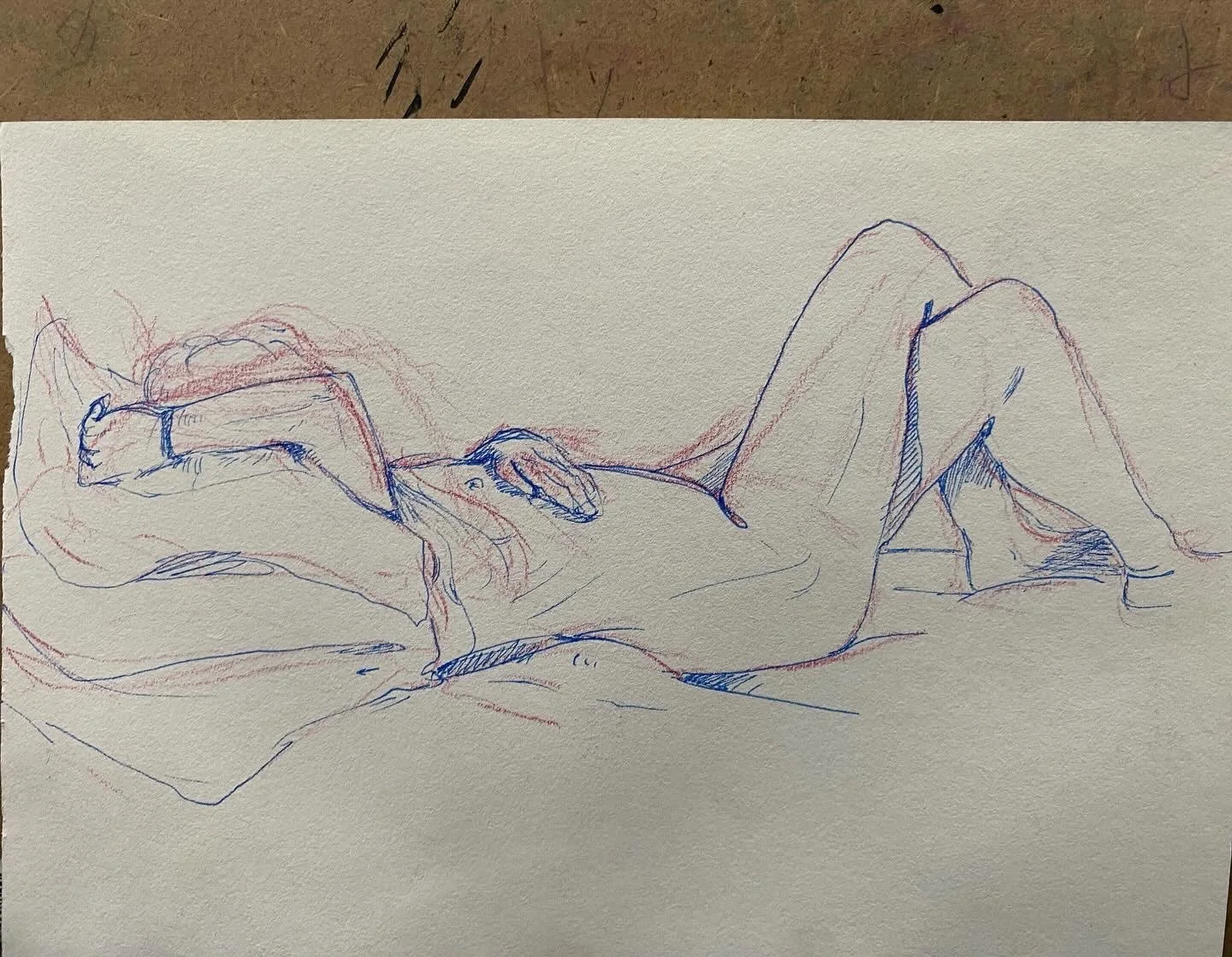
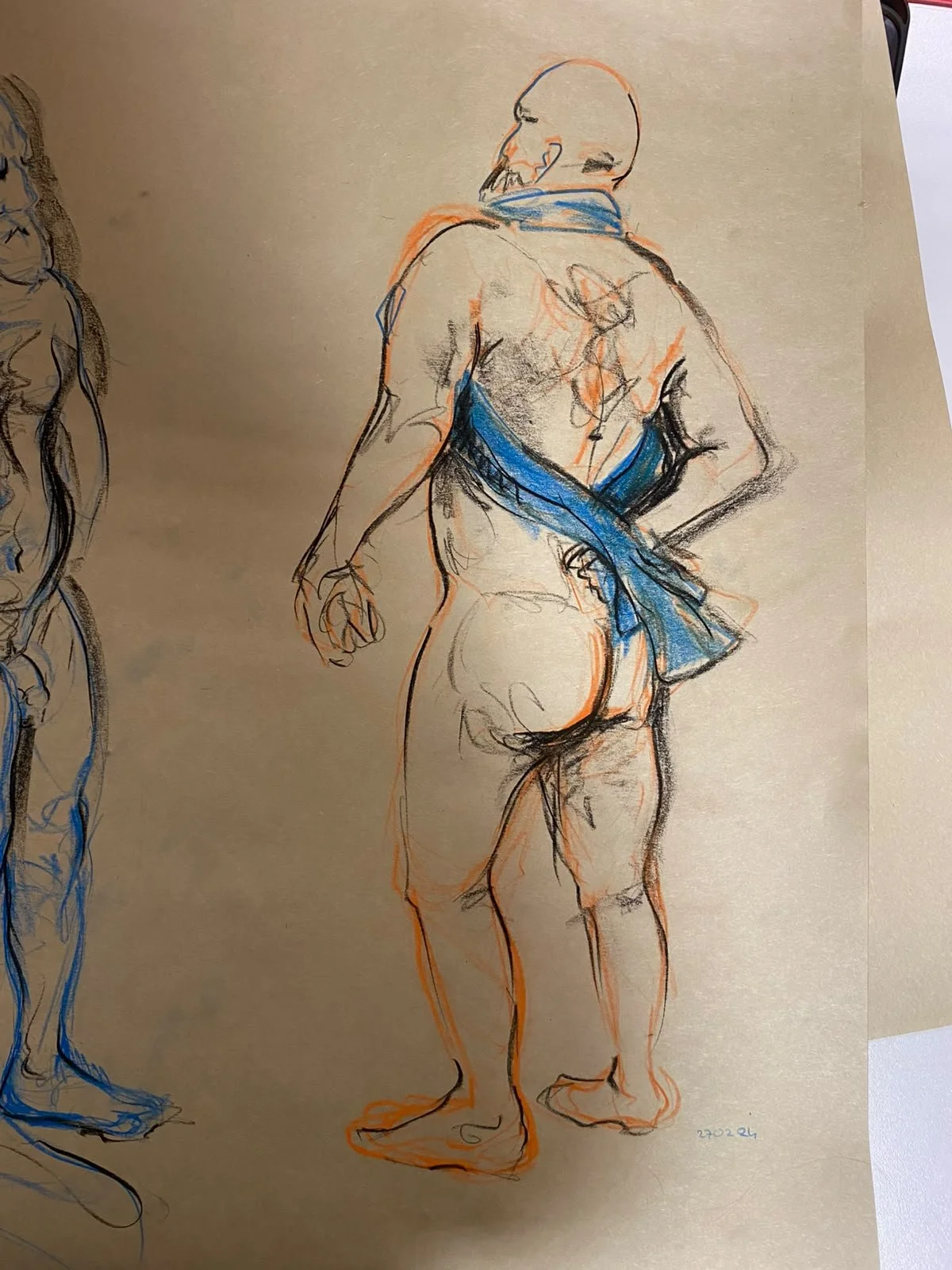
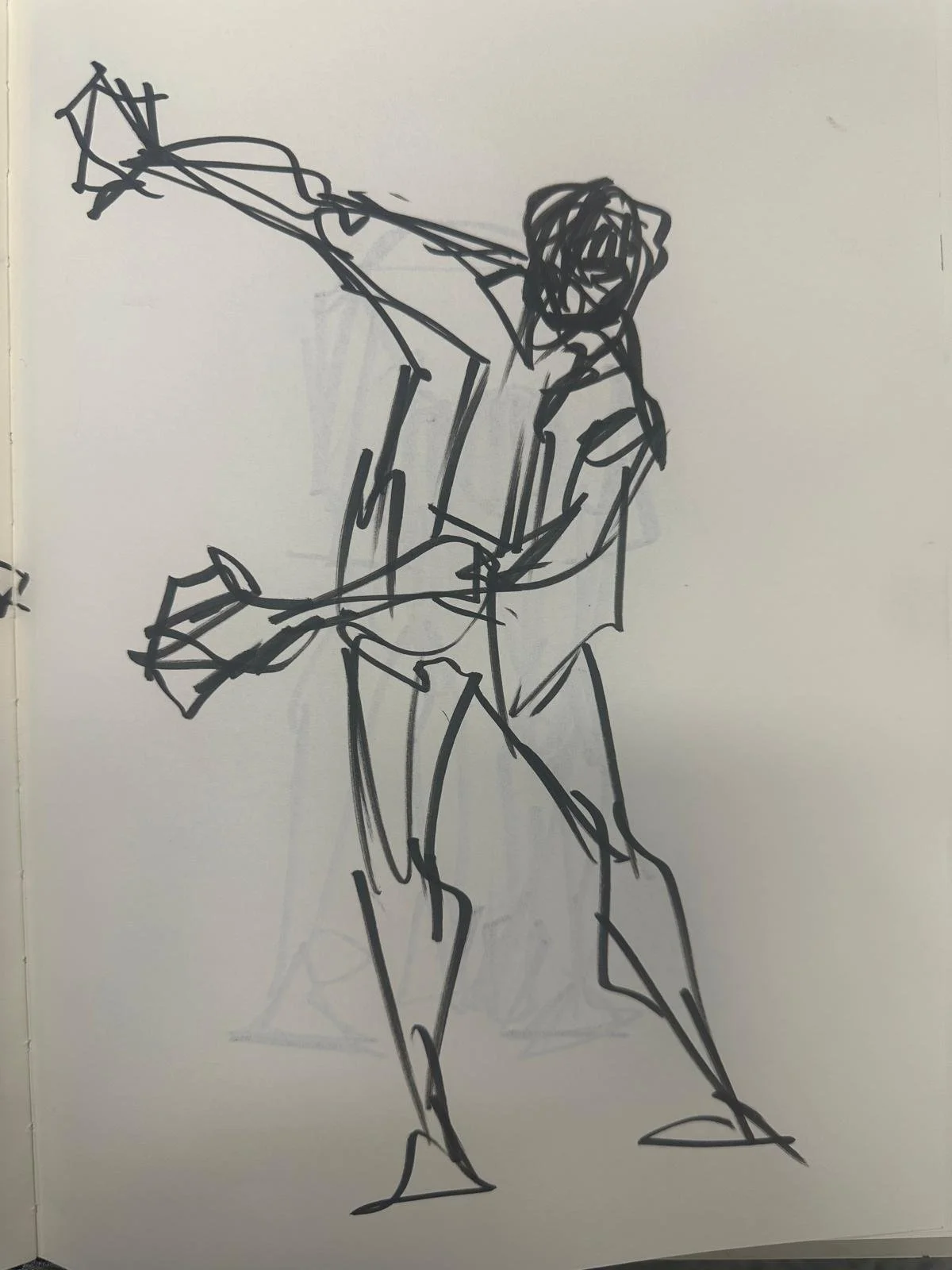
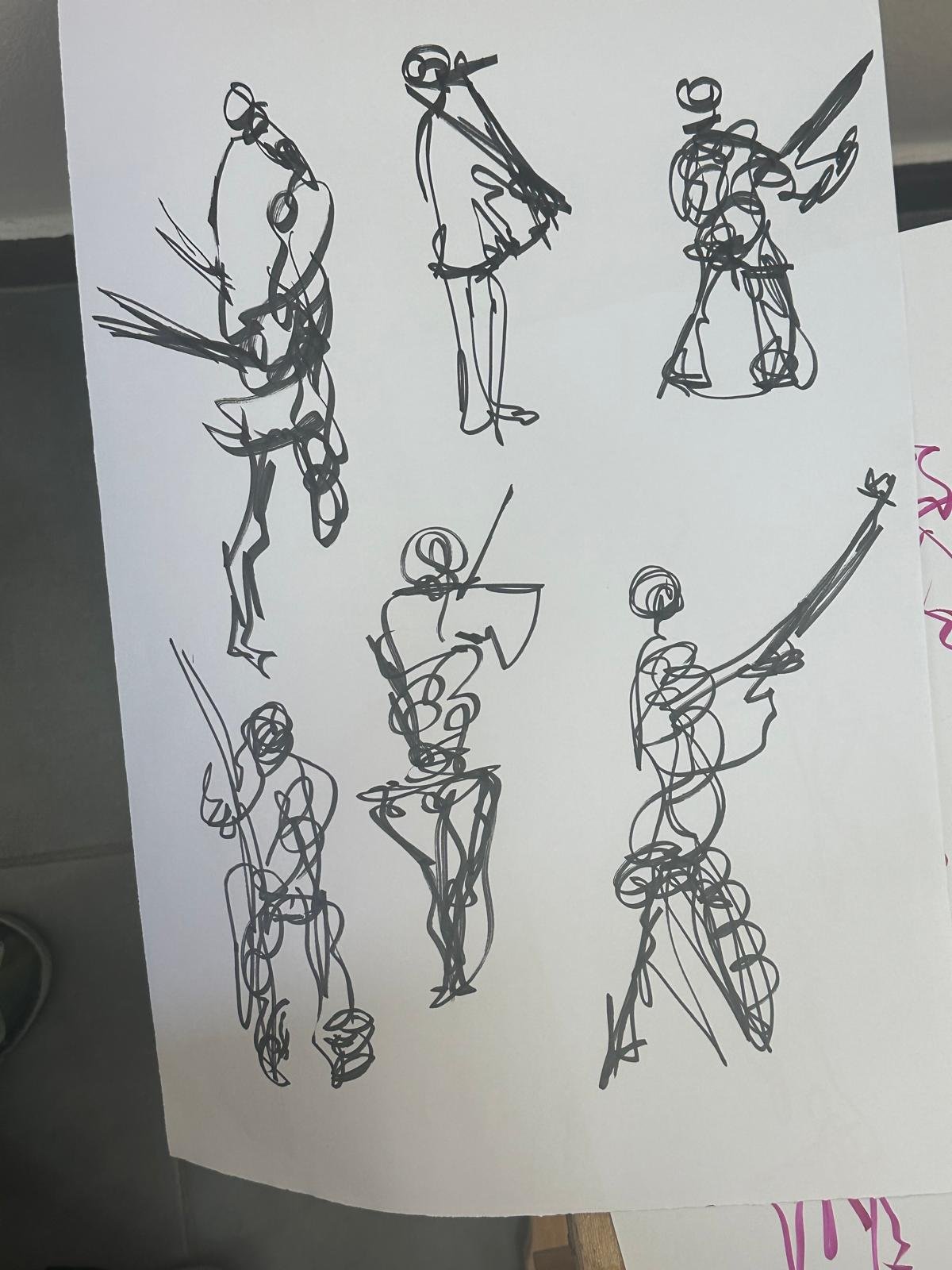
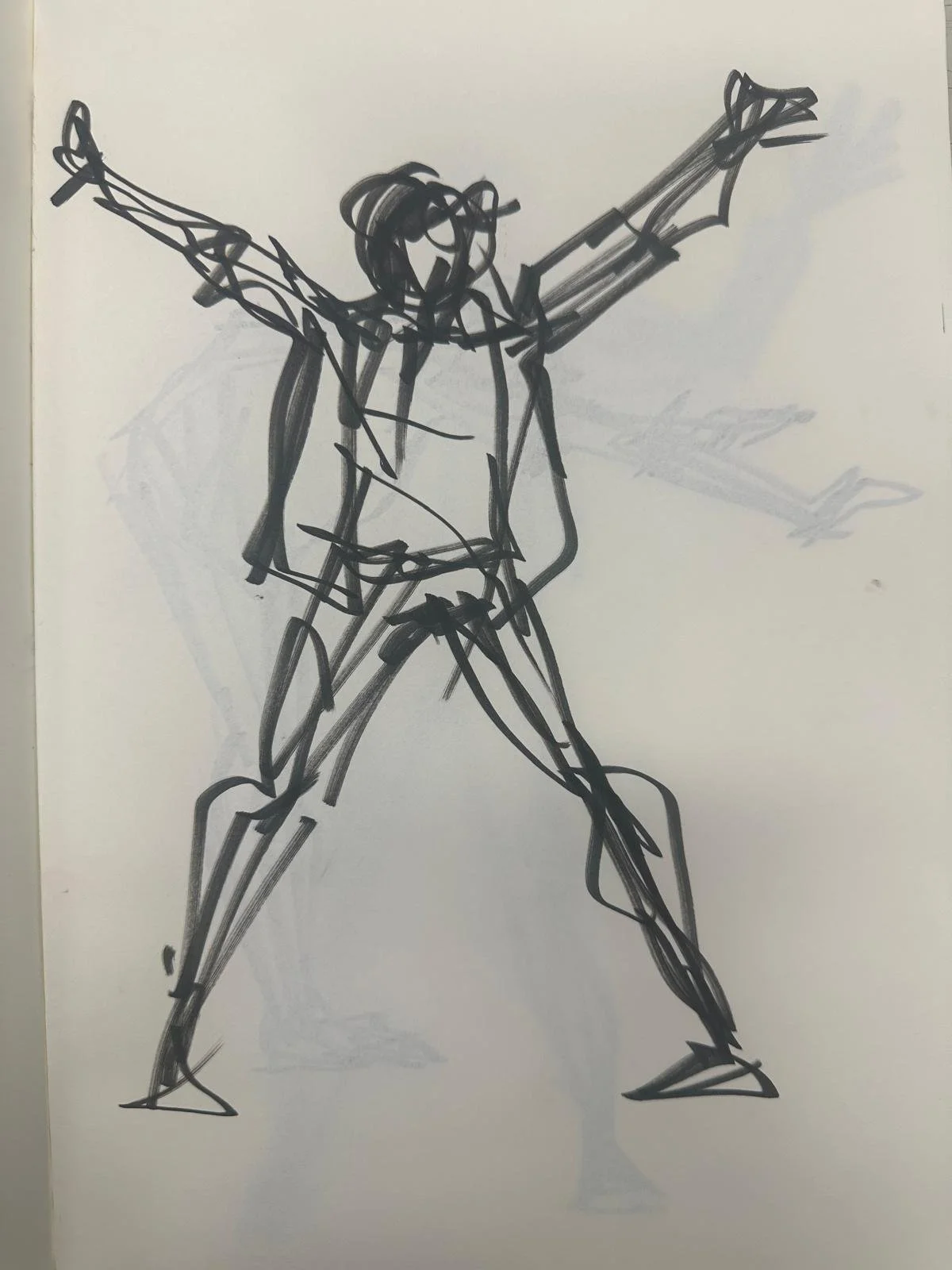
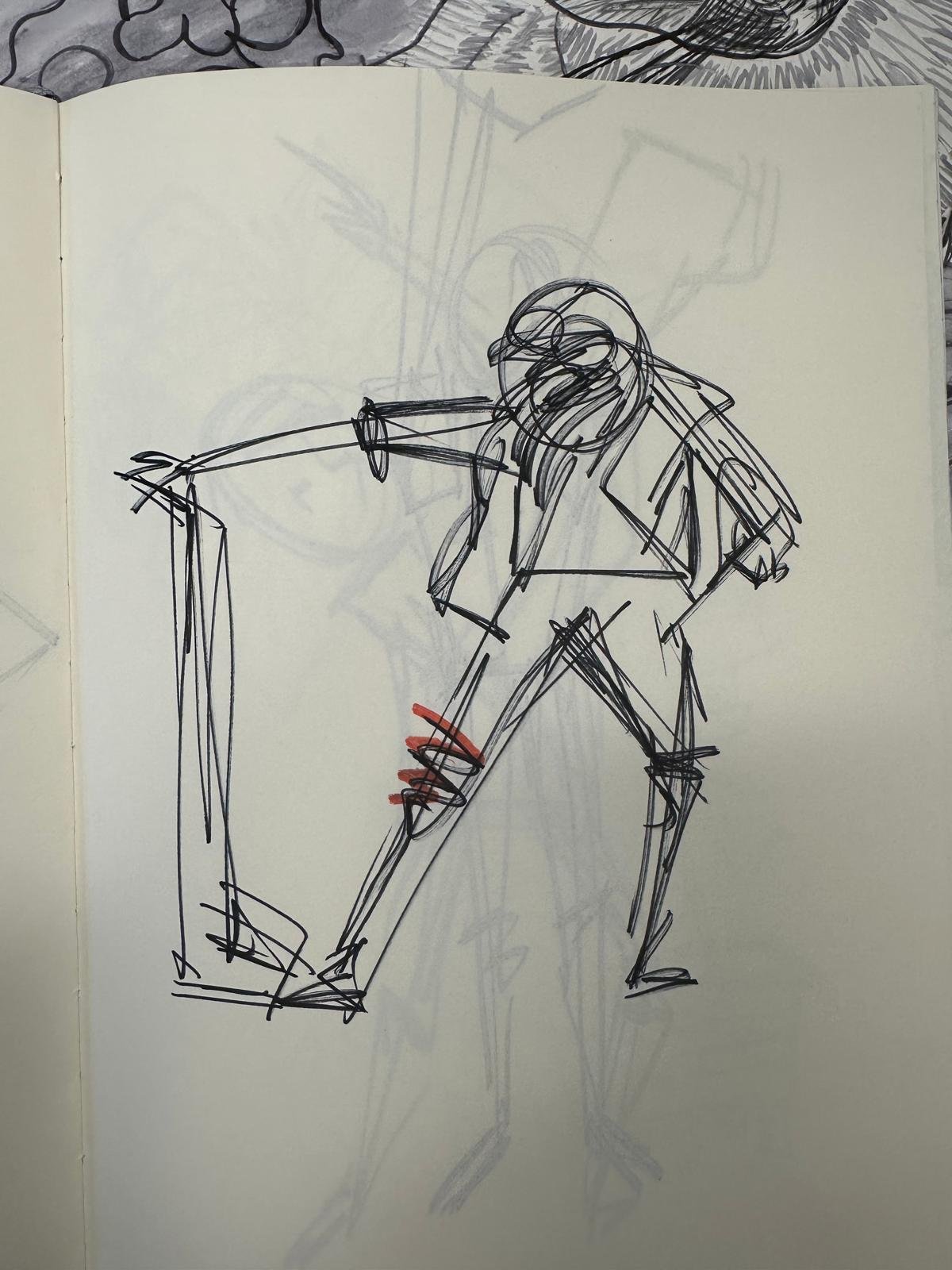
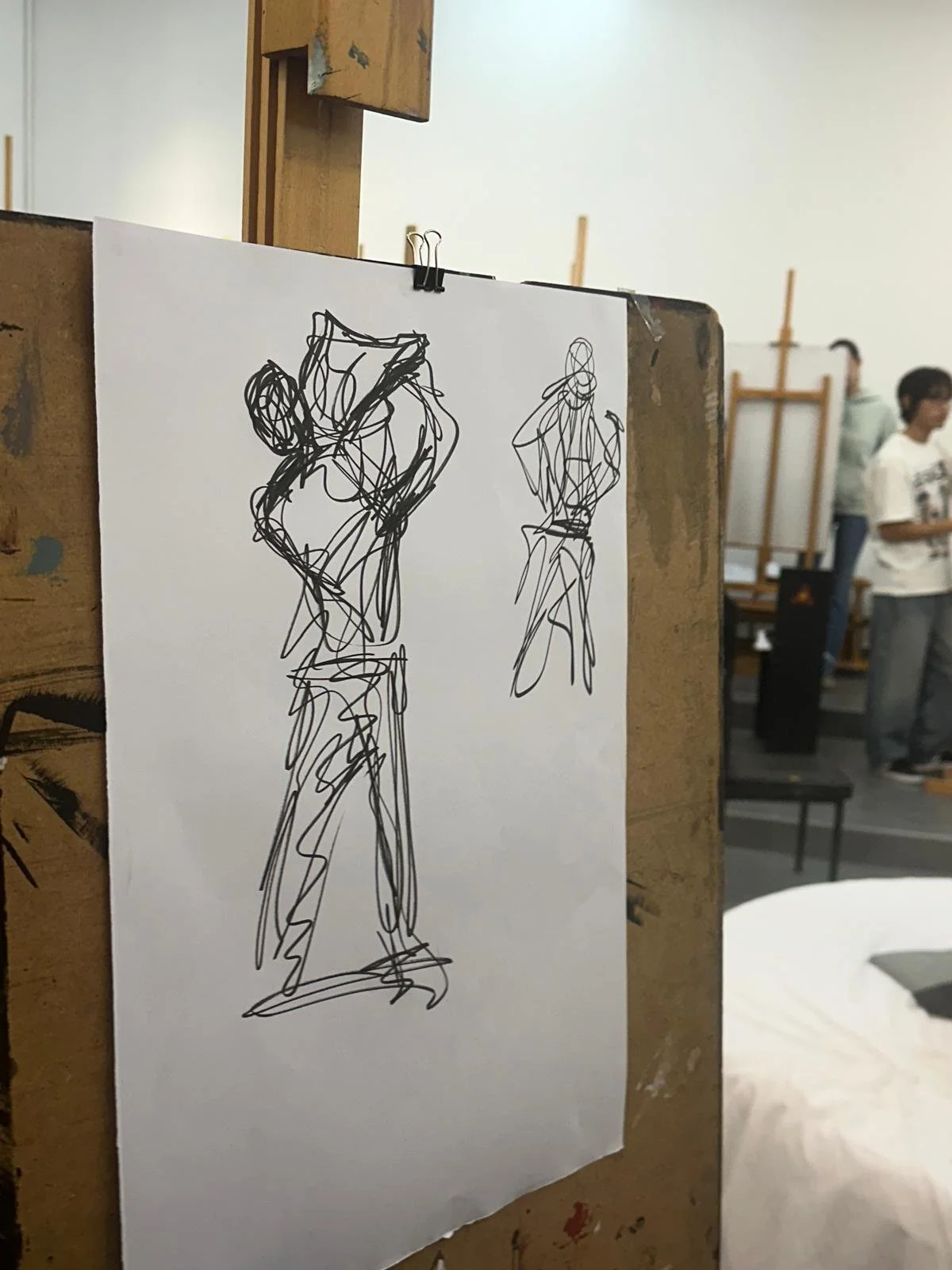
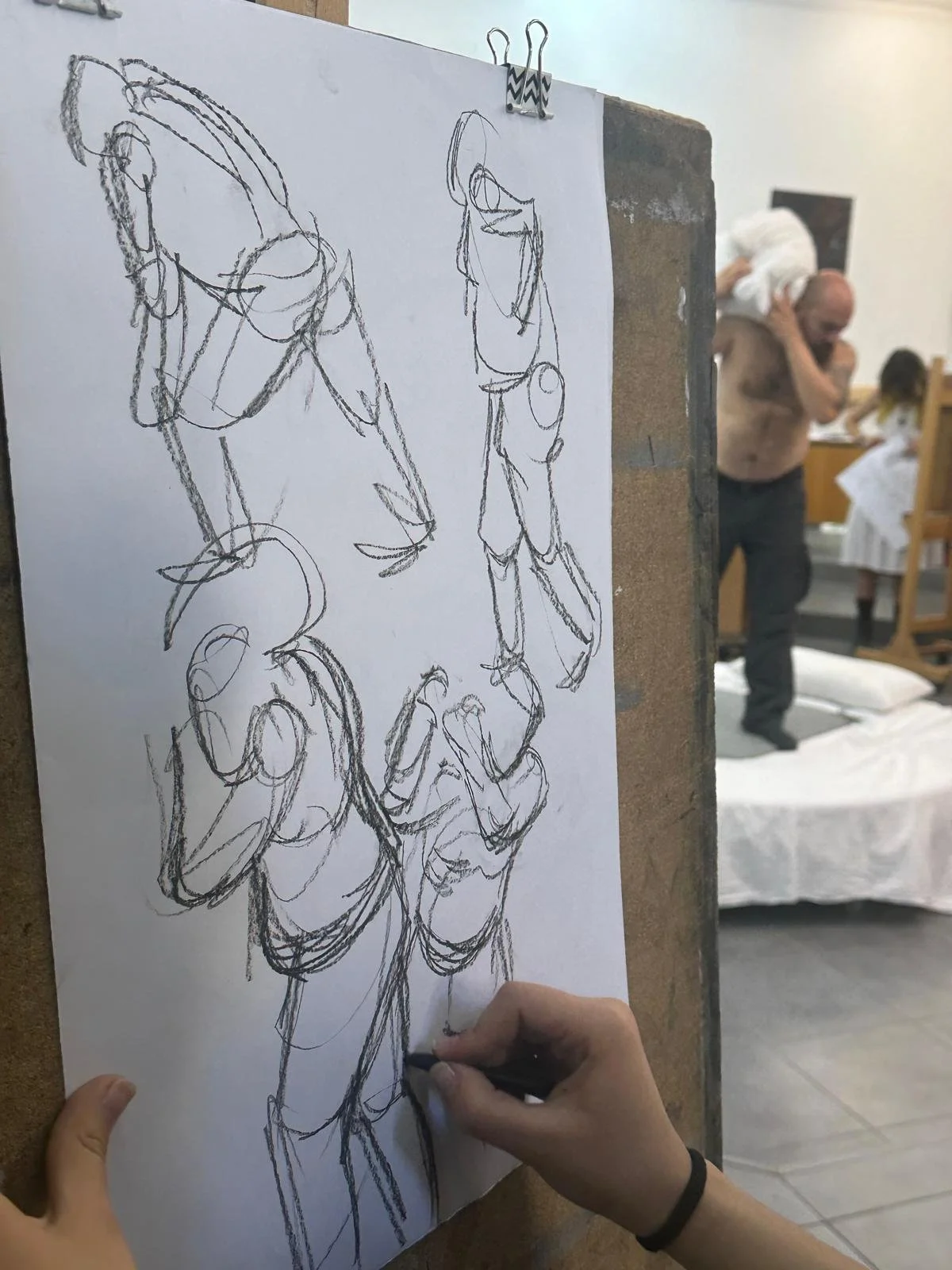
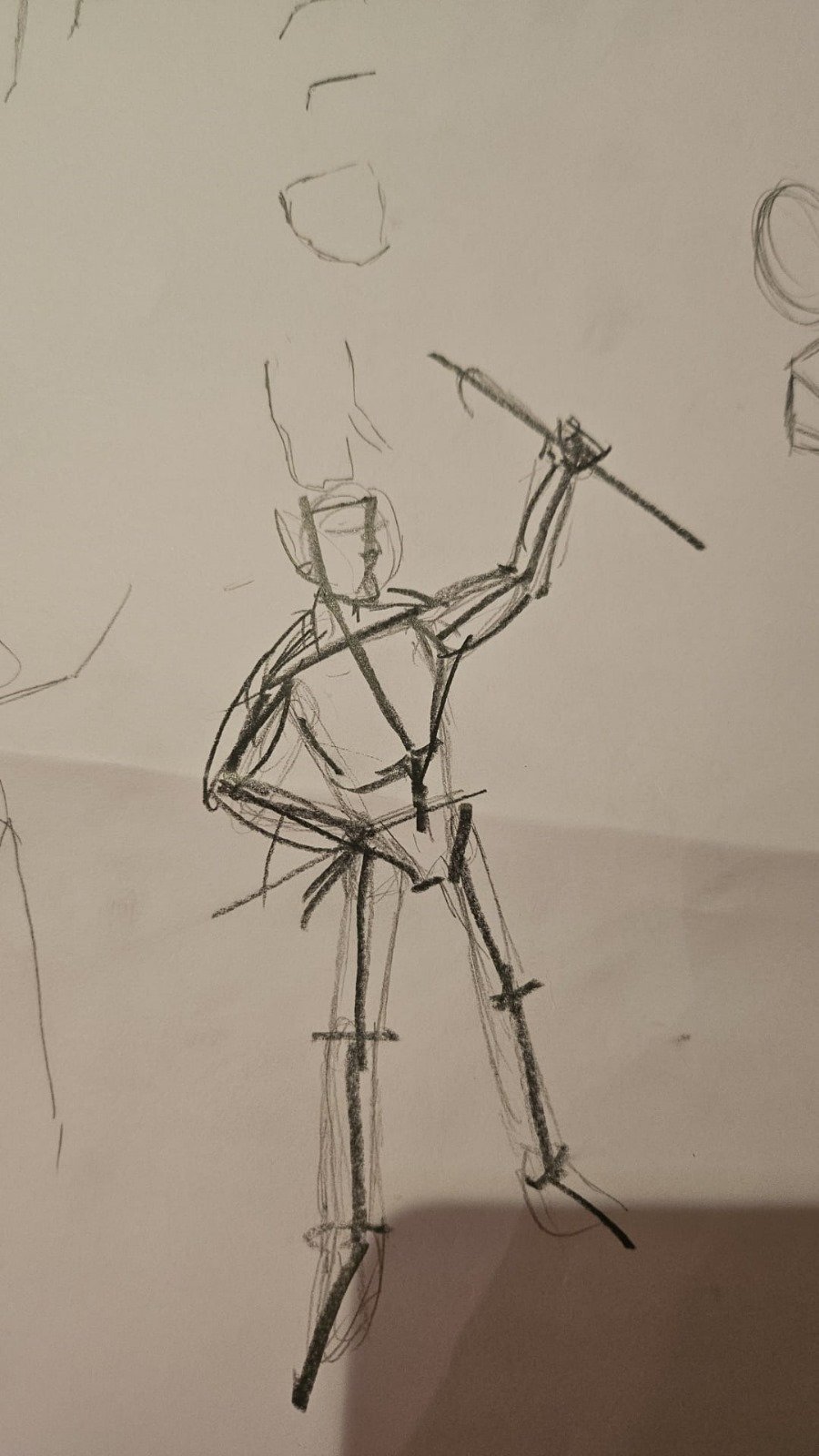
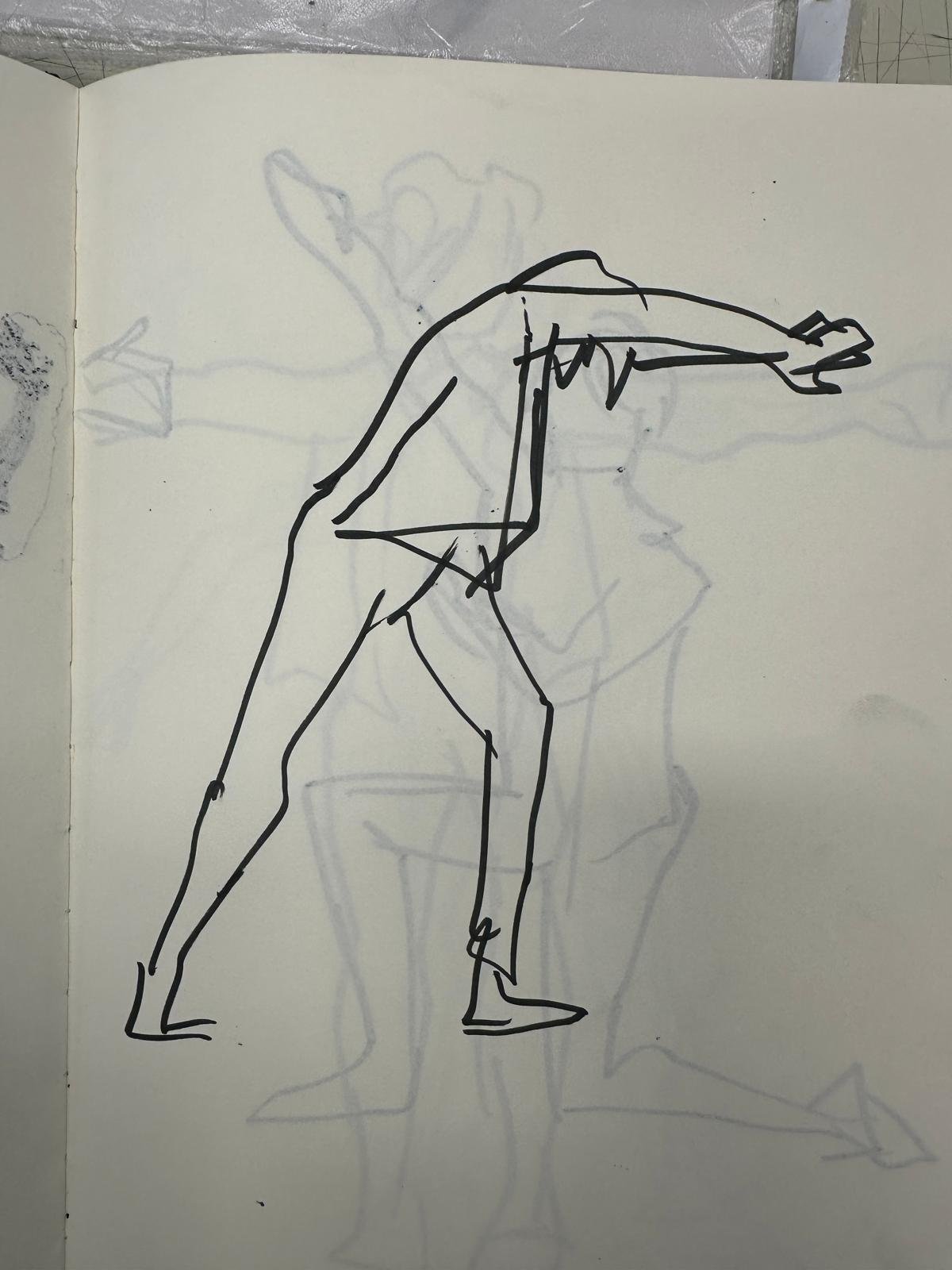
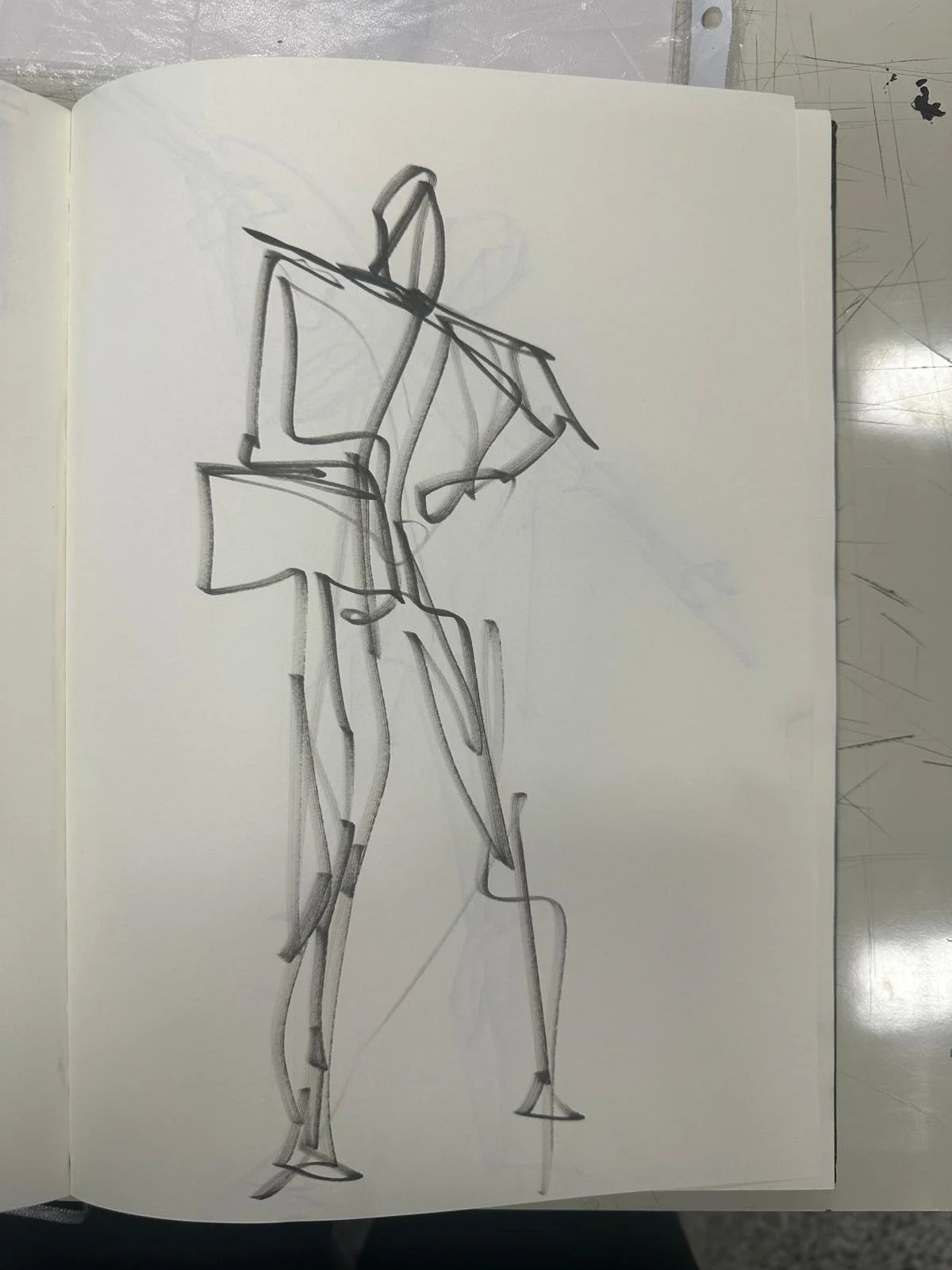
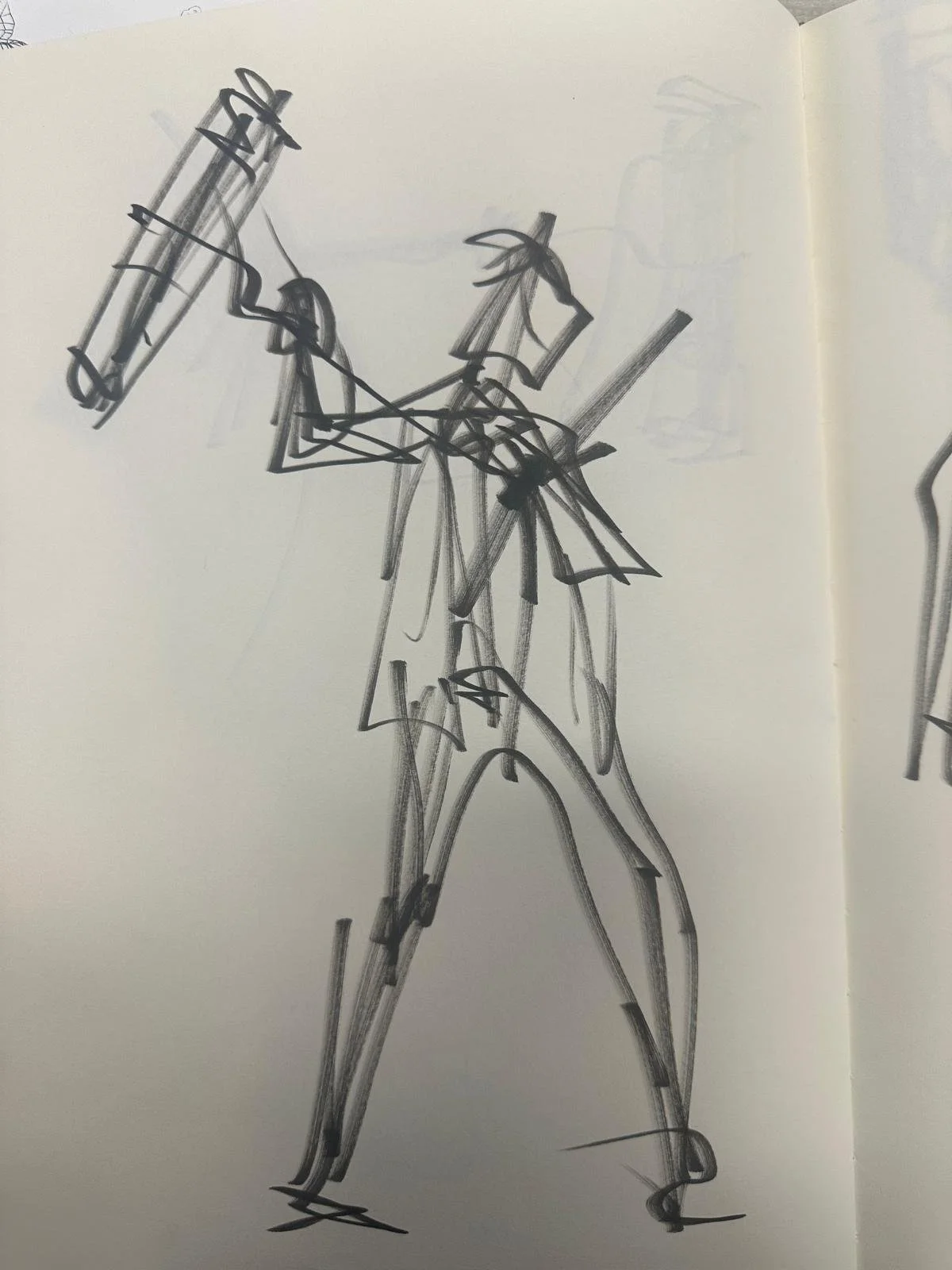
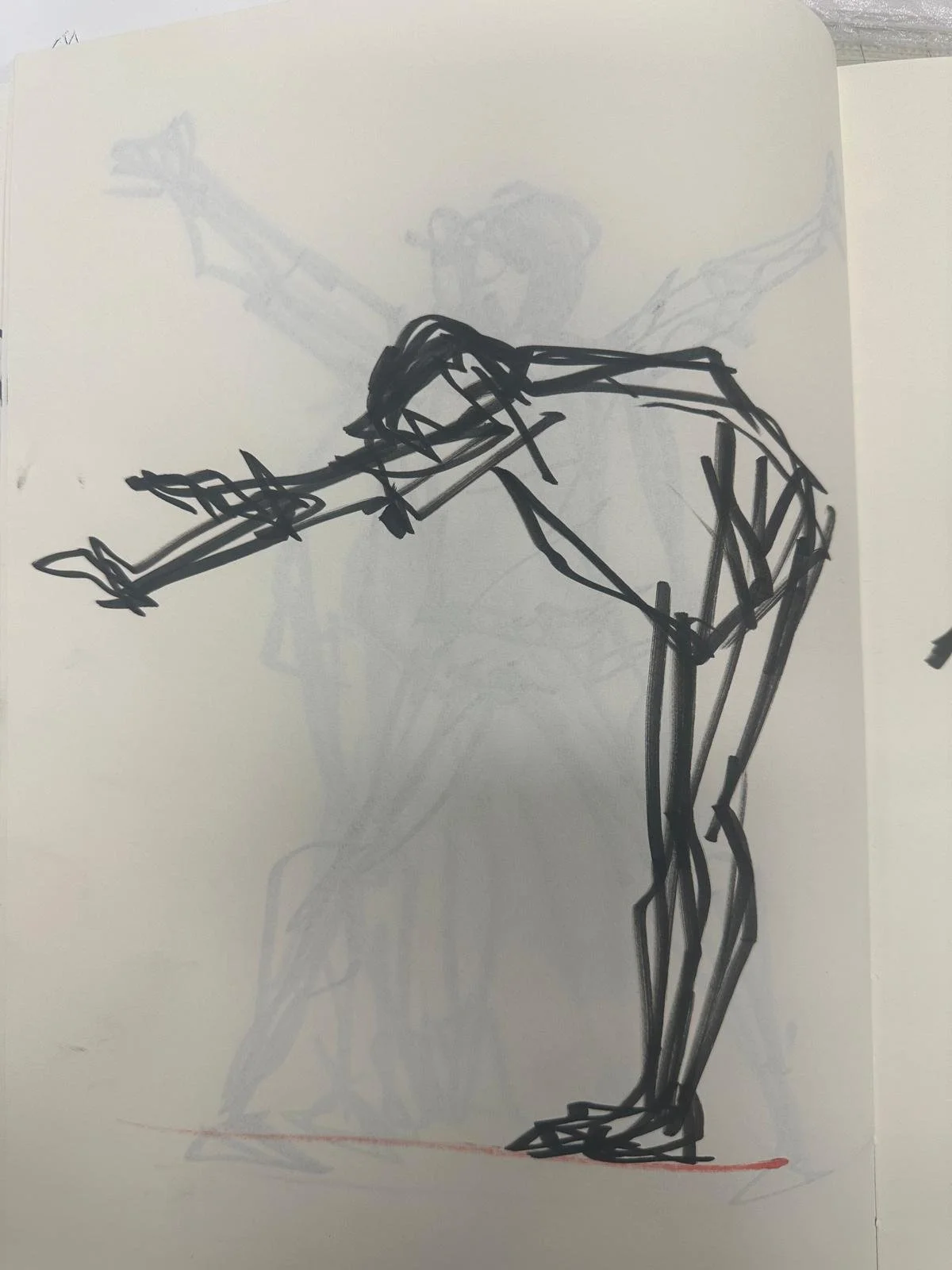
Gesture Drawing
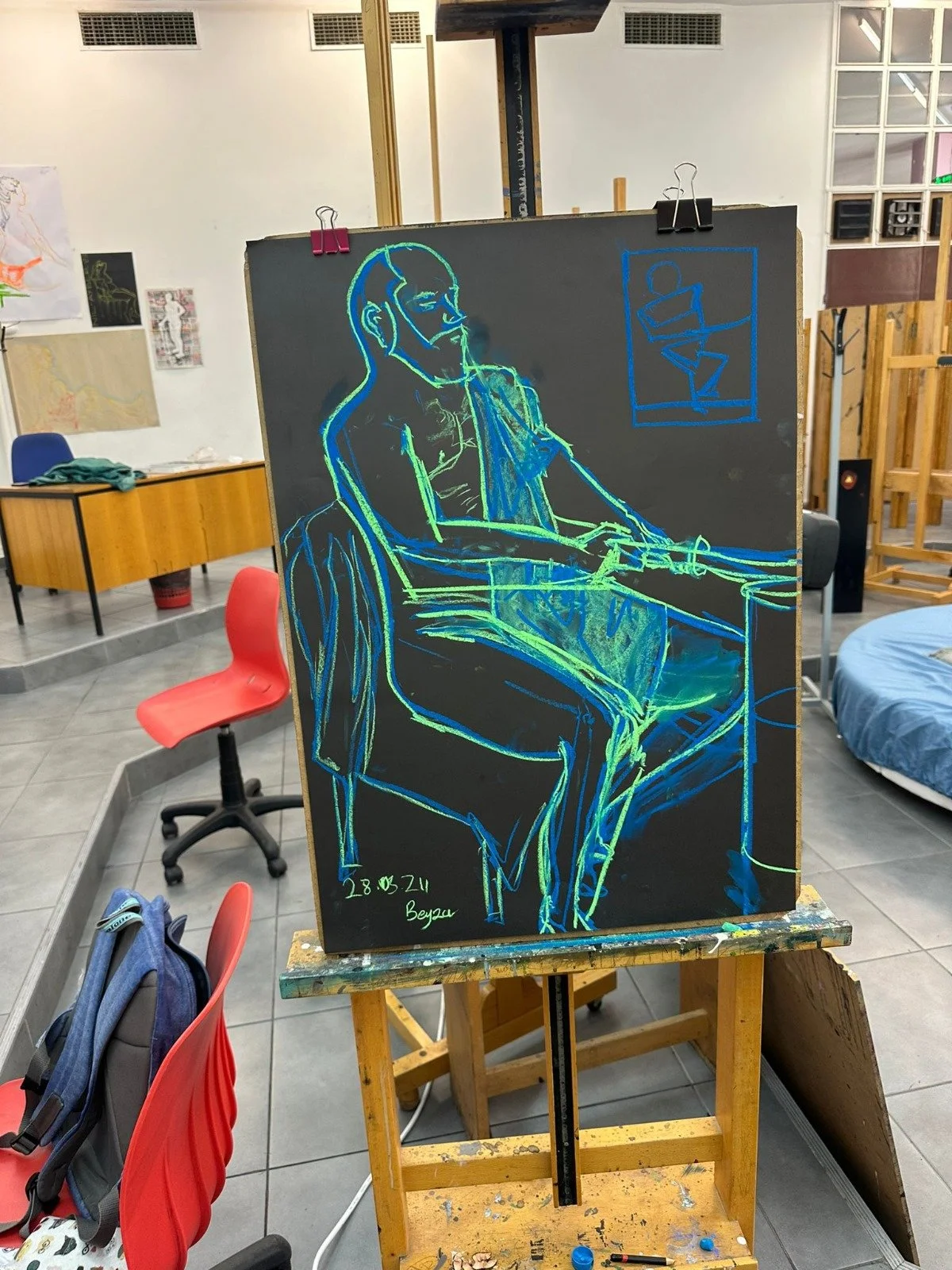
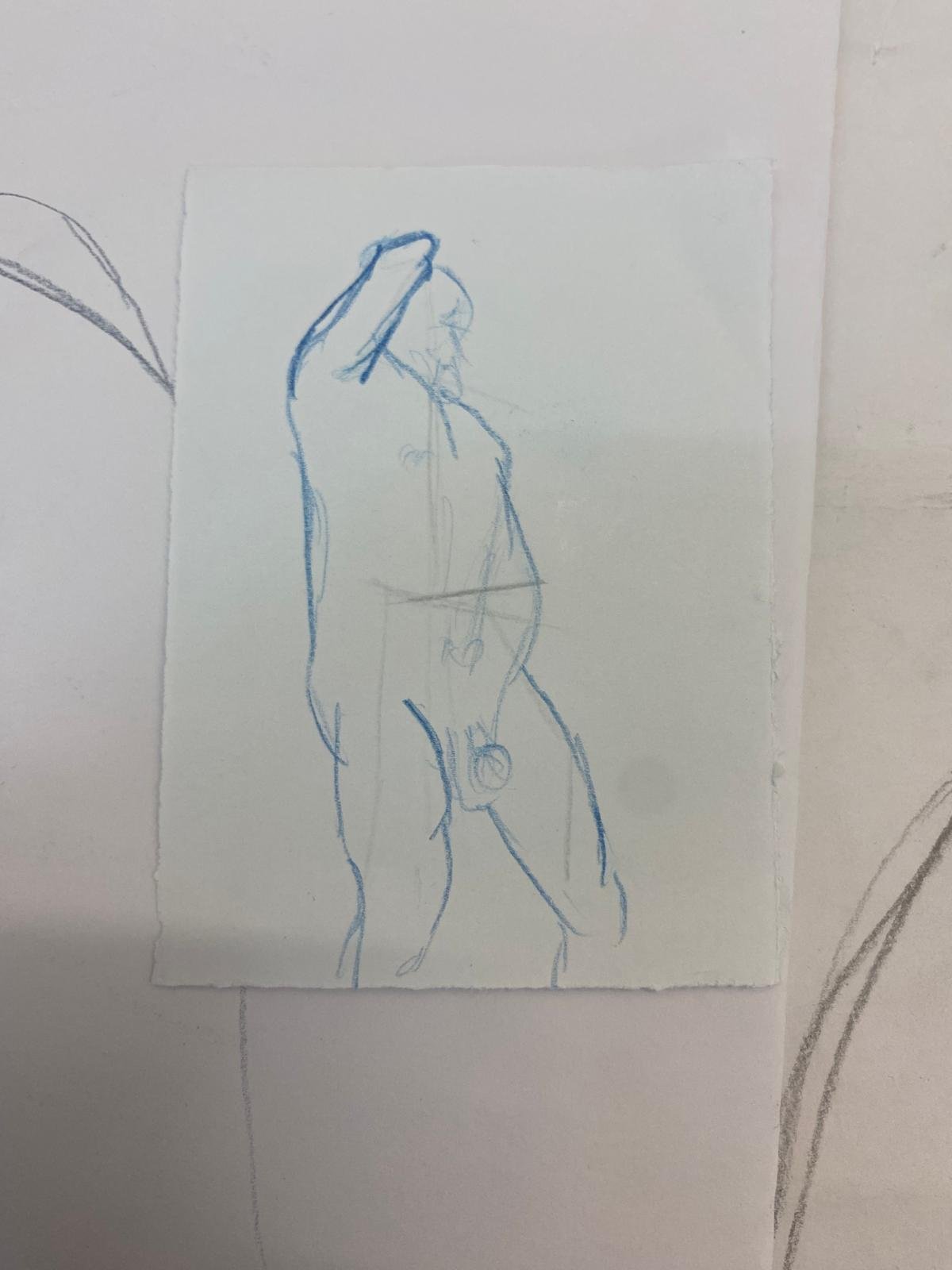
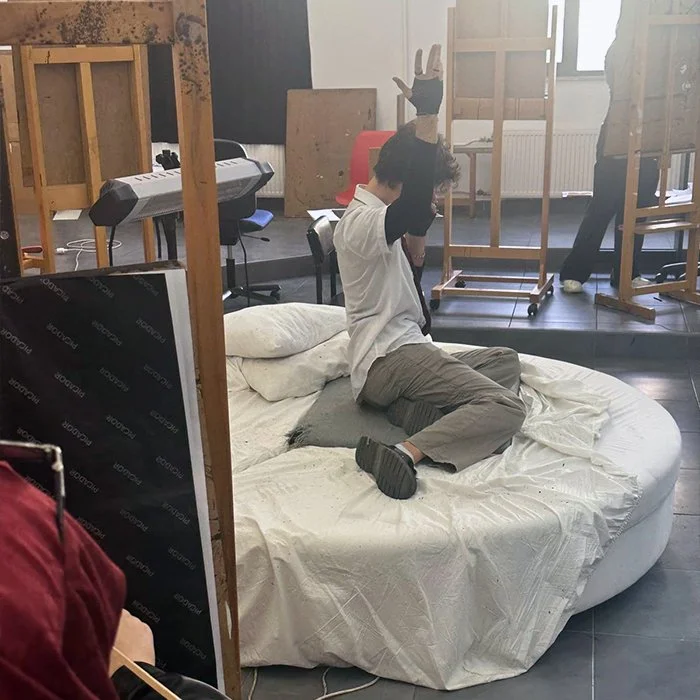
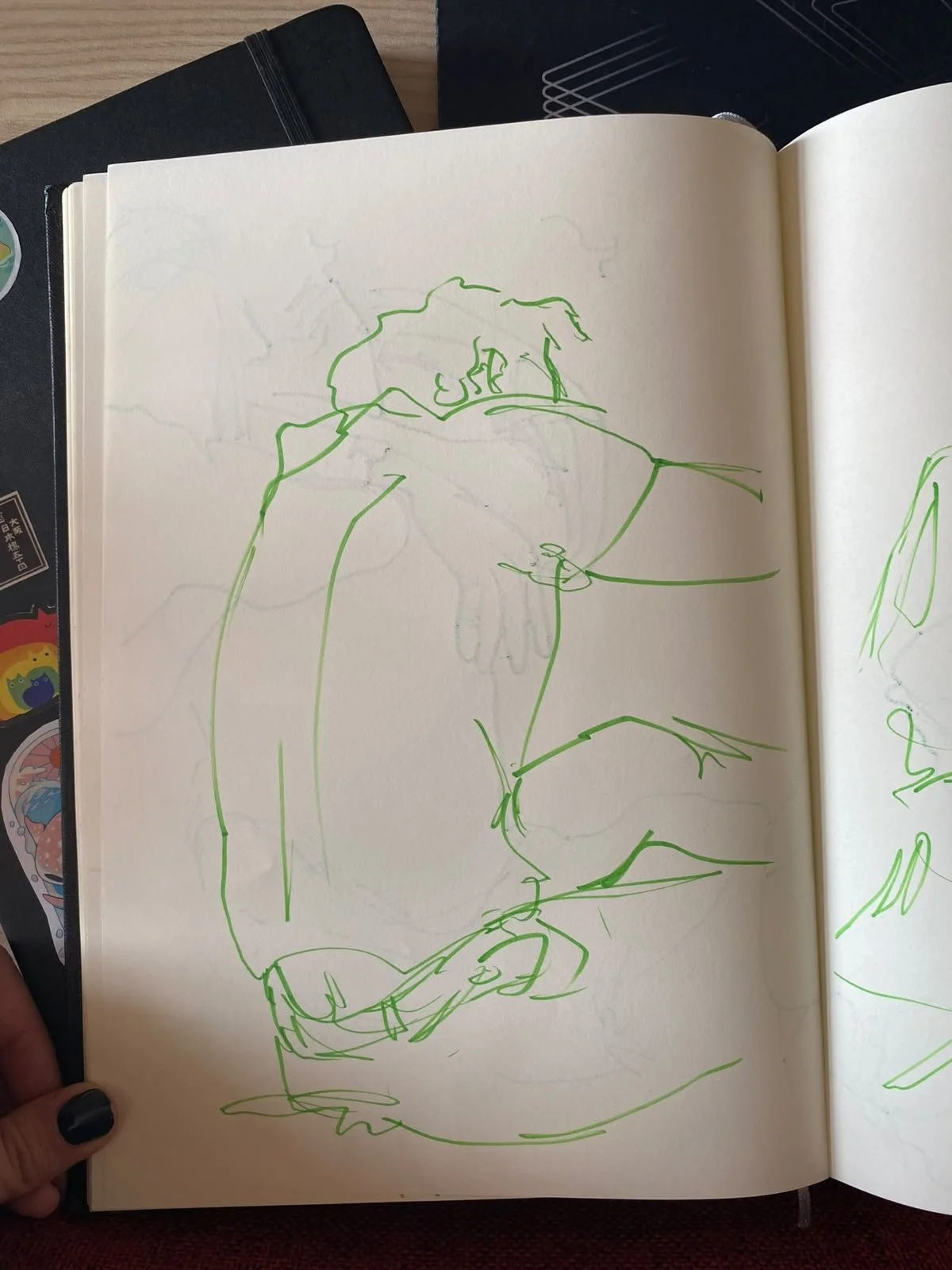
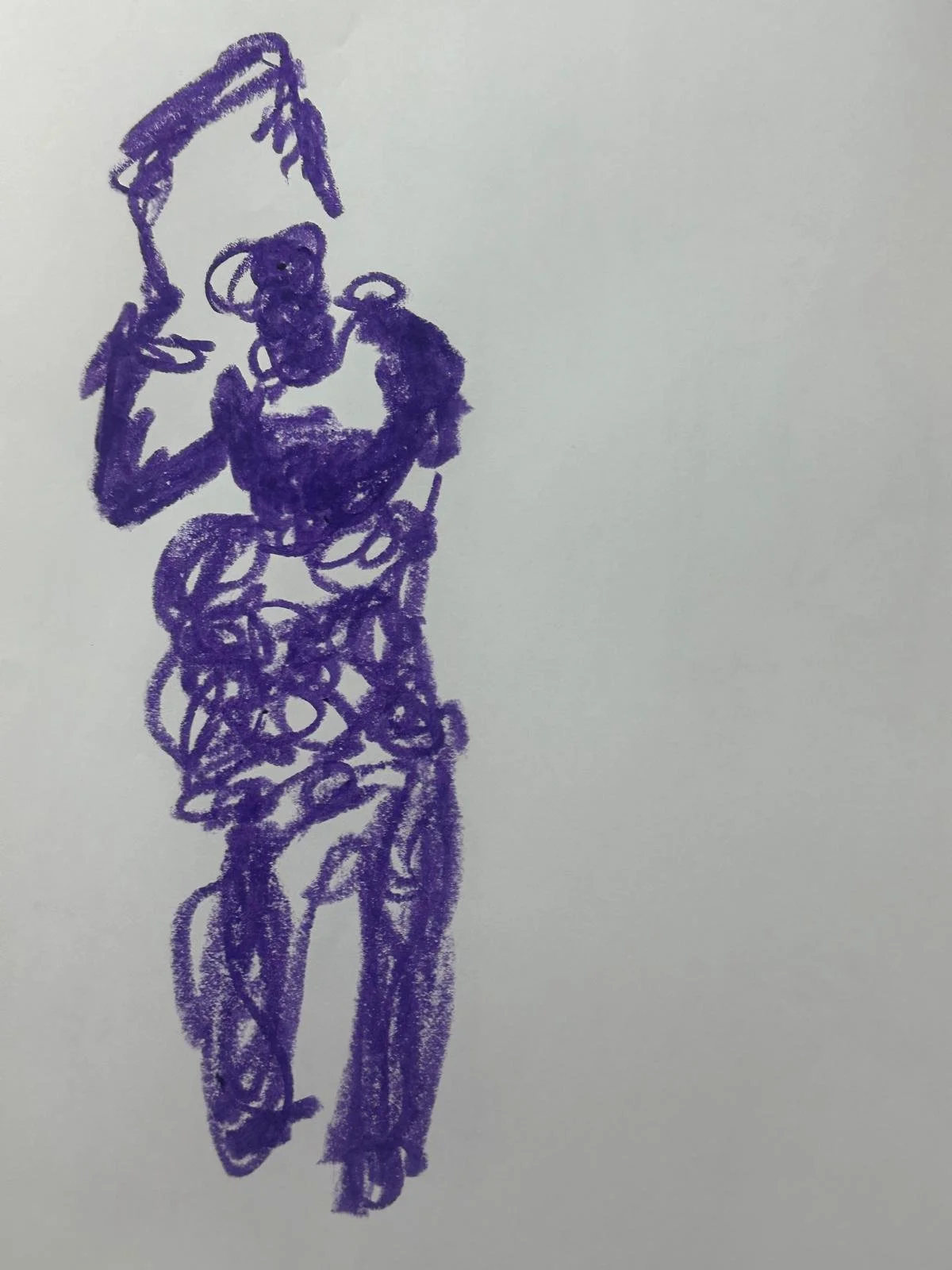
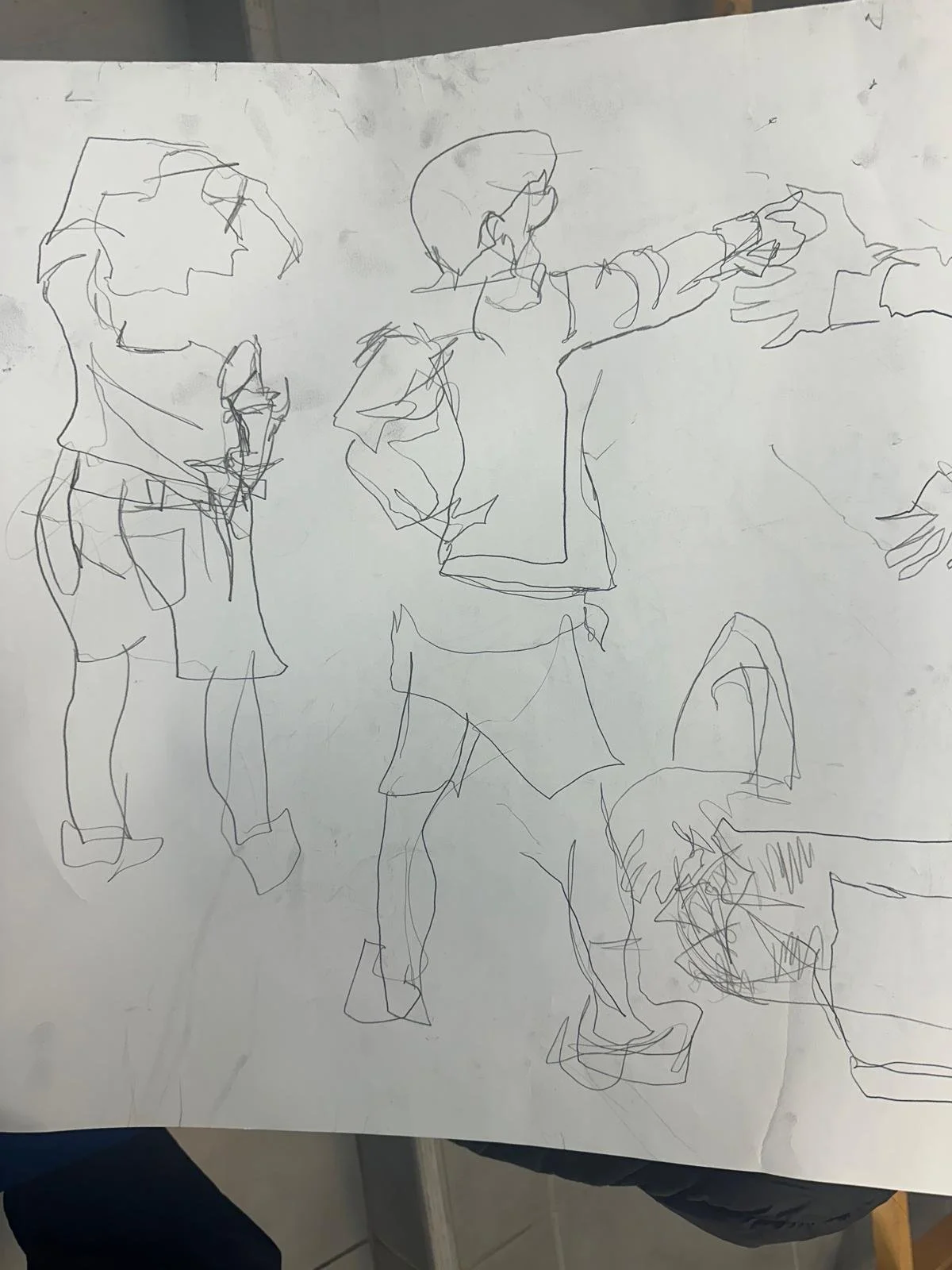
Students explore drawing as an immediate record of movement, energy, weight, and rhythm. Working within short time limits, they learn to identify the dominant action of a subject before focusing on surface details.
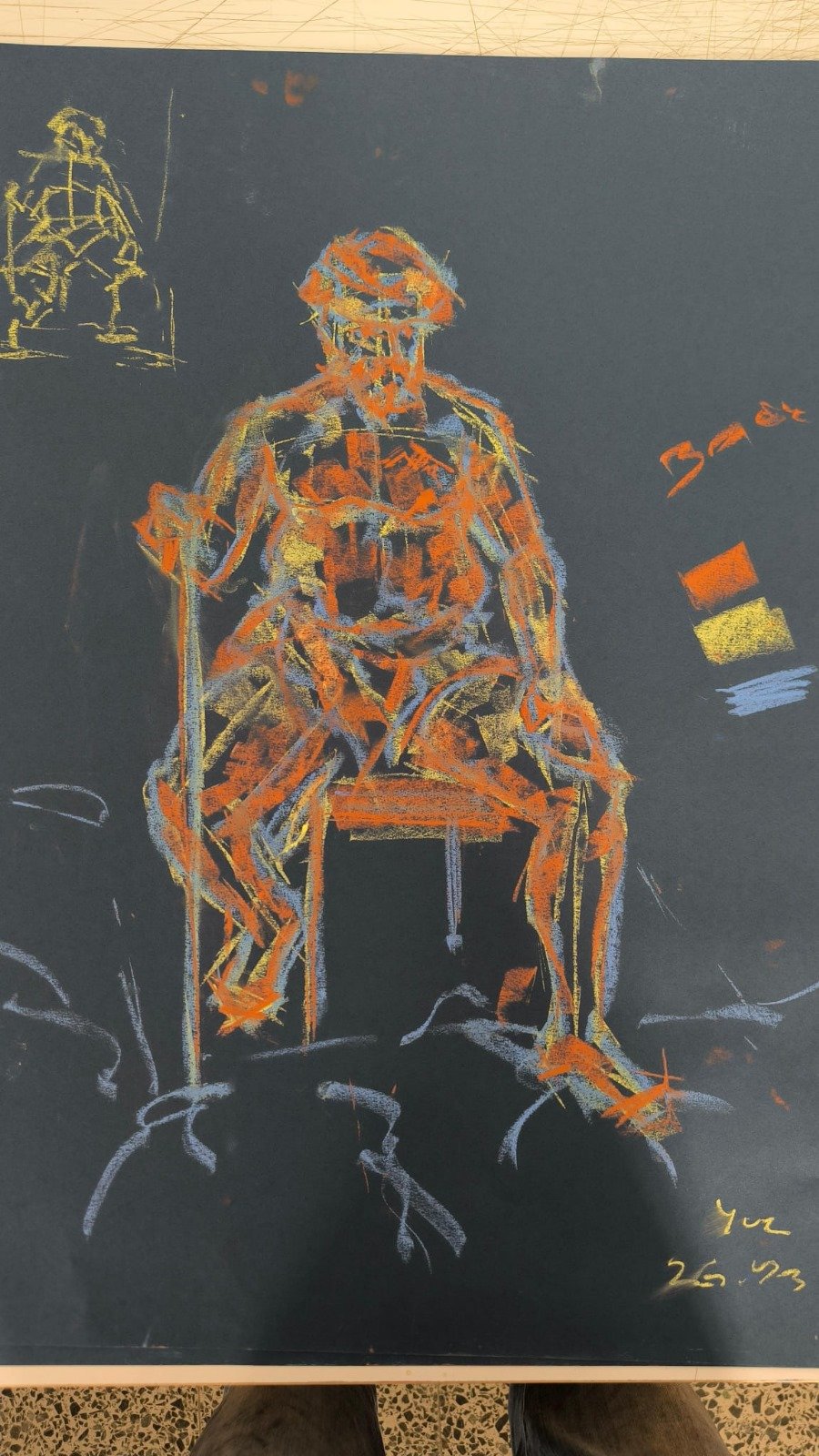
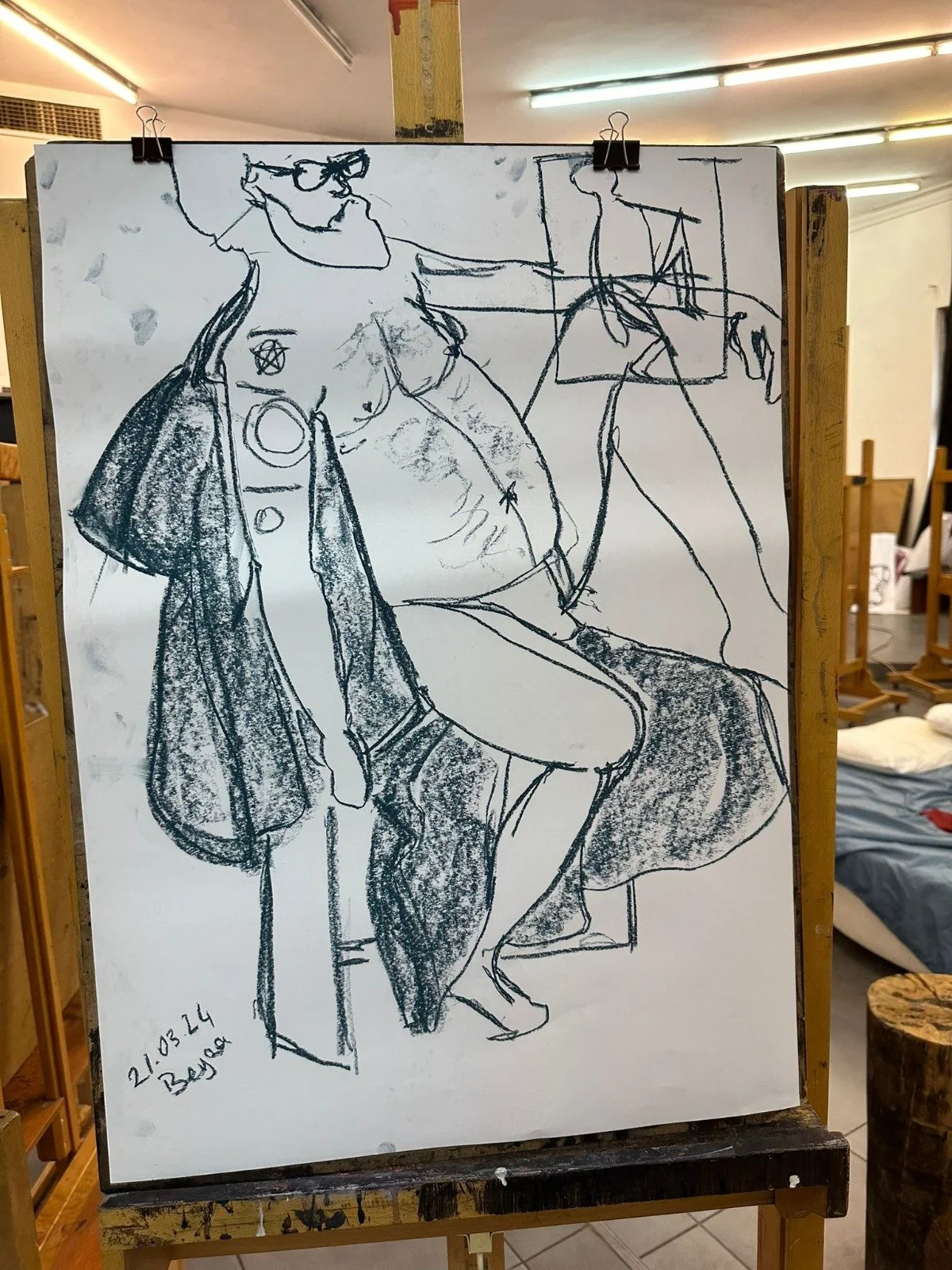
Exercises involve line gestures, mass gestures, scribbled forms, sustained poses, and rapid figure studies. Students experiment with different drawing tools and scales while developing a more responsive relationship between the eye, hand, arm, and body. The emphasis is not on producing a finished image, but on capturing the essential character and direction of the pose.
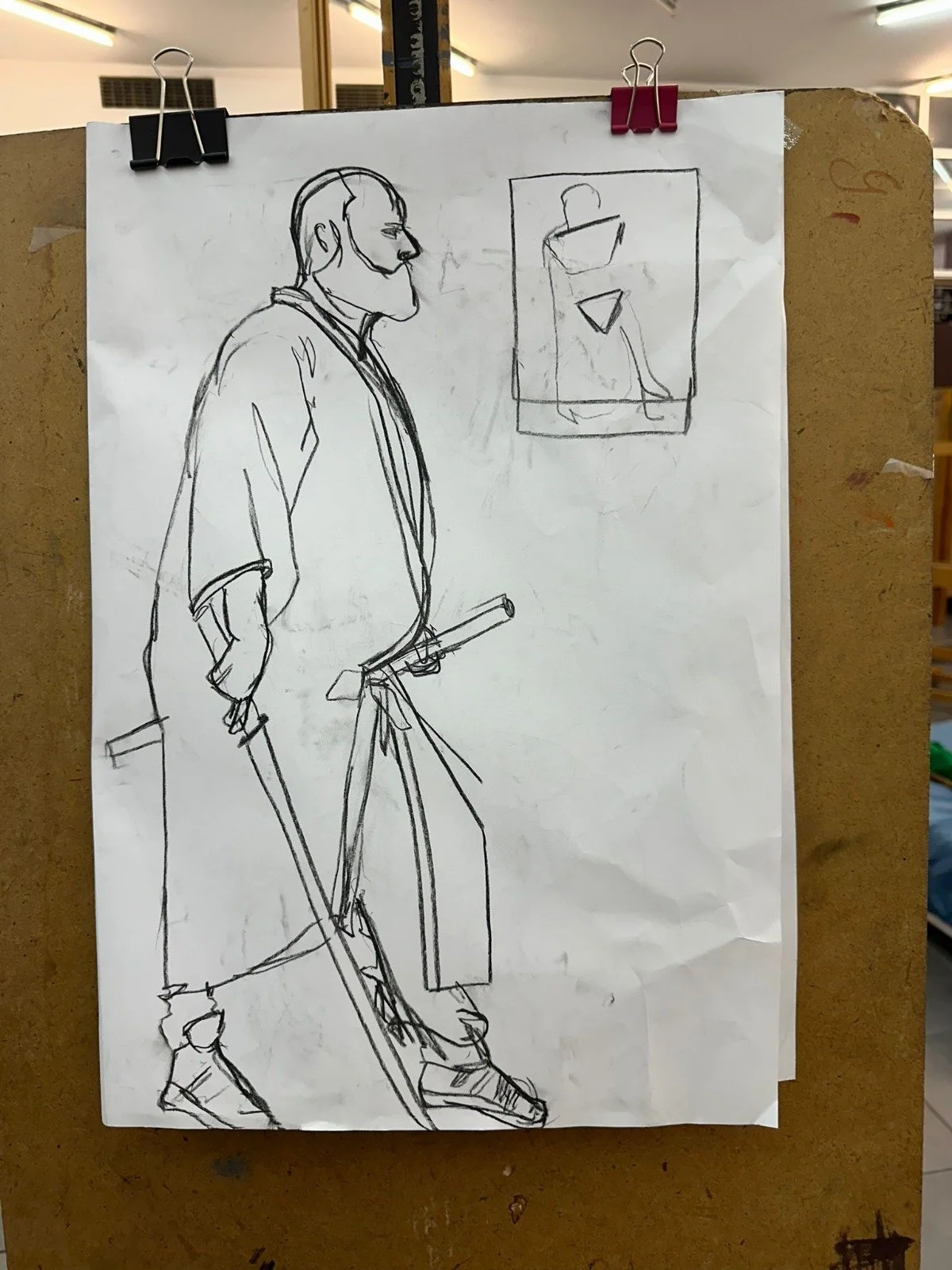
Selected Student Works
Phase 03
Structural Drawing
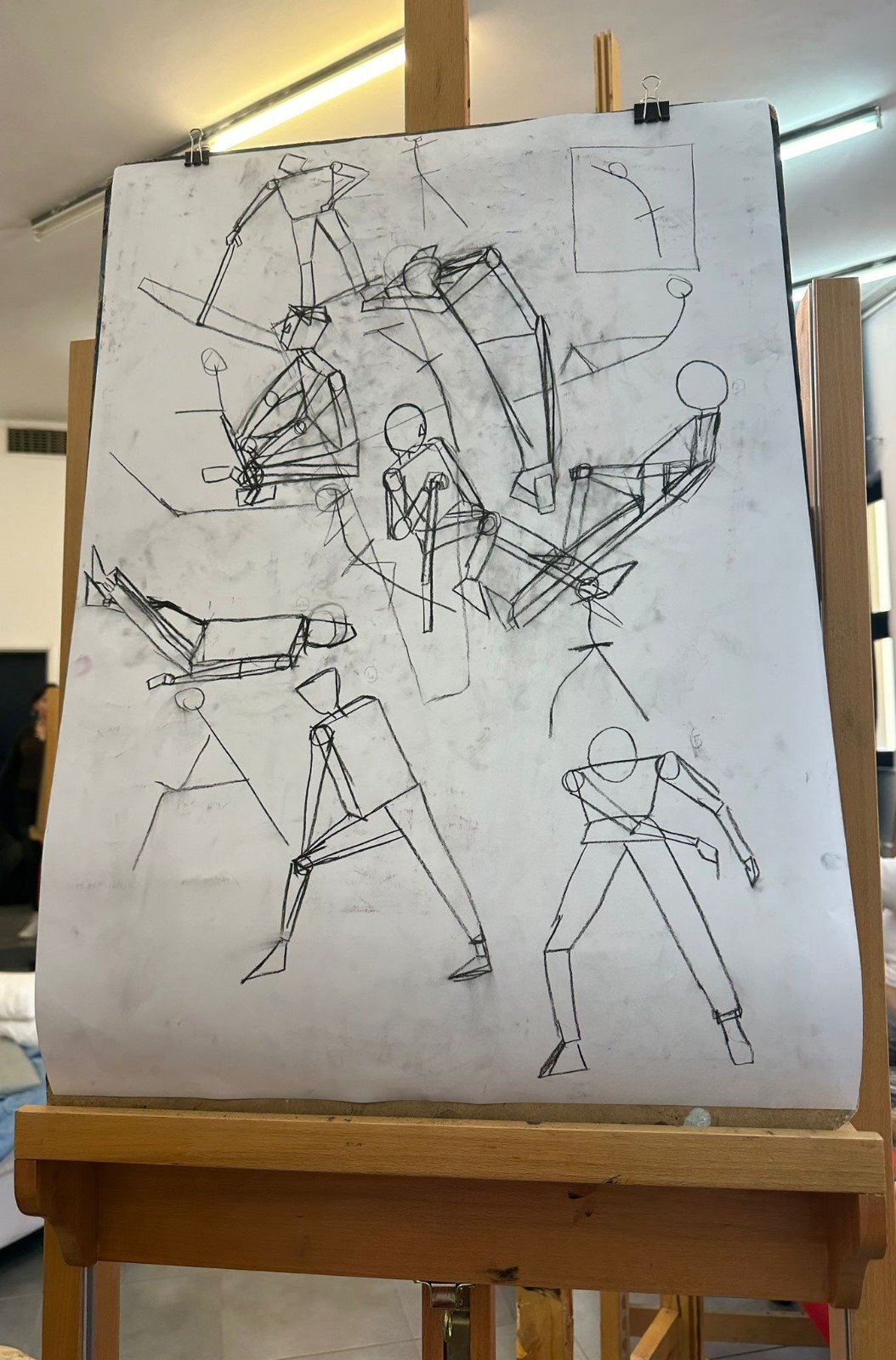
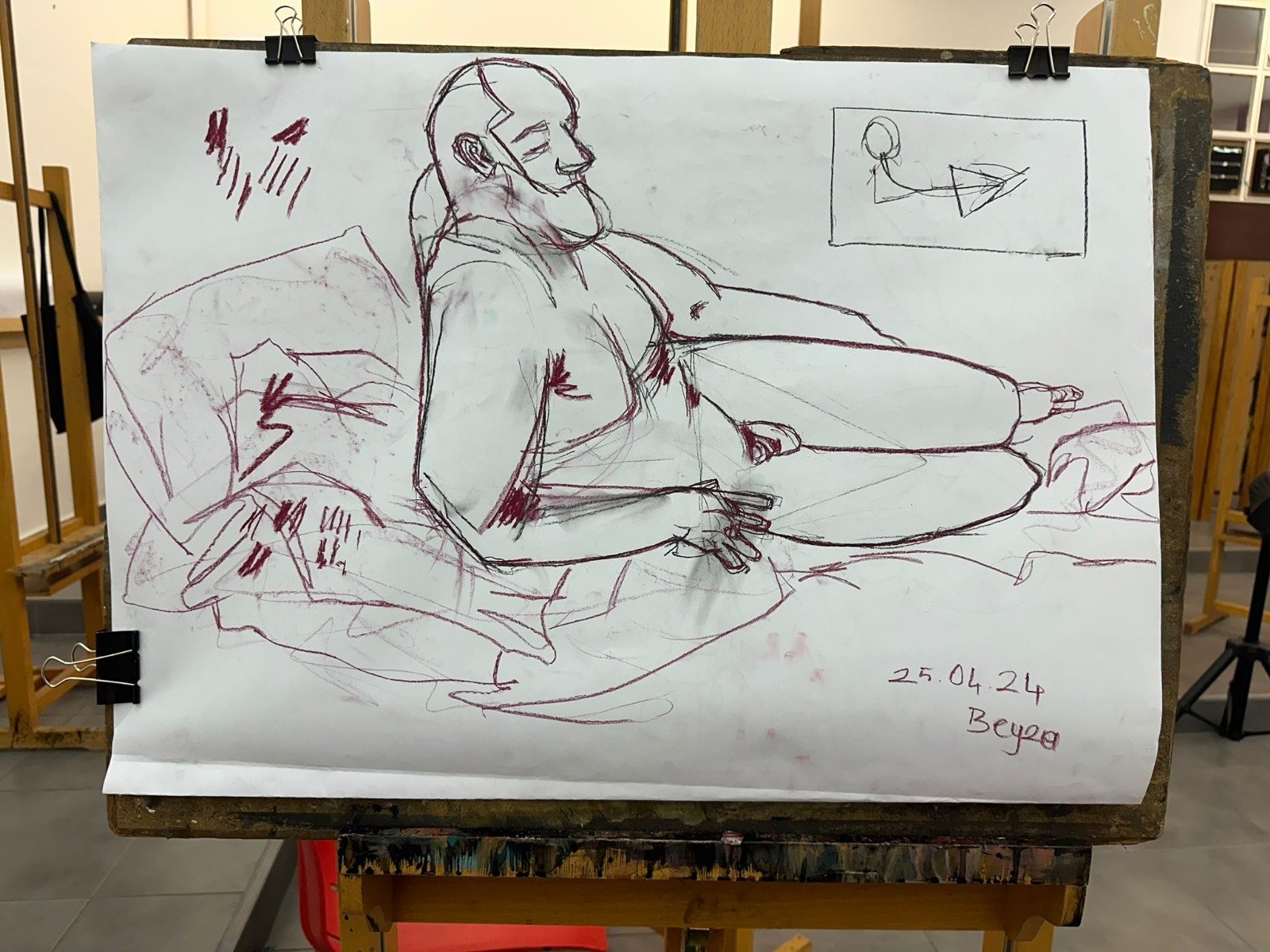
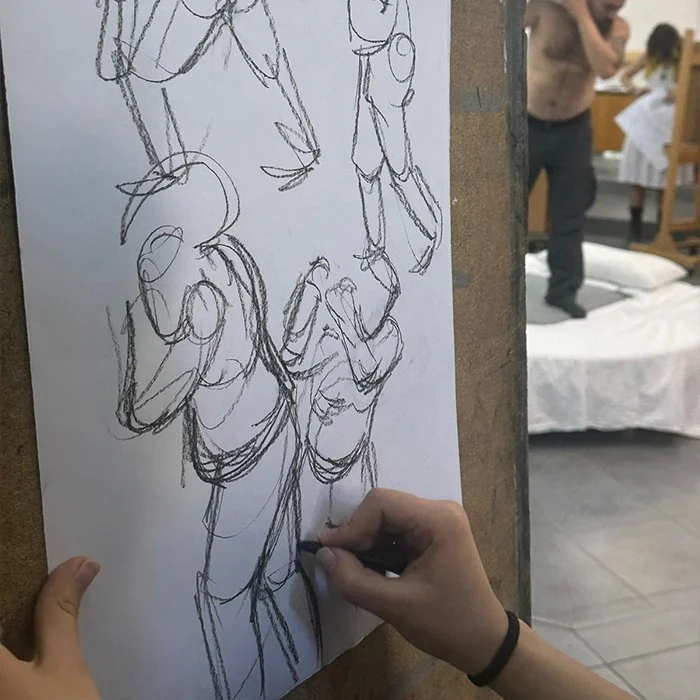
Students learn to analyse complex subjects as combinations of basic geometric forms. Figures and objects are constructed through boxes, cylinders, spheres, directional lines, axes, and proportional relationships.
The phase moves from simplified volumes to studies of the human figure, head, torso, pelvis, limbs, bottles, glasses, and still-life arrangements. Students also use light, shadow, hatching, and tonal transitions to describe volume and spatial depth. Gesture remains present beneath the structure, helping students create drawings that feel both stable and alive.
Selected Student Works